W–032 · Documentary photograph and sources
Famine in Southern India
First the harvest failed. The drought of 1876 struck southern and southwestern India especially hard. Over the next two years famine spread across a wider region and took millions of lives. British colonial authorities opened relief camps. People came to them, but the catastrophe continued.
1. At the relief camp
Provenance and sources for frame 1
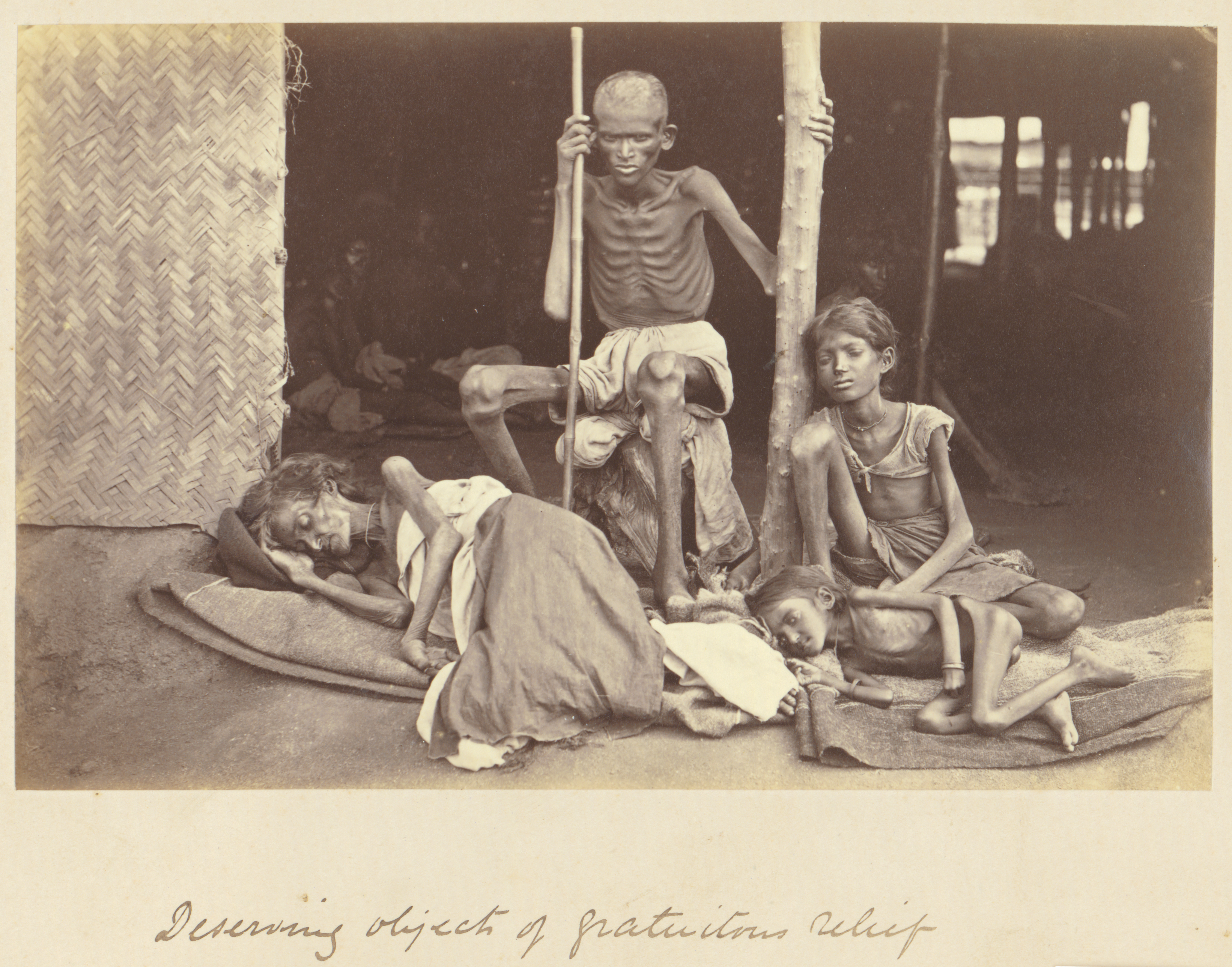
Willoughby Wallace Hooper made this image for Scenes of the Madras Famine. The Getty Museum dates it to 1876–78, without a more precise location, and titles it Deserving Objects of Gratuitous Relief. The museum’s digital file is marked Public Domain. Displayed file: 3283 × 2578 pixels. The source record discusses public-domain status; check which jurisdiction it covers. Full image record in Russian.
getty.edugetty.educollection.nam.ac.ukView image fileBritish officer Willoughby Wallace Hooper took photographs in those camps, later gathered in an album called Scenes of the Madras Famine. The Getty Museum describes the people in this print as a family at a relief camp. Its catalogue gives neither their names nor any account of their later lives.
Online, the image has acquired a story about a man supposedly protecting his family from cannibals. He is holding a stick, but we do not know why. Neither the inscription on the print nor the Getty description links the scene to cannibalism.
Beneath the photograph remain the words “Deserving Objects of Gratuitous Relief.” That was how people caught in the famine were labelled. Their faces have survived far more clearly than the facts of their lives.