Biafra: War and Famine
W–075
In 1966, Igbo people fled northern Nigeria for the east, escaping massacres. Two military coups took place that year. On 30 May 1967, the Eastern Region’s military governor, Chukwuemeka Odumegwu Ojukwu, proclaimed the Republic of Biafra. The federal government rejected secession. War began in July.
Federal forces gradually cut Biafra off from the outside world. In May 1968 they captured Port Harcourt, its principal seaport. Encirclement by land reinforced the naval blockade. Refugees crowded into a shrinking territory where food and medicines were scarce. Children were especially vulnerable: before the war, much of the region’s protein supply had come from elsewhere, and those supplies had been cut off.
Don McCullin first travelled to Biafra in April 1968. Working for The Sunday Times Magazine, he photographed soldiers at the front. In June the magazine published his photographs alongside a text by Chinua Achebe, who supported Biafran independence. McCullin returned, increasingly photographing people dying of hunger.
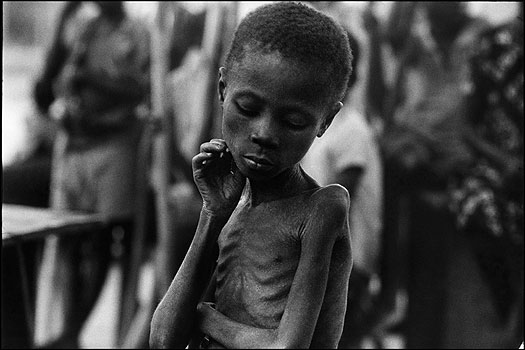
In one of the camps, he photographed an emaciated boy with albinism holding an empty tin. The Contact Press Images catalogue describes the child as nine years old; the sources checked for this account give neither his name nor his later fate. The agency dates the photograph to April 1968. MFAH and the collection jointly held by the National Galleries of Scotland and Tate also give 1968, while the photographer’s website gives 1969.
Newspaper coverage of famine was bound up with the argument over Biafra’s future. McCullin’s photographs accompanied Richard West’s article ‘The Accusing Face of Young Biafra’, which opposed the destruction of the independent republic. Across Europe and the United States, reports of starvation prompted fundraising and public demands for aid. Humanitarian relief and support for secession often appeared within the same campaigns.
The International Committee of the Red Cross and Joint Church Aid, an alliance of Catholic and Protestant organisations, brought in food. Aircraft carried dried fish, powdered milk and other supplies. The Red Cross reported a network of eleven main depots and five hundred feeding centres supplied from Uli airstrip. Local staff and volunteers helped the international teams transport and distribute the food.
For two days in December 1968, relief aircraft could not leave for Biafra. Equatorial Guinea’s authorities had stopped the airlift from Fernando Po. The Red Cross warned that 850,000 people risked losing even the daily ration of 70 grams per person it provided. Flights resumed on the night of 23-24 December. Five flights brought in more than fifty tons of supplies.
Relief routes required negotiation with the warring parties. The federal government demanded control over flights, concerned that humanitarian operations could conceal arms deliveries. Biafra’s leaders insisted on night flights because aircraft and airfields risked attack in daylight. Attempts to agree on an overland corridor and daytime flights failed. On the night of 5-6 June 1969, Nigerian aircraft shot down a Swedish Red Cross plane carrying relief to Uli. All four crew members were killed.
Food deliveries did reduce deaths. A US assessment of Biafra’s food situation, dated 7 July 1969, reported that relief agencies had been feeding an estimated 1.5 million people each day during the three months before flights were suspended in June. Its authors linked falling mortality to protein-rich supplies and warned that their loss would again endanger children, sick people and the elderly.
In January 1970, Biafra’s defences collapsed and Ojukwu left the country. Surrender was announced on 12 January; on 15 January, Nigeria’s leader, Yakubu Gowon, declared the war over in a radio broadcast. Biafra ceased to exist as a separate state. Gowon promised an amnesty and relief for the population. The death toll remains an estimate: researcher Mie Vestergaard puts it at about two million from fighting, hunger and disease.
Among the doctors who had worked in Biafra were Bernard Kouchner and Max Récamier. They had arrived on a Red Cross assignment in 1968. Back in France, they spoke publicly about what they had witnessed and challenged the organisation’s restraint. In 1971, doctors planning a new emergency medical service joined forces with journalists from the medical publication Tonus. Médecins Sans Frontières was founded in France that December.
Photographs and documents
1. Biafran volunteers
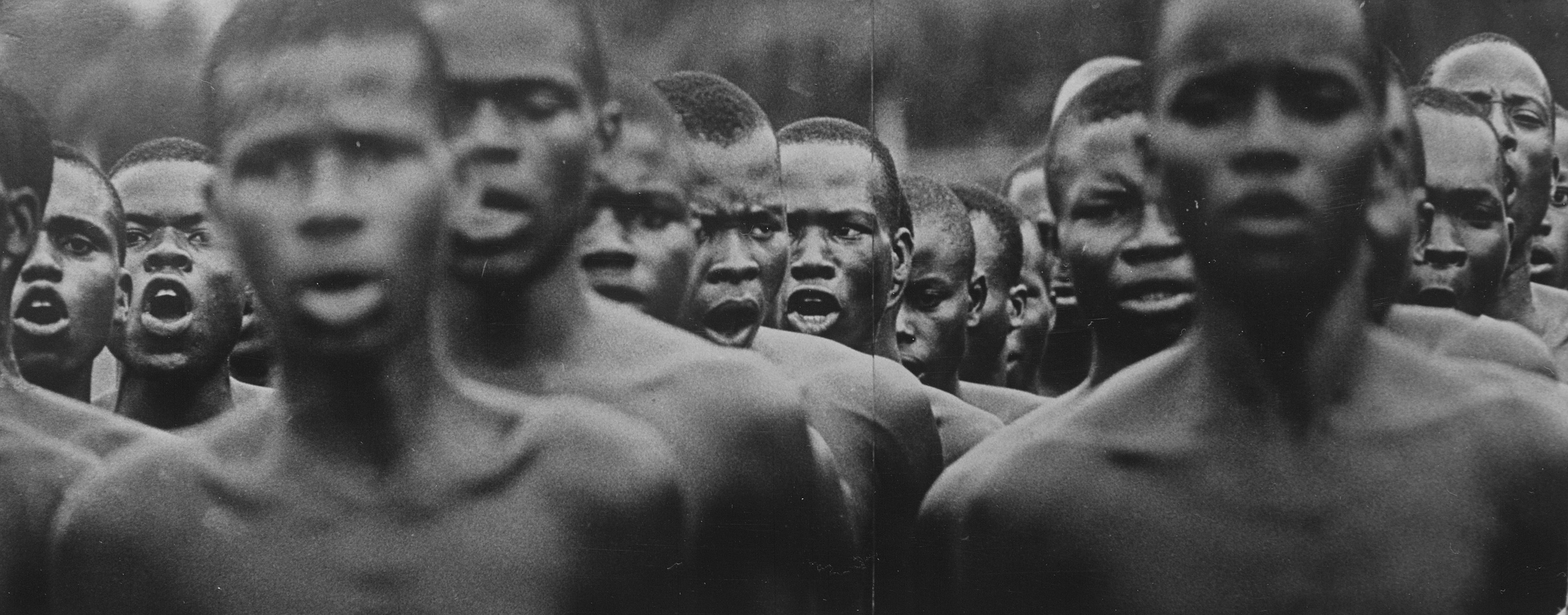
Sources and provenance for frame 1
Photographer: Gérard Klijn. The series won second prize in General News / Stories at the 1968 World Press Photo contest. The catalogue gives 1 January 1968; the exact day of exposure has not been independently confirmed. The public file is preserved unchanged; print halftones visible in some frames are already present in the source. No free licence is stated for these photographs.
World Press PhotoWorld Press PhotoFile on WITNESS · 3072 × 12042. Volunteers with rifles

Sources and provenance for frame 2
Photographer: Gérard Klijn. The series won second prize in General News / Stories at the 1968 World Press Photo contest. The catalogue gives 1 January 1968; the exact day of exposure has not been independently confirmed. The public file is preserved unchanged; print halftones visible in some frames are already present in the source. No free licence is stated for these photographs.
World Press PhotoWorld Press PhotoFile on WITNESS · 1318 × 9053. Carrying the wounded
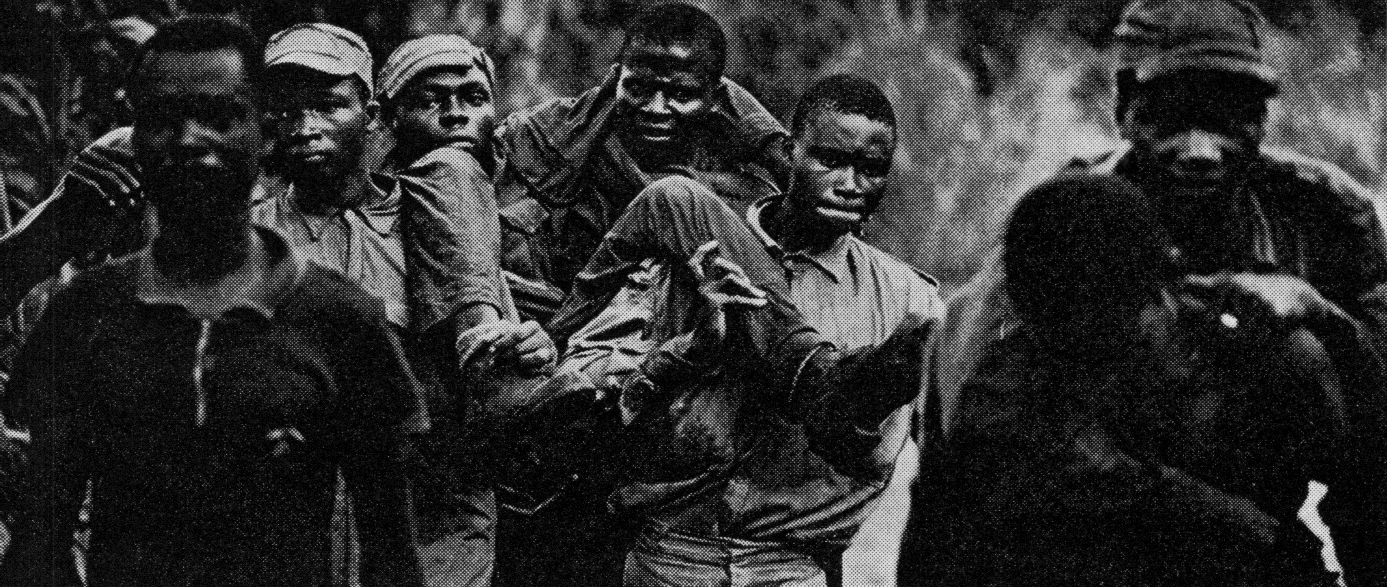
Sources and provenance for frame 3
Photographer: Gérard Klijn. The series won second prize in General News / Stories at the 1968 World Press Photo contest. The catalogue gives 1 January 1968; the exact day of exposure has not been independently confirmed. The public file is preserved unchanged; print halftones visible in some frames are already present in the source. No free licence is stated for these photographs.
World Press PhotoWorld Press PhotoFile on WITNESS · 1387 × 5874. Pots and rifles
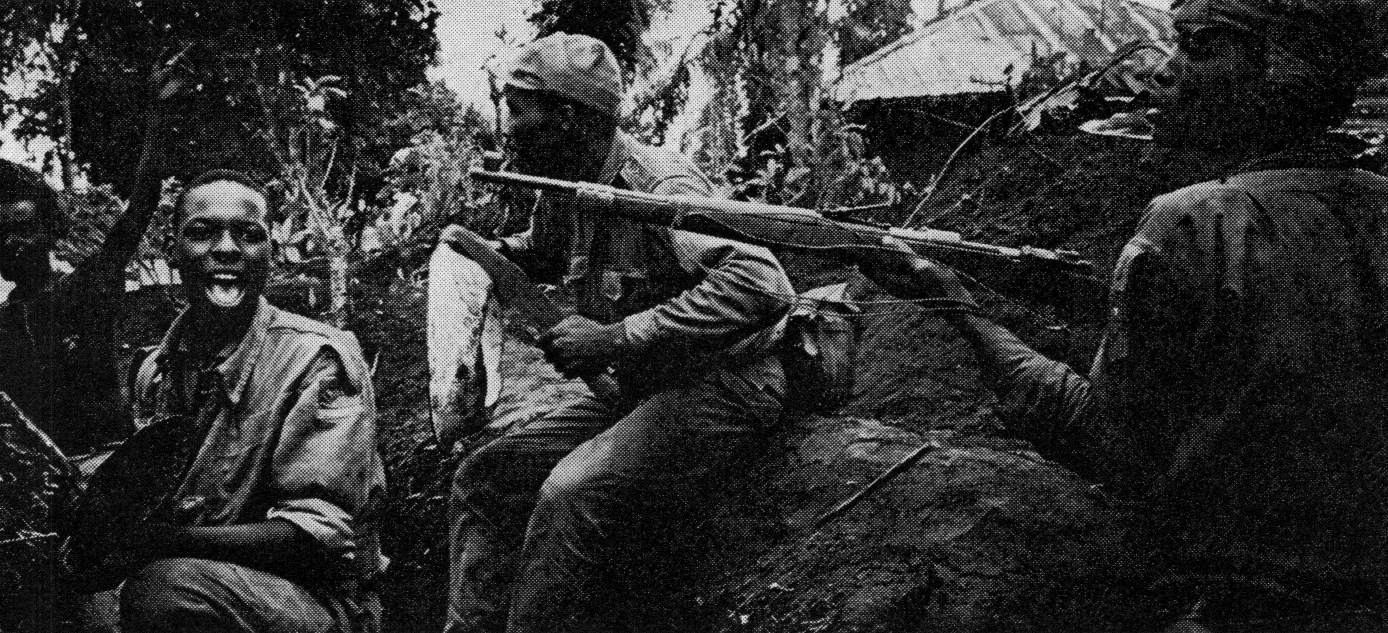
Sources and provenance for frame 4
Photographer: Gérard Klijn. The series won second prize in General News / Stories at the 1968 World Press Photo contest. The catalogue gives 1 January 1968; the exact day of exposure has not been independently confirmed. The public file is preserved unchanged; print halftones visible in some frames are already present in the source. No free licence is stated for these photographs.
World Press PhotoWorld Press PhotoFile on WITNESS · 1388 × 6335. A fatally wounded soldier
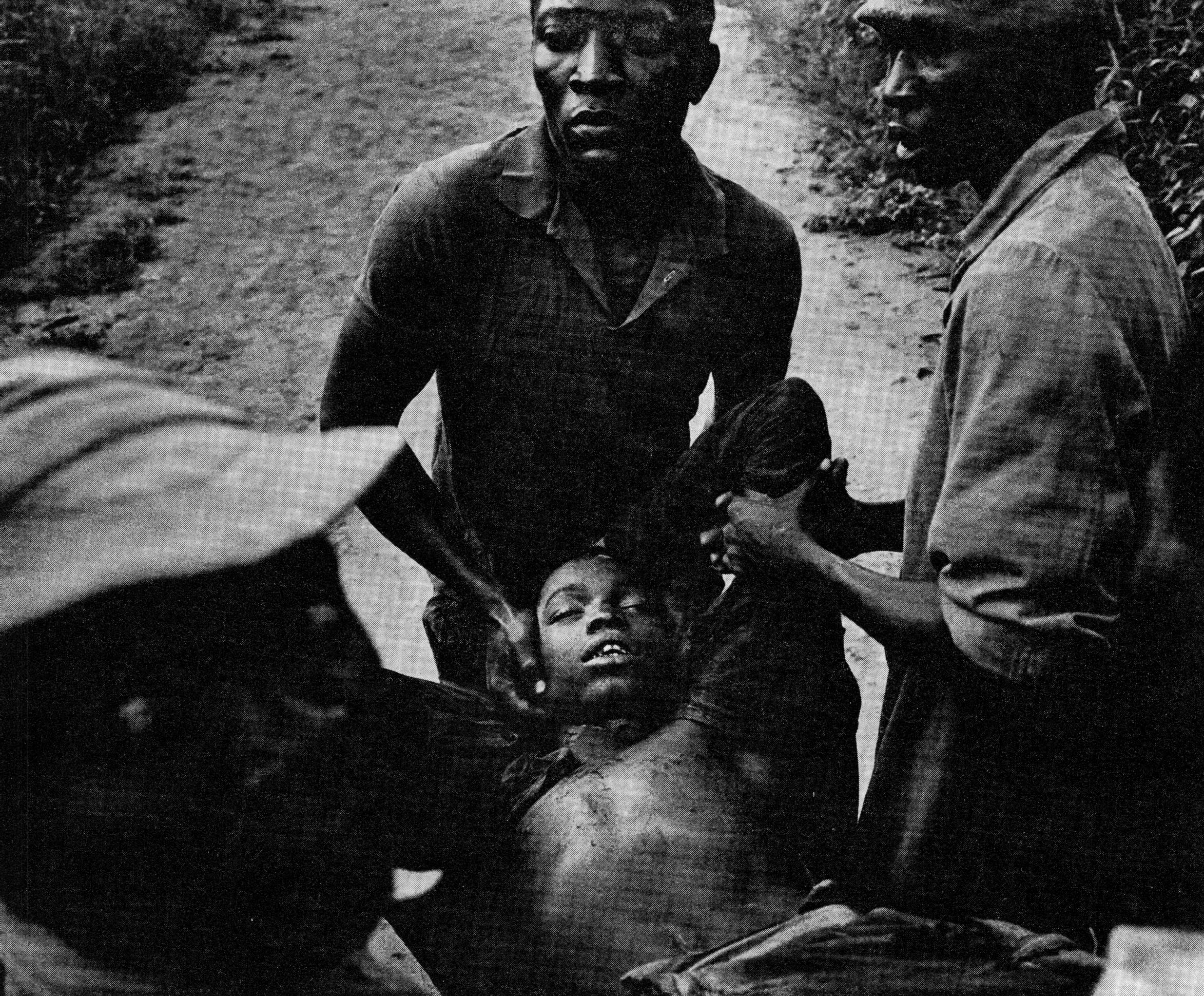
Sources and provenance for frame 5
Photographer: Gérard Klijn. The series won second prize in General News / Stories at the 1968 World Press Photo contest. The catalogue gives 1 January 1968; the exact day of exposure has not been independently confirmed. The public file is preserved unchanged; print halftones visible in some frames are already present in the source. No free licence is stated for these photographs.
World Press PhotoWorld Press PhotoFile on WITNESS · 2346 × 19406. A dead soldier
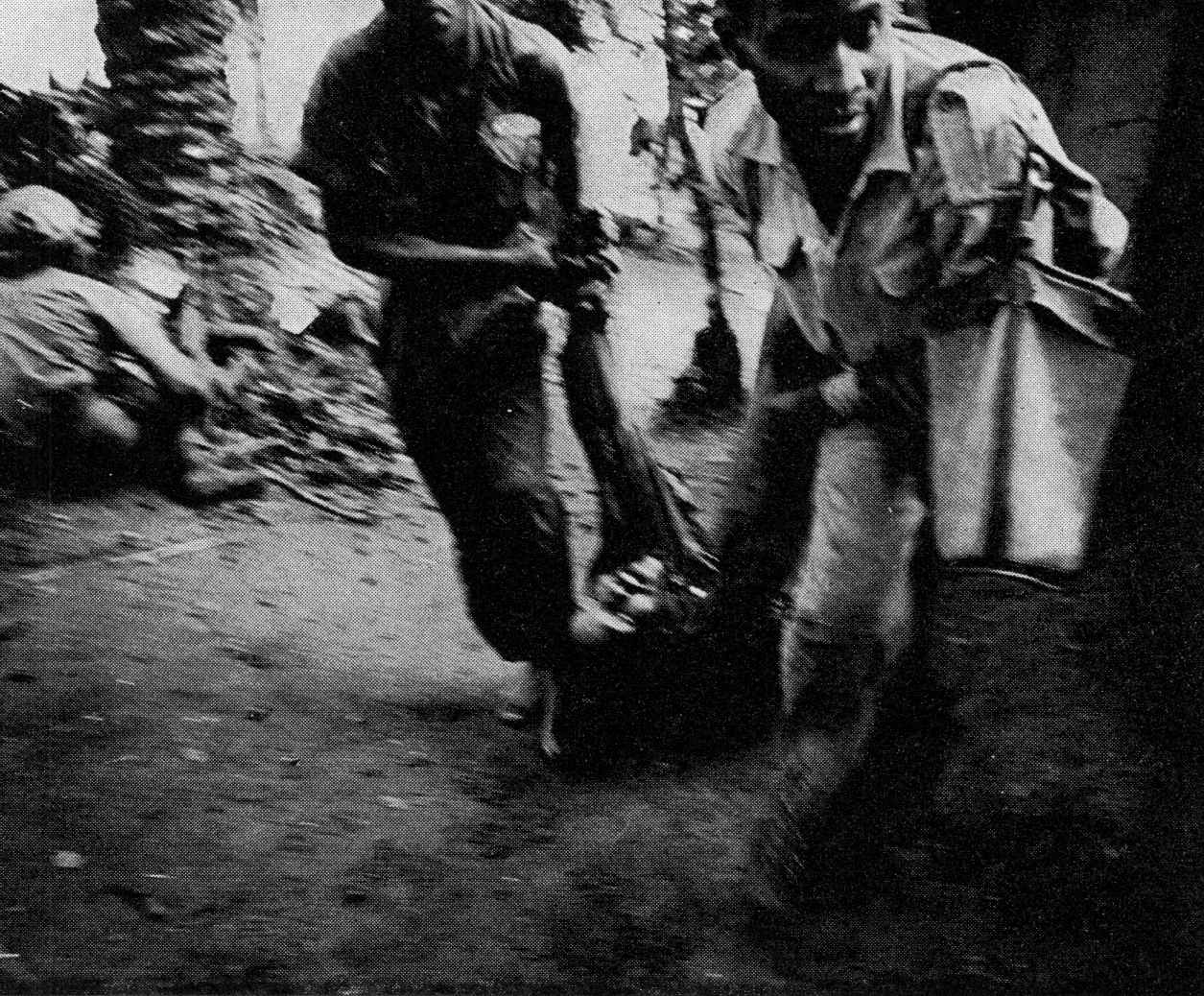
Sources and provenance for frame 6
Photographer: Gérard Klijn. The series won second prize in General News / Stories at the 1968 World Press Photo contest. The catalogue gives 1 January 1968; the exact day of exposure has not been independently confirmed. The public file is preserved unchanged; print halftones visible in some frames are already present in the source. No free licence is stated for these photographs.
World Press PhotoWorld Press PhotoFile on WITNESS · 1255 × 10387. Igbo soldiers
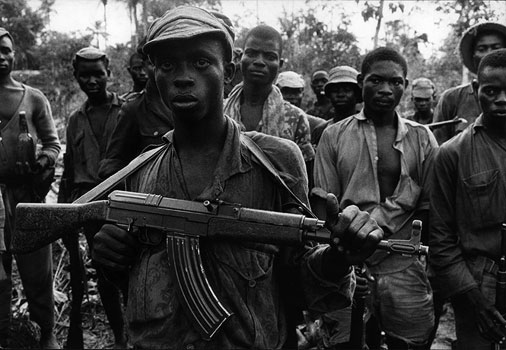
Sources and provenance for frame 7
Photographer: Don McCullin; date and identification follow the Contact Press Images catalogue “1968: Rock, Rebels, and Rights”. The agency’s public copy is small; its dimensions are given in the file link. It is preserved unchanged. © Don McCullin; no free licence is stated.
Contact Press ImagesContact Press ImagesFile on WITNESS · 506 × 3508. An officer beside a dead soldier
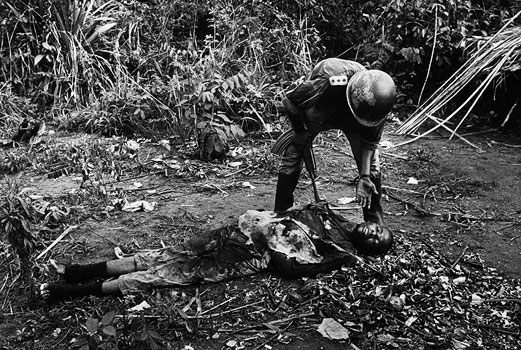
Sources and provenance for frame 8
Photographer: Don McCullin; date and identification follow the Contact Press Images catalogue “1968: Rock, Rebels, and Rights”. The agency’s public copy is small; its dimensions are given in the file link. It is preserved unchanged. © Don McCullin; no free licence is stated.
Contact Press ImagesContact Press ImagesFile on WITNESS · 521 × 3509. Carrying shells
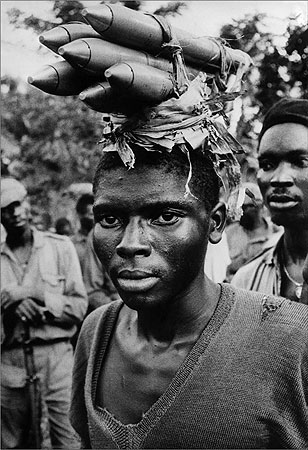
Sources and provenance for frame 9
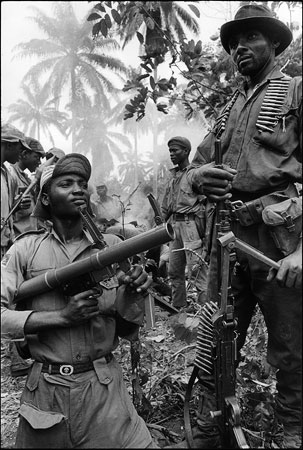
Photographer: Don McCullin; date and identification follow the Contact Press Images catalogue “1968: Rock, Rebels, and Rights”. The agency’s public copy is small; its dimensions are given in the file link. It is preserved unchanged. © Don McCullin; no free licence is stated.
Contact Press ImagesContact Press ImagesFile on WITNESS · 308 × 45010. Armed soldiers
Sources and provenance for frame 10
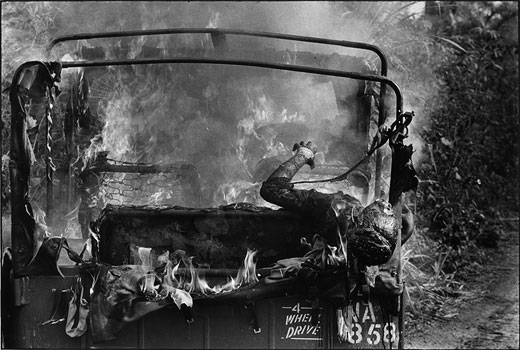
Photographer: Gilles Caron; date and identification follow the Contact Press Images catalogue “1968: Rock, Rebels, and Rights”. The agency’s public copy is small; its dimensions are given in the file link. It is preserved unchanged. © Gilles Caron; no free licence is stated.
Contact Press ImagesContact Press ImagesFile on WITNESS · 303 × 45011. A burning vehicle
Sources and provenance for frame 11
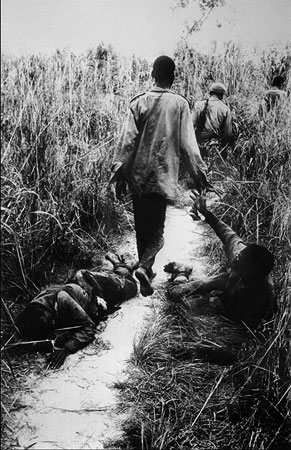
Photographer: Gilles Caron; date and identification follow the Contact Press Images catalogue “1968: Rock, Rebels, and Rights”. The agency’s public copy is small; its dimensions are given in the file link. It is preserved unchanged. © Gilles Caron; no free licence is stated.
Contact Press ImagesContact Press ImagesFile on WITNESS · 520 × 35012. Retreat
Sources and provenance for frame 12
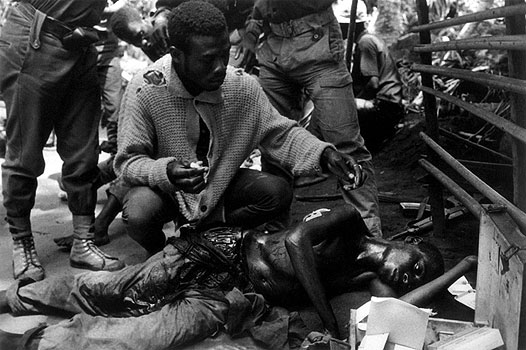
Photographer: Gilles Caron; date and identification follow the Contact Press Images catalogue “1968: Rock, Rebels, and Rights”. The agency’s public copy is small; its dimensions are given in the file link. It is preserved unchanged. © Gilles Caron; no free licence is stated.
Contact Press ImagesContact Press ImagesFile on WITNESS · 291 × 45013. A medic and a wounded soldier
Sources and provenance for frame 13
Photographer: Don McCullin; date and identification follow the Contact Press Images catalogue “1968: Rock, Rebels, and Rights”. The agency’s public copy is small; its dimensions are given in the file link. It is preserved unchanged. © Don McCullin; no free licence is stated.
Contact Press ImagesContact Press ImagesFile on WITNESS · 526 × 35014. A wounded soldier on a comrade’s back
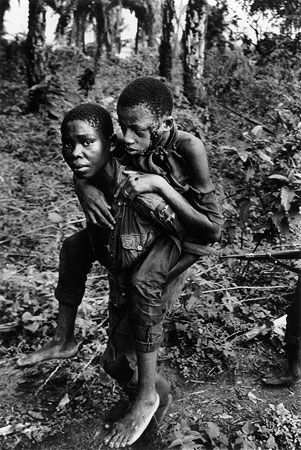
Sources and provenance for frame 14
Photographer: Don McCullin; date and identification follow the Contact Press Images catalogue “1968: Rock, Rebels, and Rights”. The agency’s public copy is small; its dimensions are given in the file link. It is preserved unchanged. © Don McCullin; no free licence is stated.
Contact Press ImagesContact Press ImagesFile on WITNESS · 301 × 45015. A makeshift ambulance
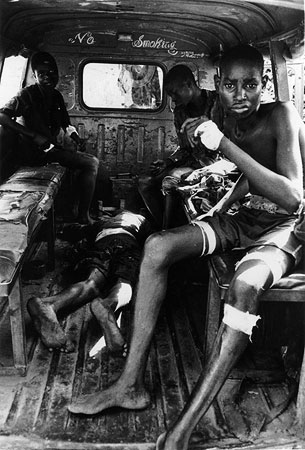
Sources and provenance for frame 15
Photographer: Don McCullin; date and identification follow the Contact Press Images catalogue “1968: Rock, Rebels, and Rights”. The agency’s public copy is small; its dimensions are given in the file link. It is preserved unchanged. © Don McCullin; no free licence is stated.
Contact Press ImagesContact Press ImagesFile on WITNESS · 305 × 45016. At a Catholic mission

Sources and provenance for frame 16
Photographer: Don McCullin; date and identification follow the Contact Press Images catalogue “1968: Rock, Rebels, and Rights”. The agency’s public copy is small; its dimensions are given in the file link. It is preserved unchanged. © Don McCullin; no free licence is stated.
Contact Press ImagesContact Press ImagesFile on WITNESS · 300 × 45017. A boy with a bowl

Sources and provenance for frame 17
Photographer: Don McCullin; date and identification follow the Contact Press Images catalogue “1968: Rock, Rebels, and Rights”. The agency’s public copy is small; its dimensions are given in the file link. It is preserved unchanged. © Don McCullin; no free licence is stated.
Contact Press ImagesContact Press ImagesFile on WITNESS · 305 × 45018. A food distribution centre
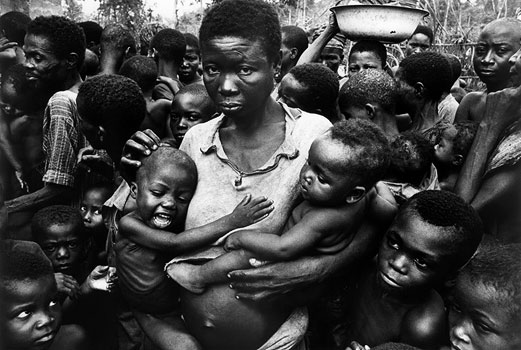
Sources and provenance for frame 18
Photographer: Don McCullin; date and identification follow the Contact Press Images catalogue “1968: Rock, Rebels, and Rights”. The agency’s public copy is small; its dimensions are given in the file link. It is preserved unchanged. © Don McCullin; no free licence is stated.
Contact Press ImagesContact Press ImagesFile on WITNESS · 521 × 35019. Medicines for Biafra
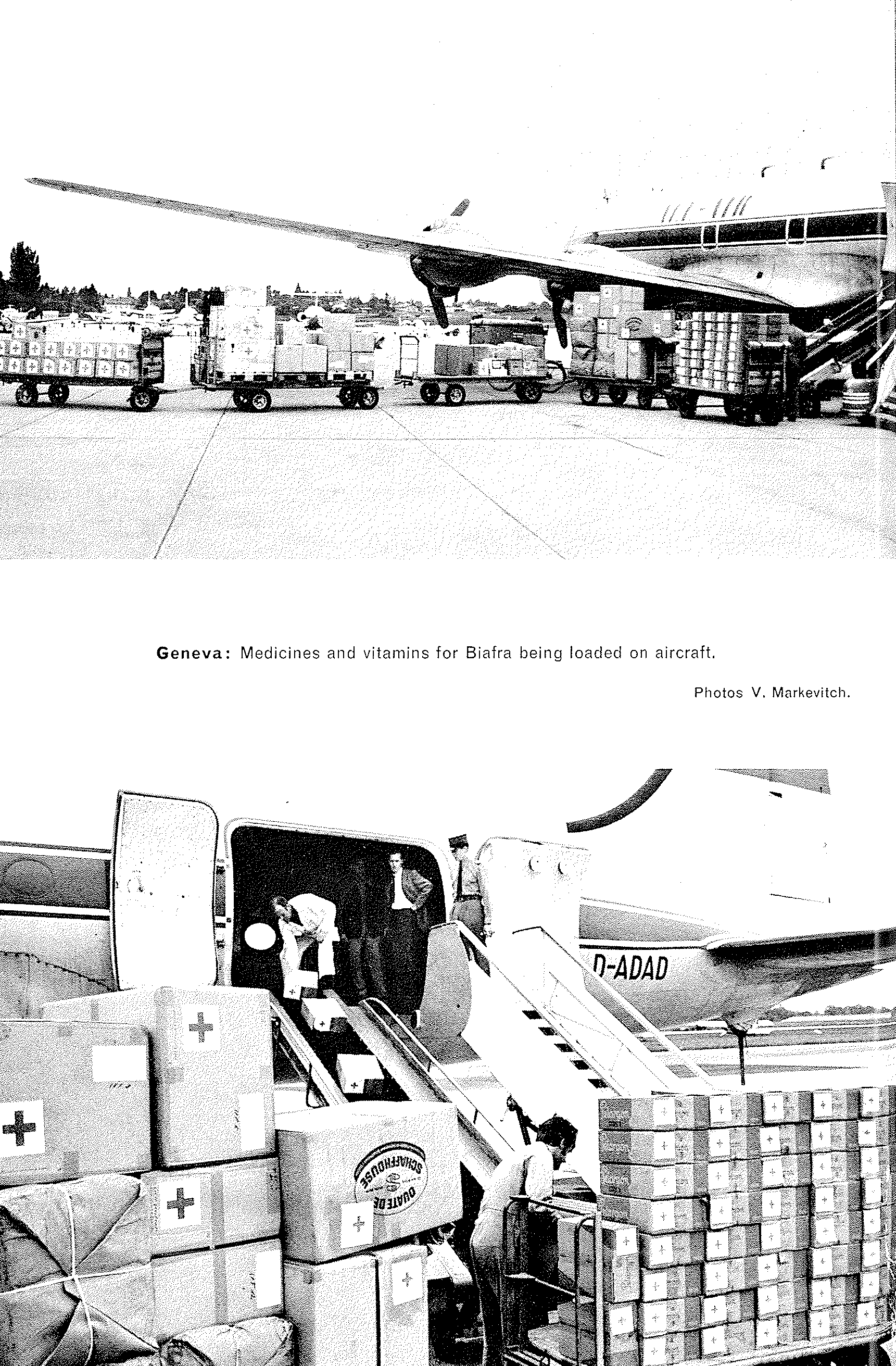
Sources and provenance for frame 19
International Review of the Red Cross, no. 87, June 1968, plate after p. 300; PDF page 24. Printed credit: Photos V. Markevitch. Complete page, with the PDF raster decoded losslessly to PNG without cropping or retouching. This is a printed-document scan, not a high-resolution negative. ICRC rights; no free licence is stated for this scan.
International Review of the Red Cross / Library of CongressInternational Review of the Red Cross / Library of CongressFile on WITNESS · 1721 × 262320. Relief in Nigeria
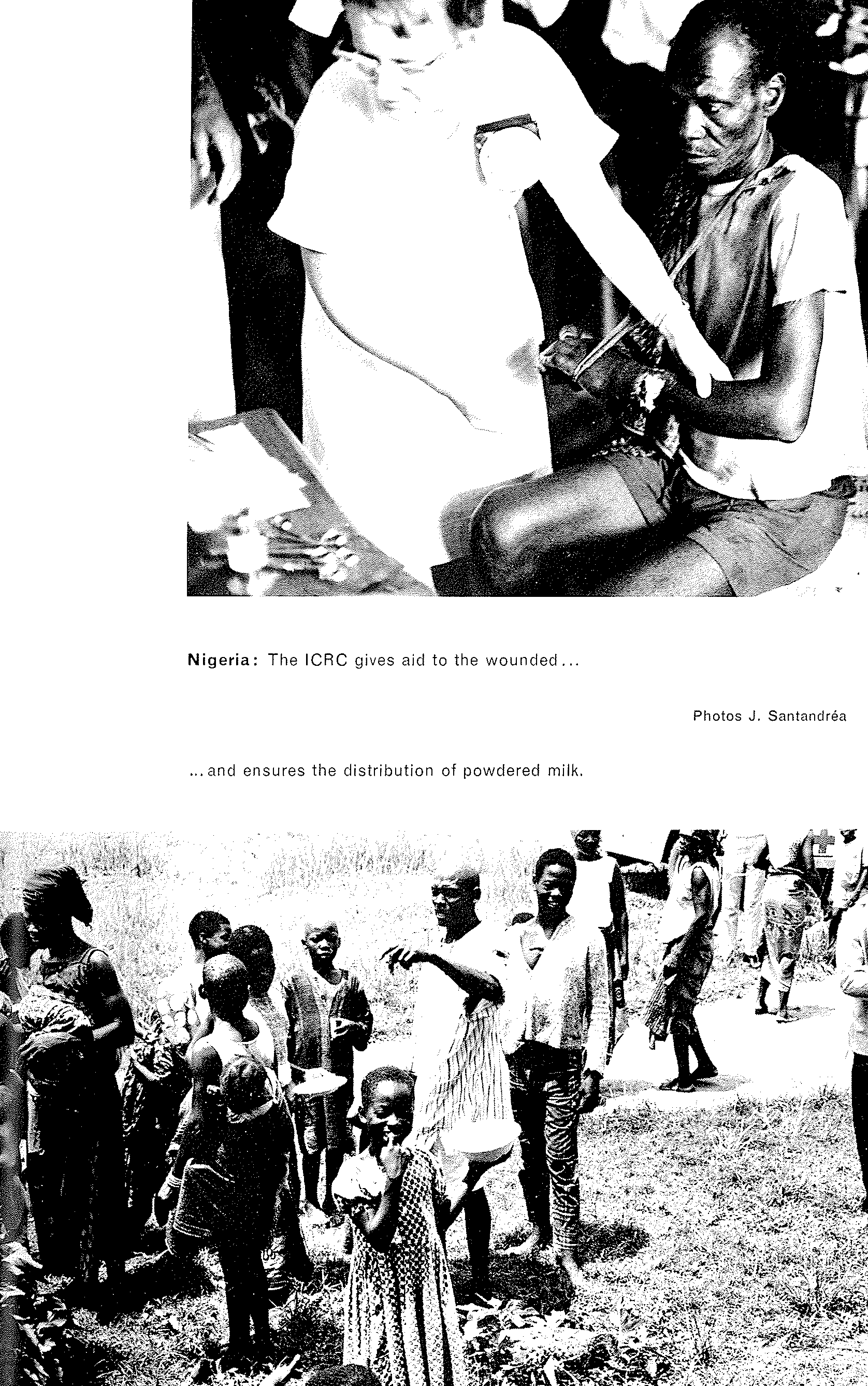
Sources and provenance for frame 20
International Review of the Red Cross, no. 87, June 1968, plate after p. 300; PDF page 23. Printed credit: Photos J. Santandréa. Complete page; the PDF raster was decoded losslessly to PNG without cropping or retouching, and the source PDF is preserved. The exact location and day of exposure are not established. The caption does not place this centre on either side of the conflict. No free licence is stated for this scan.
International Review of the Red Cross / Library of CongressInternational Review of the Red Cross / Library of CongressFile on WITNESS · 1676 × 267521. A victim of the civil war
Sources and provenance for frame 21
Photographer: Gilles Caron; date and identification follow the Contact Press Images catalogue “1968: Rock, Rebels, and Rights”. The agency’s public copy is small; its dimensions are given in the file link. It is preserved unchanged. © Gilles Caron; no free licence is stated.
Contact Press ImagesContact Press ImagesFile on WITNESS · 516 × 35022. A child in Biafra
Sources and provenance for frame 22
Photographer: Gilles Caron; date and identification follow the Contact Press Images catalogue “1968: Rock, Rebels, and Rights”. The agency’s public copy is small; its dimensions are given in the file link. It is preserved unchanged. © Gilles Caron; no free licence is stated.
Contact Press ImagesContact Press ImagesFile on WITNESS · 525 × 35023. A child at a Red Cross centre
Sources and provenance for frame 23
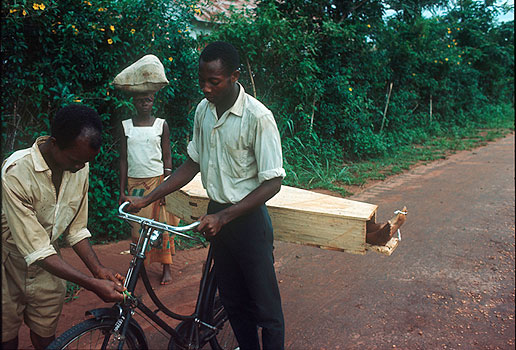
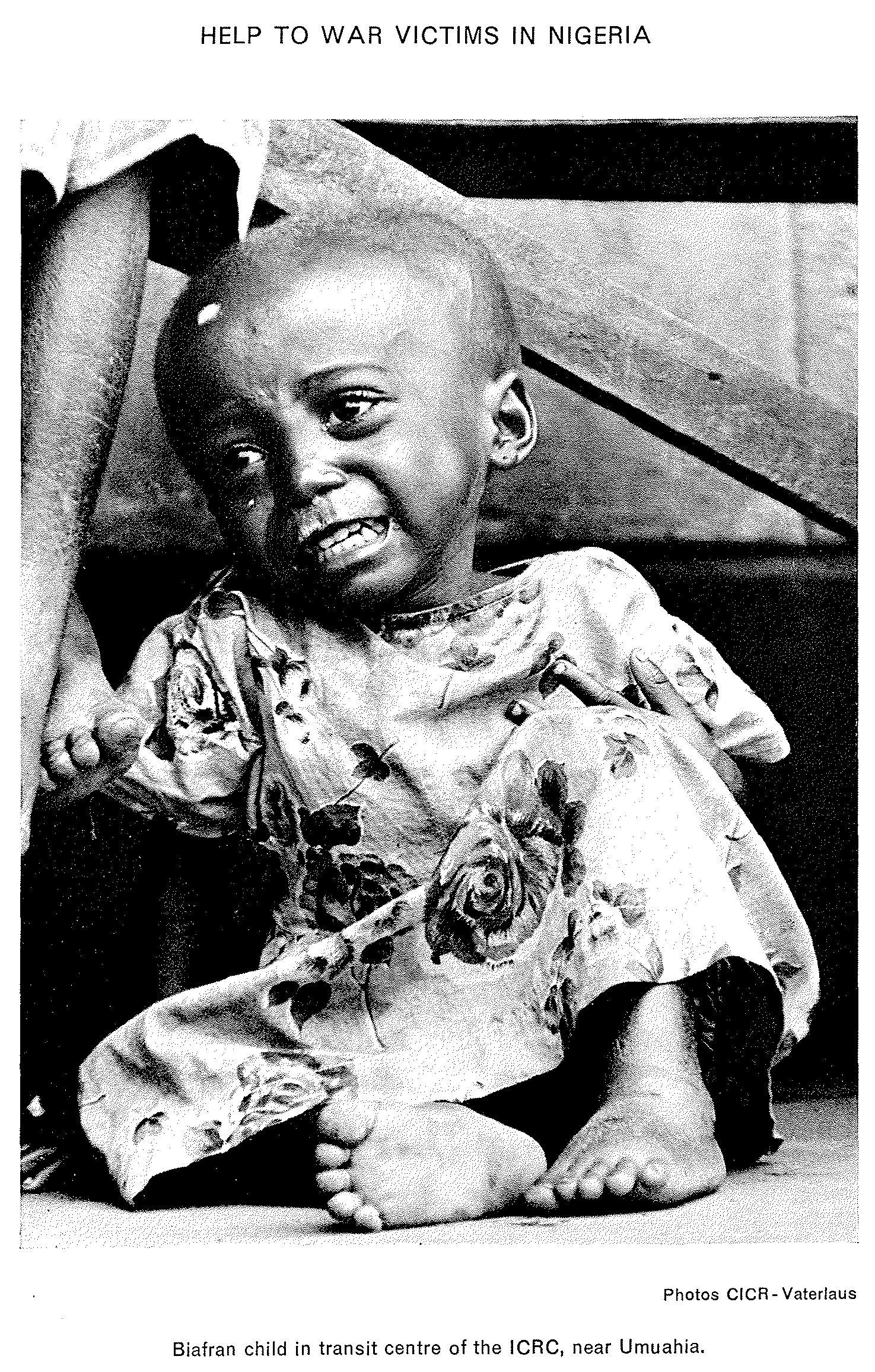
Source: International Review of the Red Cross, no. 91, October 1968, plate after p. 516; PDF page 19. The printed credit for the block is Photos CICR - Vaterlaus. The photographer’s first name, Max Vaterlaus, is established by the ICRC photographic catalogue. This is the complete page: the PDF raster layer was decoded losslessly to PNG without cropping or retouching. ICRC rights; no free licence is stated for this particular scan.
International Review of the Red Cross / Library of Congress ICRC catalogue: photographer’s name, Max VaterlausInternational Review of the Red Cross / Library of CongressFile on WITNESS · 1475 × 231324. Refugees on their way to relief
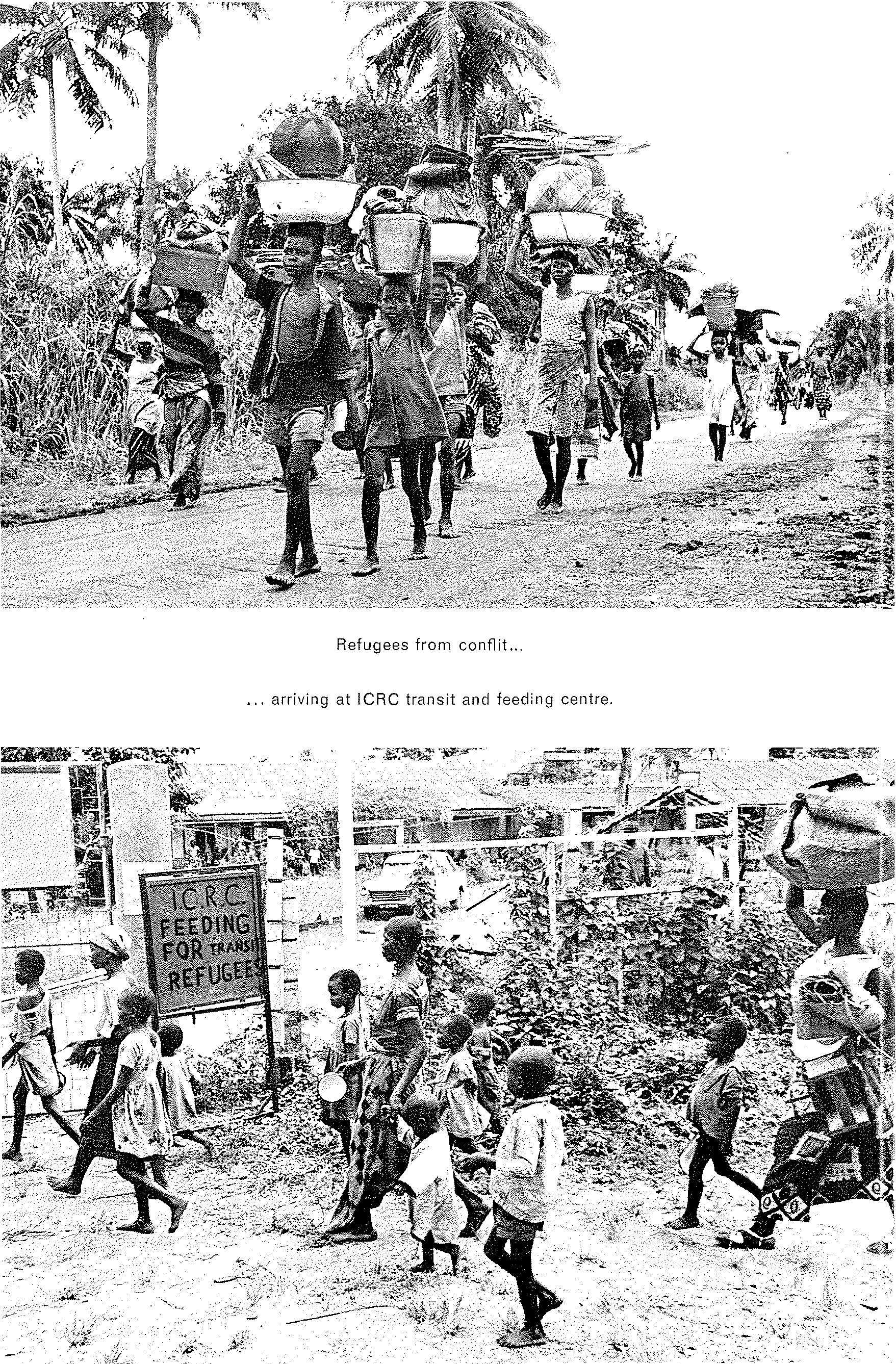
Sources and provenance for frame 24
Source: International Review of the Red Cross, no. 91, October 1968, plate after p. 516; PDF page 20. The printed credit for the block is Photos CICR - Vaterlaus. The photographer’s first name, Max Vaterlaus, is established by the ICRC photographic catalogue. This is the complete page: the PDF raster layer was decoded losslessly to PNG without cropping or retouching. ICRC rights; no free licence is stated for this particular scan.
International Review of the Red Cross / Library of Congress ICRC catalogue: photographer’s name, Max VaterlausInternational Review of the Red Cross / Library of CongressFile on WITNESS · 1757 × 267525. Medical care at Uturu
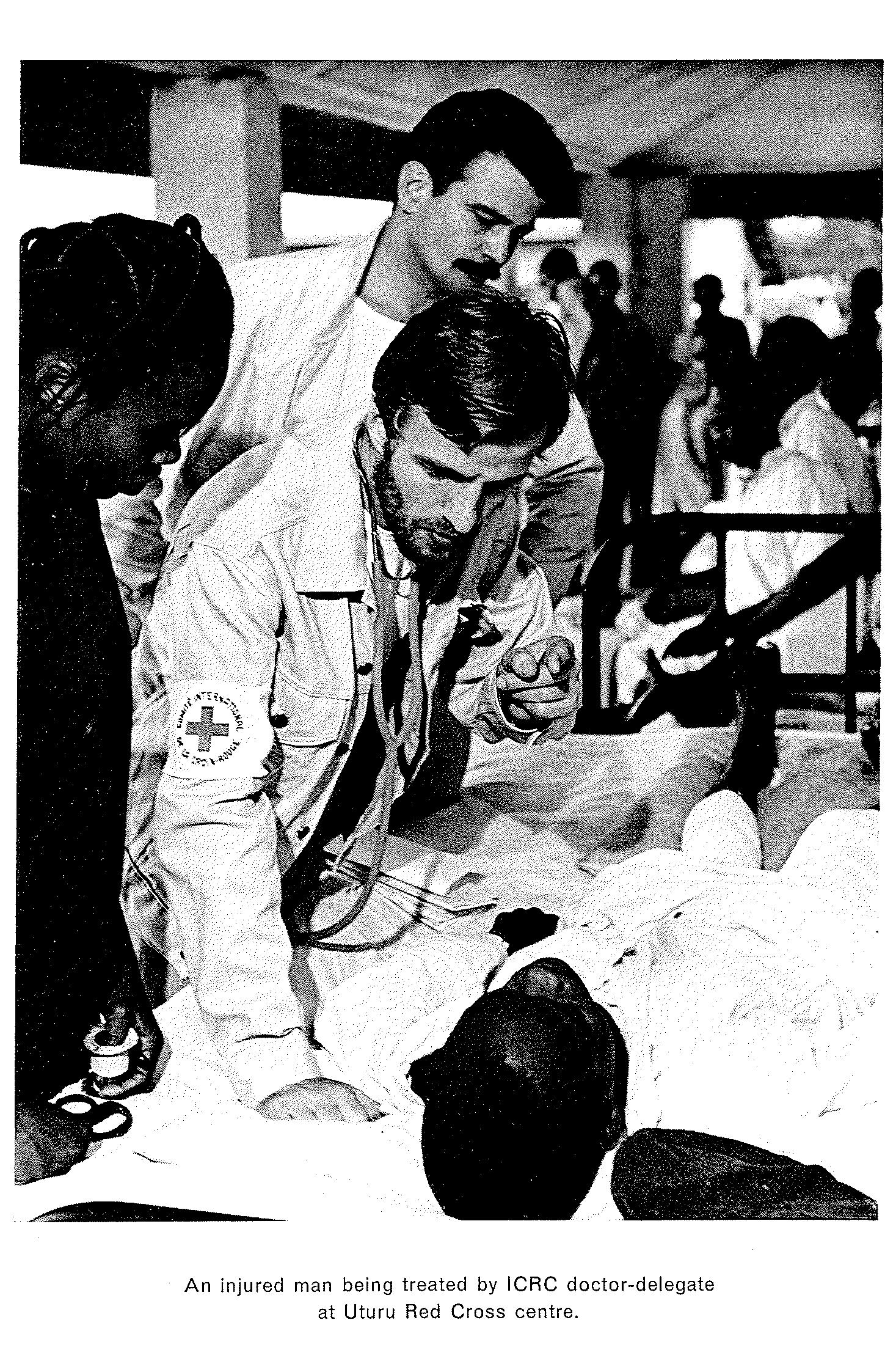
Sources and provenance for frame 25
Source: International Review of the Red Cross, no. 91, October 1968, plate after p. 516; PDF page 21. The printed credit for the block is Photos CICR - Vaterlaus. The photographer’s first name, Max Vaterlaus, is established by the ICRC photographic catalogue. This is the complete page: the PDF raster layer was decoded losslessly to PNG without cropping or retouching. ICRC rights; no free licence is stated for this particular scan.
International Review of the Red Cross / Library of Congress ICRC catalogue: photographer’s name, Max VaterlausInternational Review of the Red Cross / Library of CongressFile on WITNESS · 1467 × 221426. Distributing relief
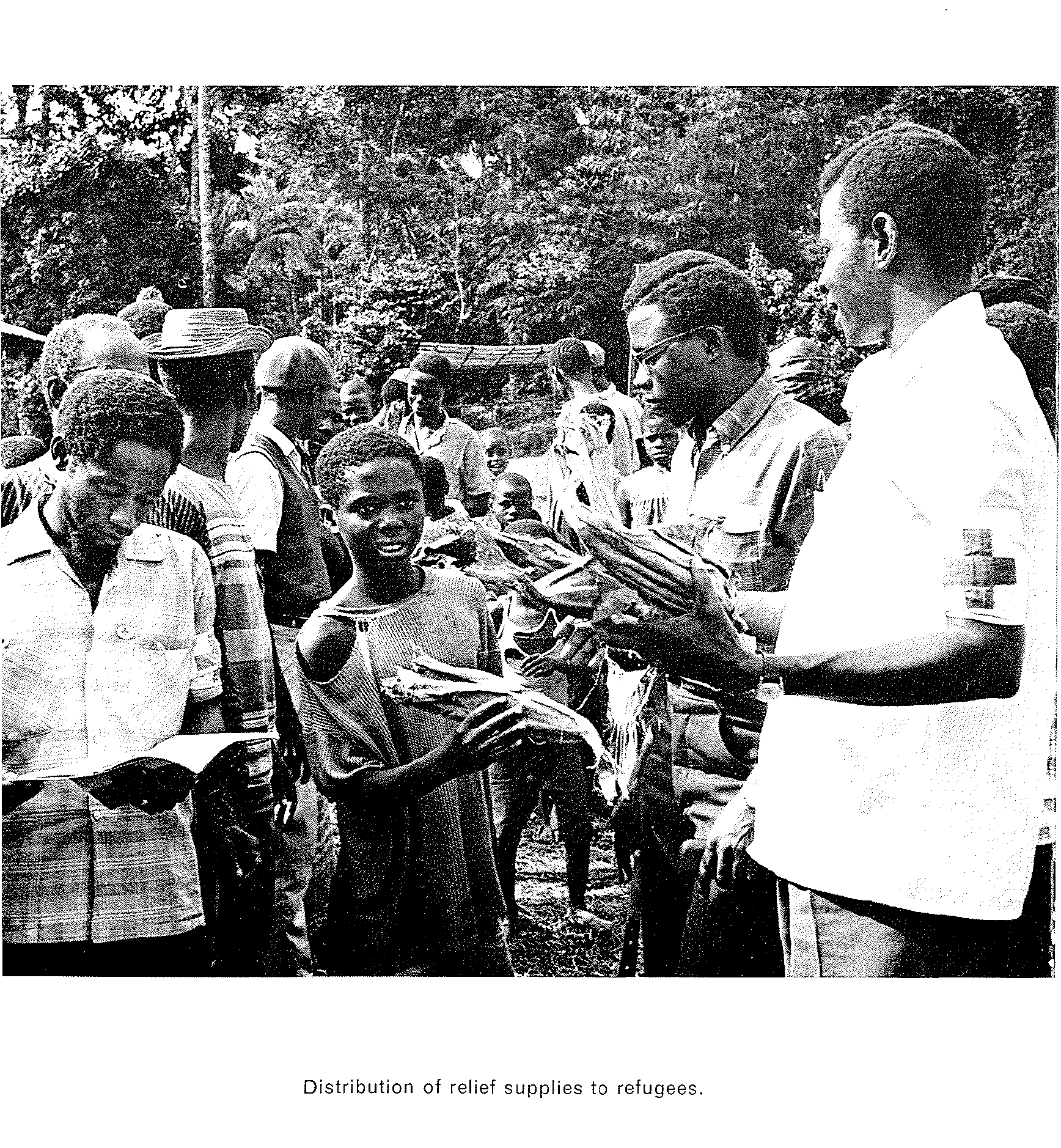
Sources and provenance for frame 26
Source: International Review of the Red Cross, no. 91, October 1968, plate after p. 516; PDF page 22. The printed credit for the block is Photos CICR - Vaterlaus. The photographer’s first name, Max Vaterlaus, is established by the ICRC photographic catalogue. This is the complete page: the PDF raster layer was decoded losslessly to PNG without cropping or retouching. ICRC rights; no free licence is stated for this particular scan.
International Review of the Red Cross / Library of Congress ICRC catalogue: photographer’s name, Max VaterlausInternational Review of the Red Cross / Library of CongressFile on WITNESS · 1736 × 187827. Carrying ammunition

Sources and provenance for frame 27
Photographer: Gilles Caron; date and identification follow the Contact Press Images catalogue “1968: Rock, Rebels, and Rights”. The agency’s public copy is small; its dimensions are given in the file link. It is preserved unchanged. © Gilles Caron; no free licence is stated.
Contact Press ImagesContact Press ImagesFile on WITNESS · 308 × 45028. Marc Goossens

Sources and provenance for frame 28
Photographer: Gilles Caron; date and identification follow the Contact Press Images catalogue “1968: Rock, Rebels, and Rights”. The agency’s public copy is small; its dimensions are given in the file link. It is preserved unchanged. © Gilles Caron; no free licence is stated.
Contact Press ImagesContact Press ImagesFile on WITNESS · 524 × 35029. An airlift for Biafra
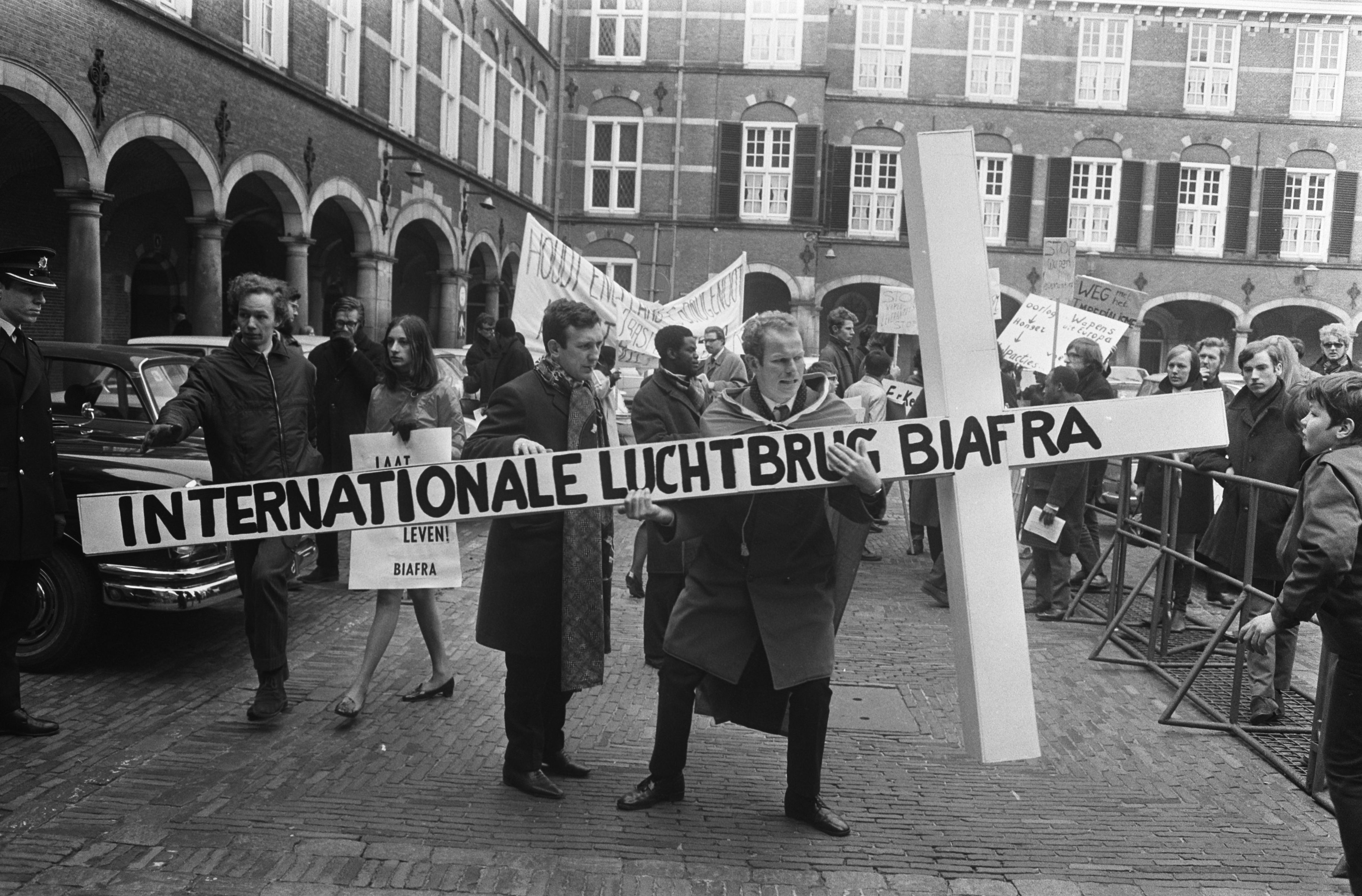
Sources and provenance for frame 29
Eric Koch / Anefo. Nationaal Archief, collection 2.24.01.05, negative 922-1382. The archive confirms the photographer and date and states CC0. The original TIFF was obtained directly from Nationaal Archief and preserved byte-for-byte; the browser-compatible PNG retains the same dimensions and pixels, without cropping, retouching or loss of detail. Original archive TIFF.
Nationaal Archief · 922-1382Nationaal Archief · 922-1382File on WITNESS · 3667 × 241330. A protest in Helsinki
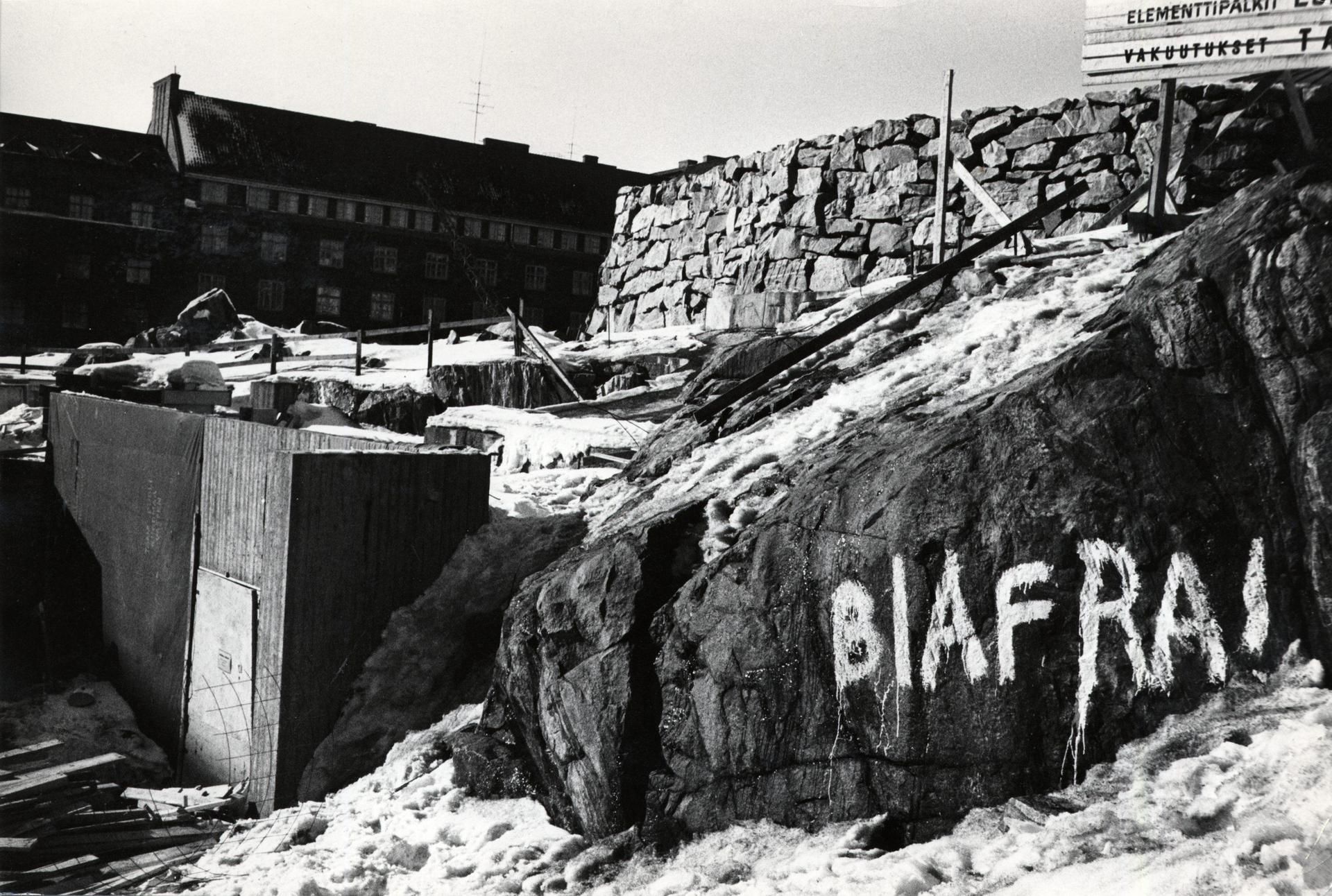
Sources and provenance for frame 30
Hannu Lindroos / Helsingin Sanomat. Publisher-hosted JPEG; photographer, location and month checked against the Wikimedia Commons record. Commons labels the photograph PD-Finland50, a status specific to Finland. Finland’s Institute for the Languages of Finland (Kotus) publishes the same photograph credited to Hannu Lindroos / Museovirasto with a CC BY-NC-ND 4.0 notice. No open licence is claimed for this publisher-hosted file.
Hannu Lindroos / Helsingin Sanomat · Wikimedia Commons Kotus: caption and reuse noticeHannu Lindroos / Helsingin Sanomat · Wikimedia CommonsFile on WITNESS · 1920 × 129231. Marching for relief to Biafra
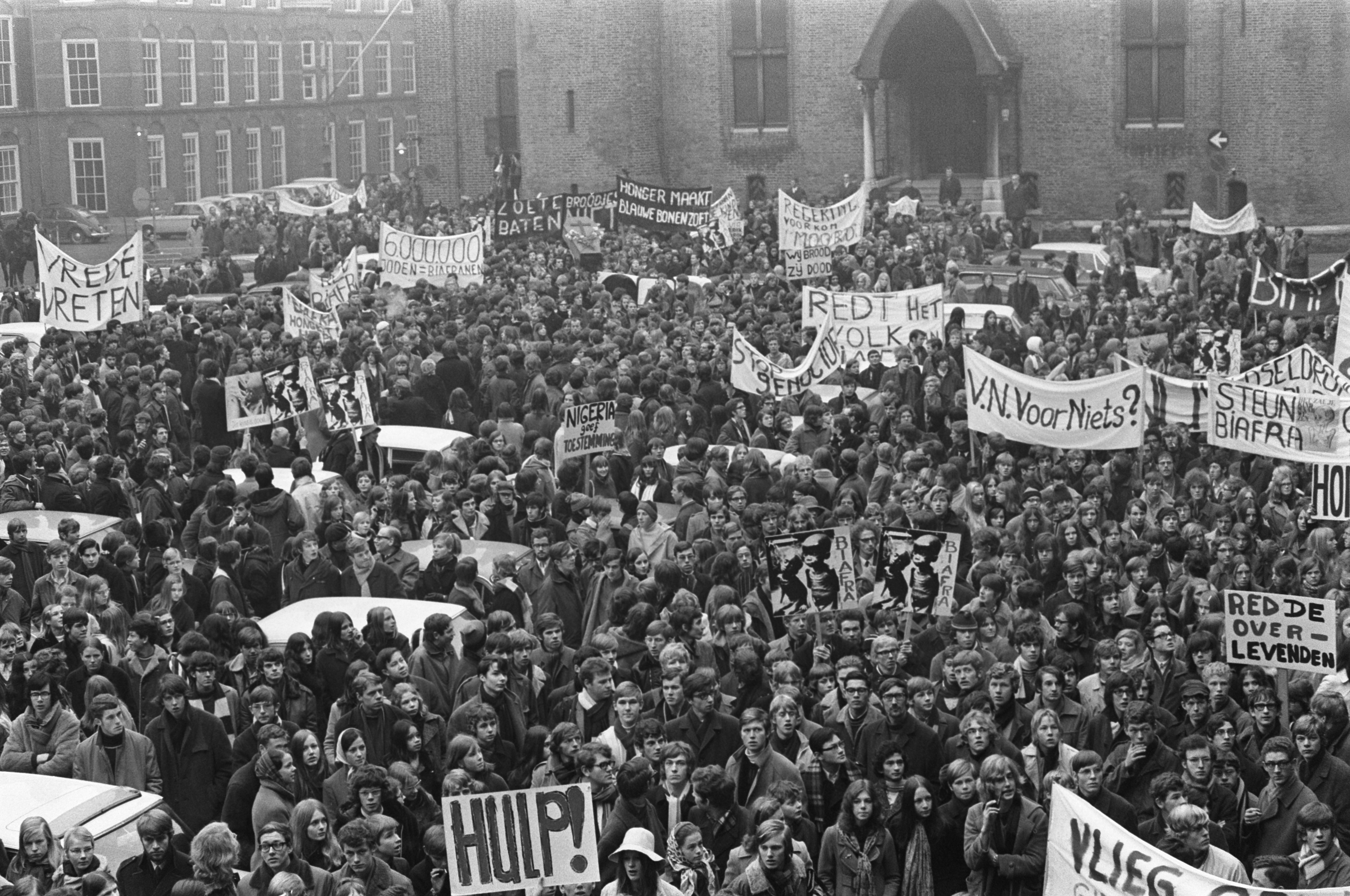
Sources and provenance for frame 31
Joost Evers / Anefo. Nationaal Archief, collection 2.24.01.05, negative 923-1643. The archive dates the photograph to 16 January 1970 and states CC0. The demonstration took place after the announcement ending the war on 15 January. The original TIFF was obtained directly from Nationaal Archief and preserved byte-for-byte; the browser-compatible PNG retains the same dimensions and pixels, without cropping, retouching or loss of detail. Original archive TIFF.
Nationaal Archief · 923-1643Nationaal Archief · 923-1643File on WITNESS · 3702 × 2458