W–031 · Documentary photograph and sources
After the Selection at Birkenau
For many Jews from the towns and villages of Carpathian Ruthenia, the journey led through the Berehove ghetto and ended at Birkenau. In May 1944, Jews from this region, then part of Hungary, were deported to Auschwitz. Trains took them from the ghetto to German-occupied Poland.
1. After the selection
Provenance and sources for frame 1
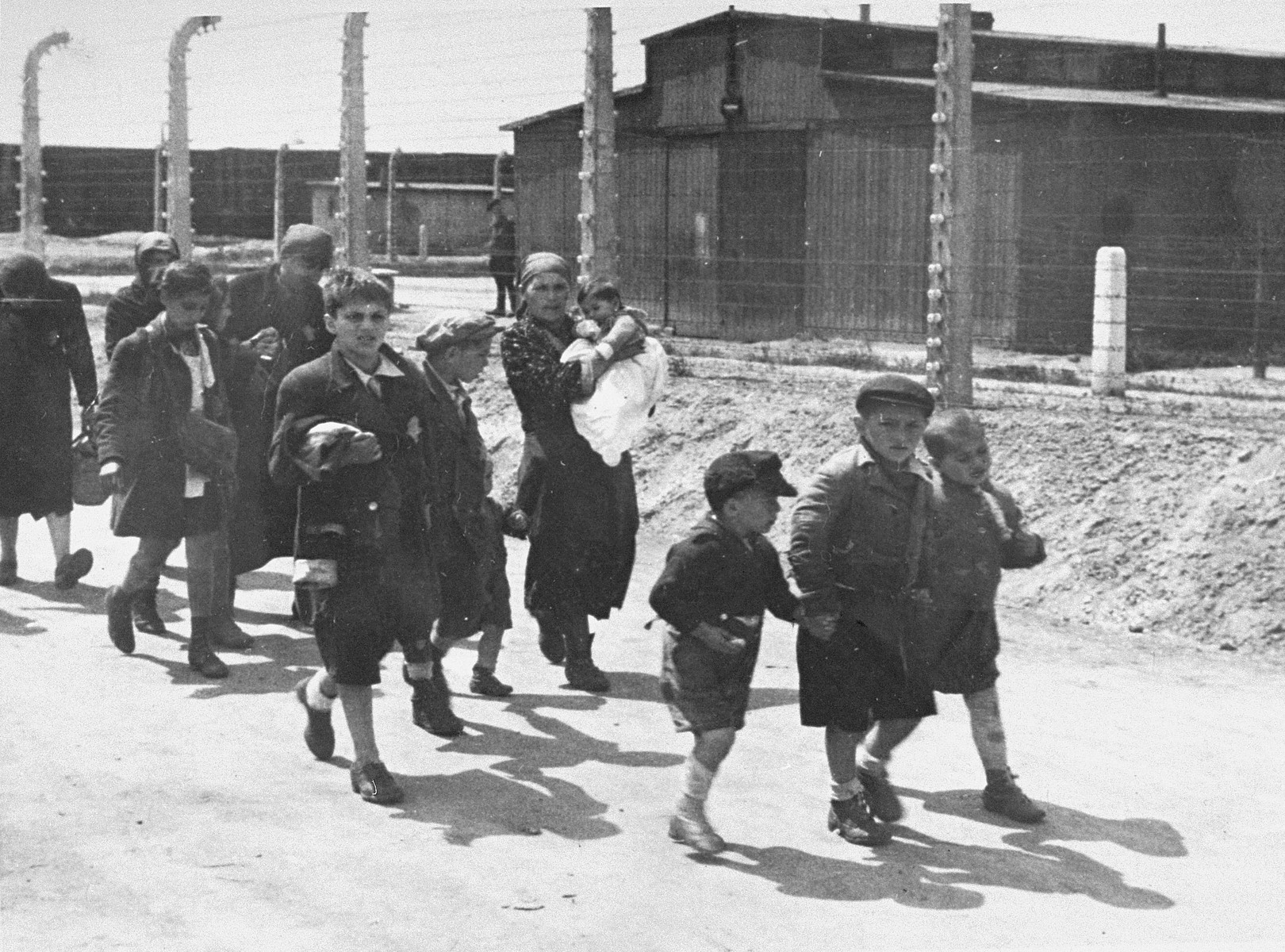
An image from the Auschwitz Album, made in May 1944 at Birkenau. The photographer was either Ernst Hofmann or Bernhard Walter; the catalogue does not identify which man exposed this frame. USHMM photograph 77343, courtesy of Yad Vashem; the Auschwitz-Birkenau State Museum gives reference FA 268/123. Displayed file: 1620 × 1200 pixels. The source record discusses public-domain status; check which jurisdiction it covers. Full image record in Russian.
collections.ushmm.orgwwv.yadvashem.orgencyclopedia.ushmm.orgauschwitz.orgcommons.wikimedia.orgView image fileOn the camp ramp, SS doctors and guards decided who would be sent to forced labour and who would be killed. The first group was registered and assigned to barracks; the others were led to gas chambers under the pretext of disinfection. The women and children in this photograph had already passed through that selection. According to the United States Holocaust Memorial Museum’s caption, they were walking towards the gas chambers. The archive does not name them.
German and Hungarian authorities organised the mass deportation. Between 15 May and 9 July 1944, about 437,000 Jews were taken from Hungary in 147 trains. Approximately 420,000 were sent to Auschwitz-Birkenau. The USHMM estimates that some 330,000 were murdered in the gas chambers soon after arrival.
Staff of the camp photography laboratory recorded the arrival of trains, the selection and the assignment of prisoners. From those exposures came the Auschwitz Album: 193 photographs on fifty-six pages, showing one or more transports from Carpathian Ruthenia. Its intended audience is uncertain. Yad Vashem suggests it may have been prepared as a reference volume for senior officers. The killings themselves do not appear in the pictures.
Lilly Jacob found the album after liberation. She had been deported from Bilke through Berehove and had survived Auschwitz, forced labour and imprisonment at Dora-Mittelbau. In an abandoned SS barrack, she discovered photographs of people arriving at Birkenau. Among them were relatives and acquaintances she would never see again.
Lilly kept the album she had found. In 1980, she donated it to Yad Vashem. The museum calls its pages the only surviving visual record of the path to mass murder at Auschwitz-Birkenau.
2. Digitally enhanced without AI
Provenance and sources for frame 2
File and rights
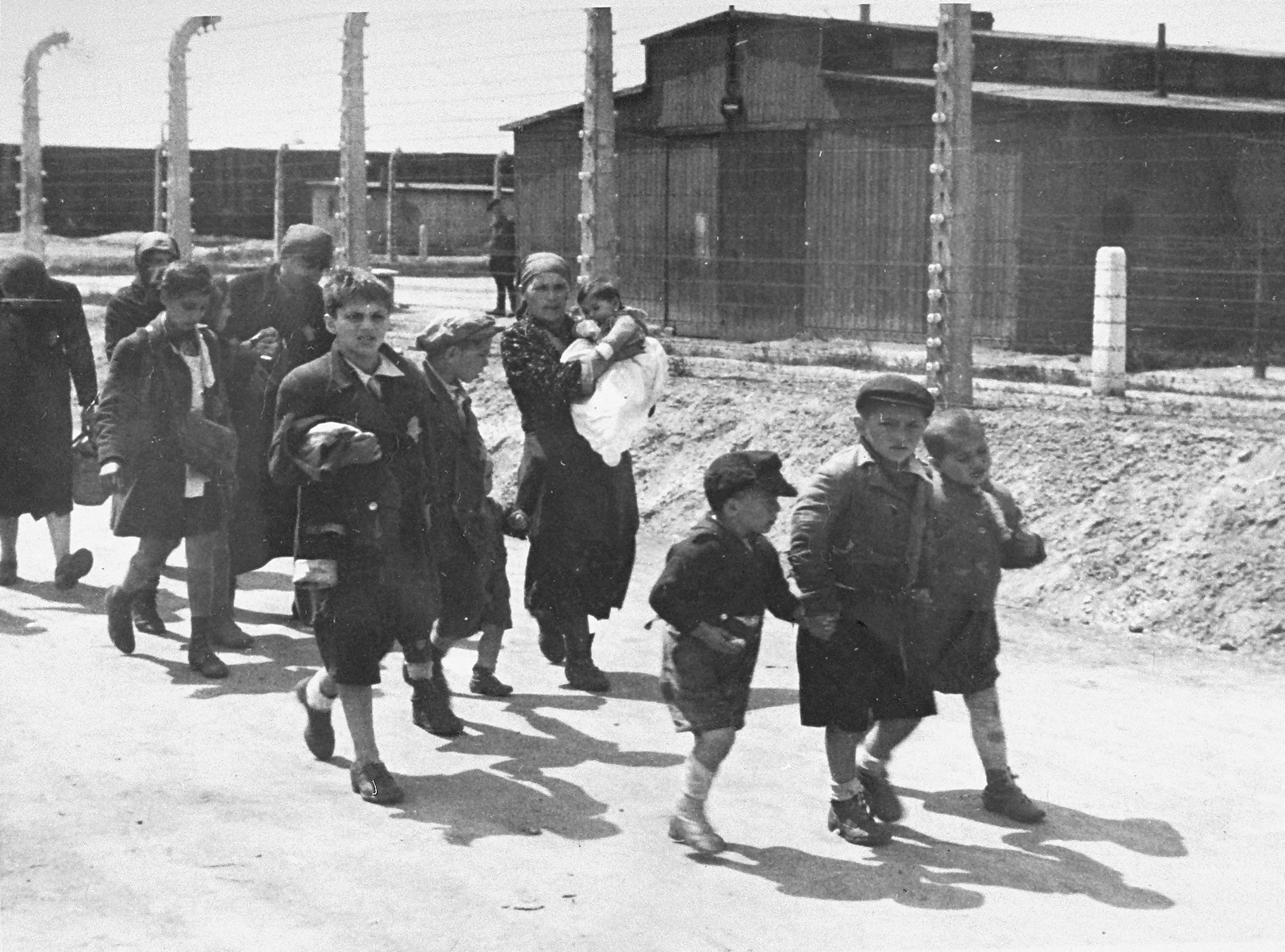
Digitally enhanced without AI. Frame 1 with non-AI tonal adjustment, edge-aware smoothing and light sharpening. The original dimensions and composition were retained; no new details were drawn in. This modern version was supplied by the WITNESS owner in 2026. The 1620 × 1200 PNG is retained without re-encoding. It is a derivative file, not an archival scan. See frame 1 for the original photograph’s authorship, provenance and reuse terms.