Hector Pieterson and the Soweto Uprising
W–073
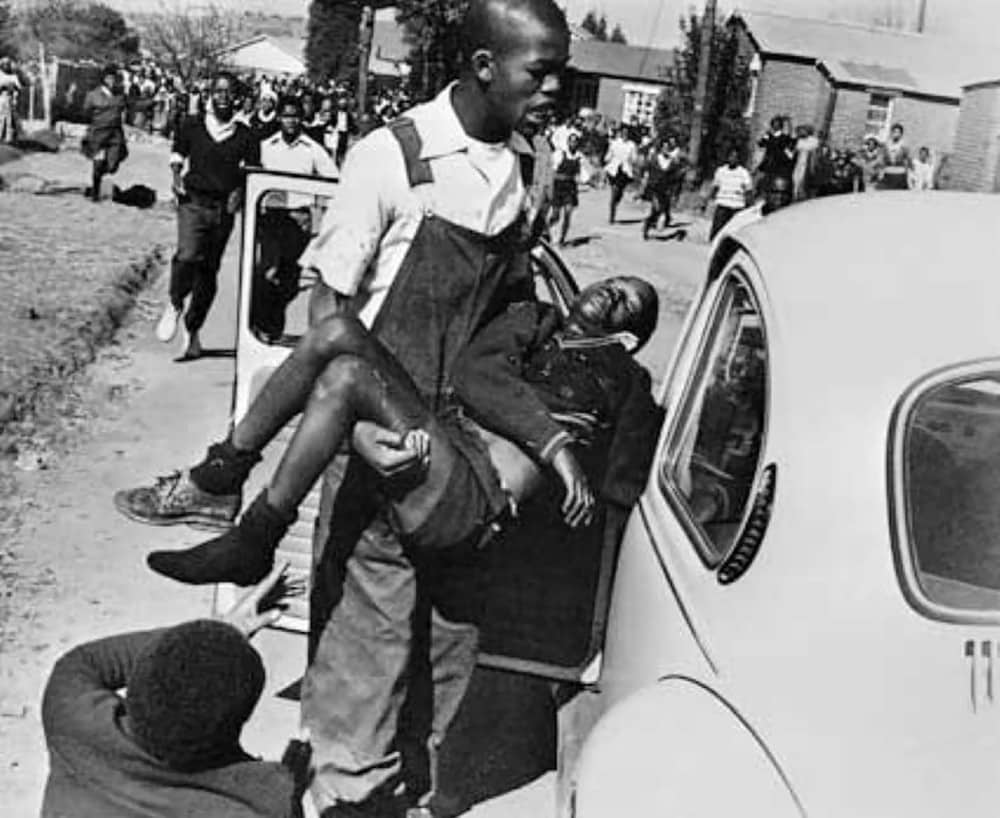
Antoinette Sithole spotted her younger brother Hector among the schoolchildren and told him to go home. A demonstration was under way in Soweto on 16 June 1976. When the shooting began, she took cover. Coming out again, she saw people carrying a child and recognised her brother by his shoe. This was how Antoinette recalled the day before the Truth and Reconciliation Commission twenty years later.
The pupils were protesting against compulsory teaching in Afrikaans for part of their curriculum. Under the new rules, subjects were to be divided between English and Afrikaans. Children had to learn mathematics and other subjects in a language many of them, and their teachers, did not speak well. The language order belonged to the wider system of Bantu Education: the apartheid state separated schools for Black children from those for white children and restricted the opportunities their education could offer.
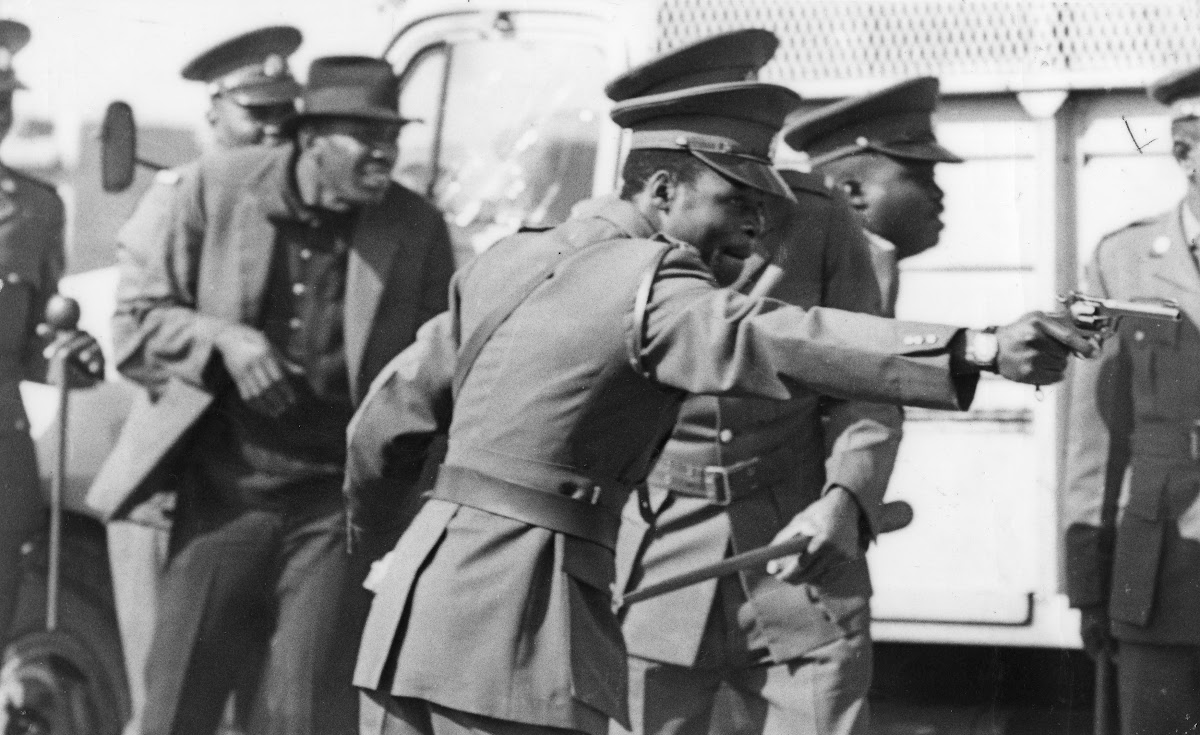
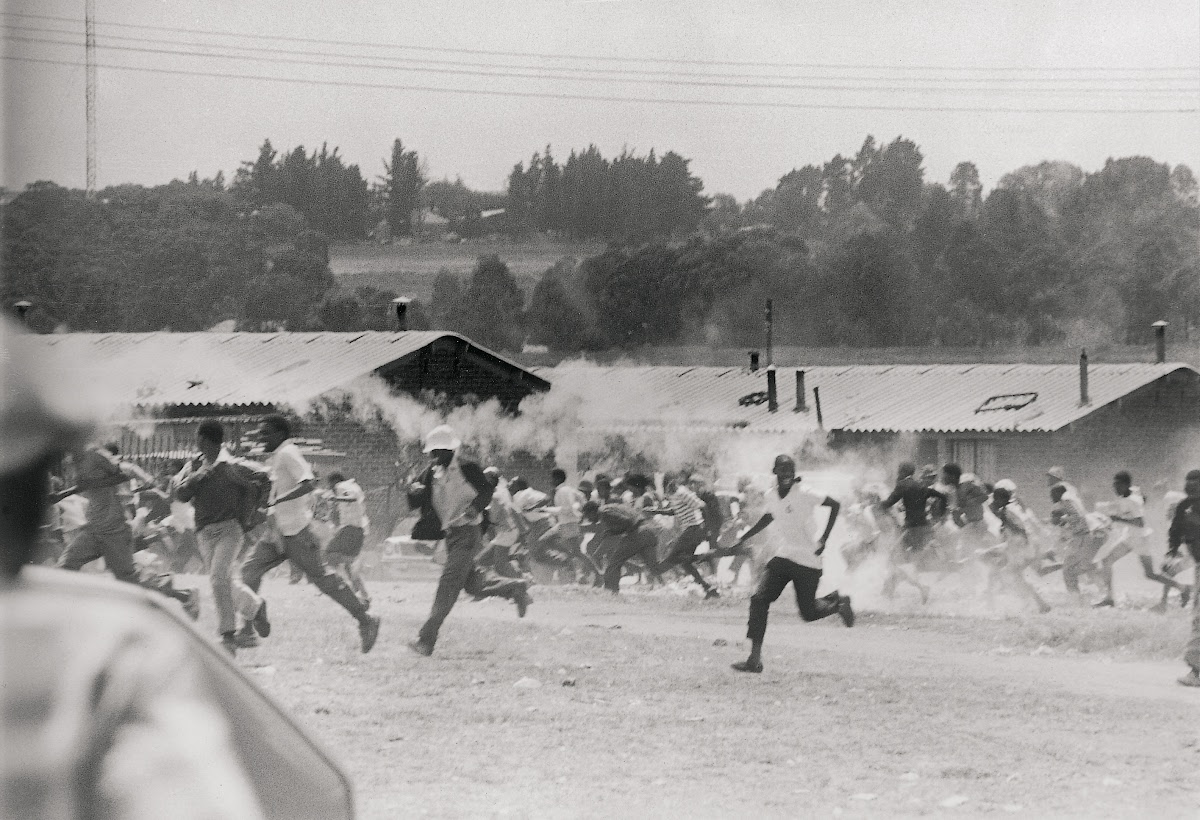
Thousands of pupils were heading for Orlando Stadium to present their demands. Police blocked their route, used tear gas and opened fire. Hector Pieterson was fatally wounded. Mbuyisa Makhubu picked him up and ran, with Antoinette beside him. She had never met Mbuyisa before. They reached a press car, which took Hector to a clinic. A doctor pronounced him dead. Hector was twelve. In her testimony, his sister explained that he would have turned thirteen in August.
Sam Nzima, a photographer for The World, was close to the pupils. He took six frames as Mbuyisa carried Hector, then removed the film, hid it in his sock and handed it to the driver to take back to the newsroom. Nzima described this in a first-person account published in 2006. Police later seized a different roll from his camera, he said.
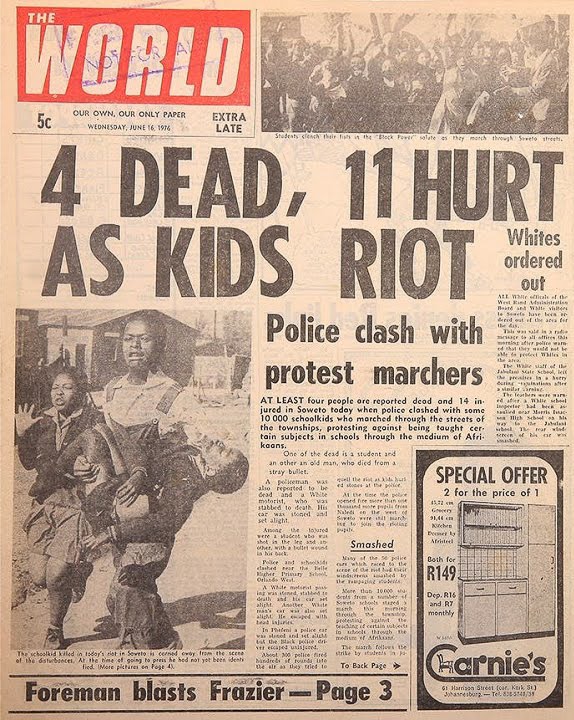
One of Nzima’s frames appeared on the front page of The World’s extra-late edition that same day. Its headline reported four dead and eleven injured: the early figures available as the edition went to press. Another front page in this collection, The Cape Times of 18 June, reported that the unrest had spread beyond Soweto.
Protests, shootings and arrests continued for months. Clashes reached Alexandra on 17 June and later Cape Town and other cities. The photographs include marches, wounded people and a solidarity protest at the University of Cape Town. The TRC’s final report cites the earlier Cillie Commission’s figures of 575 deaths and 2,389 injuries for the period from 16 June 1976 to 28 February 1977. Those totals cover the whole period investigated. The TRC itself found that the Soweto march had remained peaceful until violent police intervention.
After the photograph appeared, police harassed Nzima. He left his job in Johannesburg and returned to his home village of Lillydale. In his later account, he said he opened a shop there, but the harassment continued: he spent a year under house arrest. He never resumed his former work as a newspaper photographer.
Mbuyisa also went into hiding from the police. His mother, Nombulelo Makhubu, told the commission in 1996 that he had left for Botswana and then Nigeria. She received his last letter in June 1978. He wrote that he was ill. Conflicting accounts of his fate later reached the family. At the time of the hearing, his mother still did not know what had happened to him.
In July 1996, Antoinette and Nzima gave evidence at the same TRC hearing. The photographer described another consequence of the image’s fame. It had been reproduced repeatedly without payment to him, often without his name. Even the memorial stone bearing the photograph lacked his credit. Nzima only recovered copyright in the late 1990s.
The Hector Pieterson Museum opened in Soweto on 16 June 2002. Antoinette began taking visitors through the museum and the streets where the demonstration had passed. The later portrait in this collection shows her recounting the events in May 2012. A Johannesburg municipal report from that year also records a tour she gave librarians visiting from Cape Town.
Nzima received the Order of Ikhamanga in Bronze in 2011. He died on 12 May 2018. Mbuyisa’s fate remains unresolved. In June 2026, at the uprising’s fiftieth anniversary, the foundation led by former student protester Seth Mazibuko again called for answers about what had happened to him.
Photographs and documents
1. Hector, Mbuyisa and Antoinette
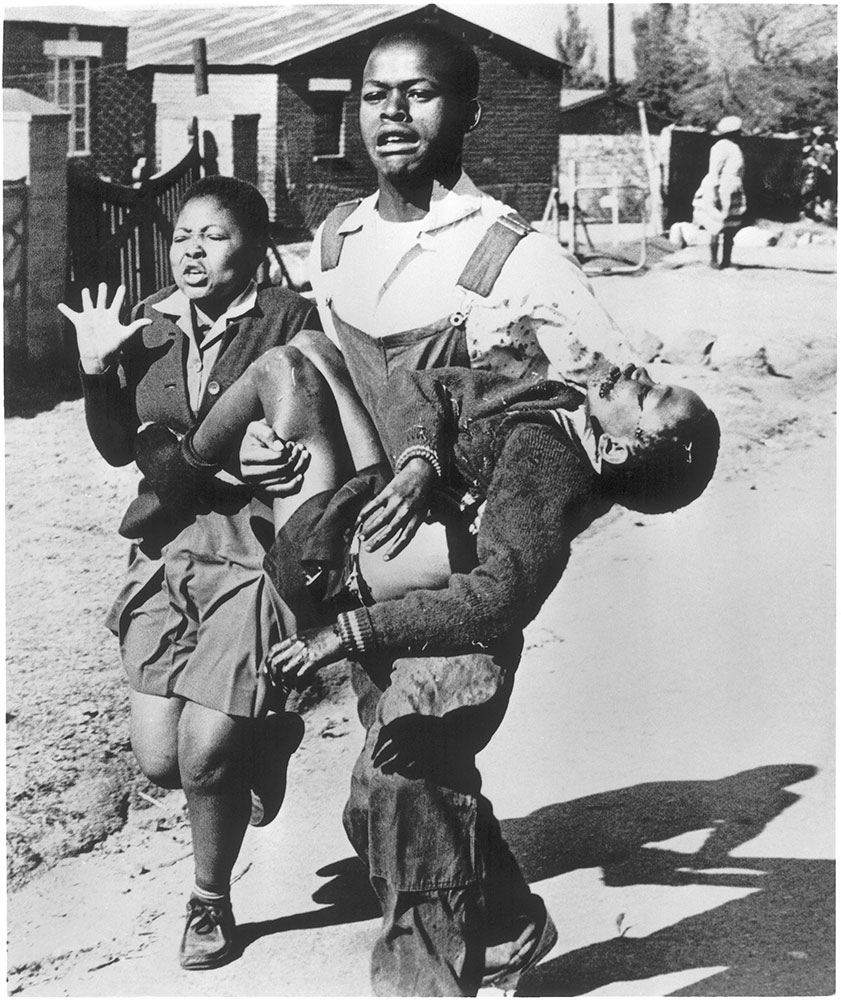
Sources and provenance for frame 1
Photographer: Sam Nzima. The black-and-white photograph published by TIME as the basis for the modern colour version at the end of this collection. Identities and date are supported by TRC testimony; this is a different exposure from the following PLP image. The source record does not state a free licence.
The public 841 × 1000 px file is preserved byte-for-byte; a WebP preview is generated separately. WITNESS has not cropped or colourised the image.
Source image fileSam Nzima / TIMEFile on WITNESS · 841 × 10002. Hector, Mbuyisa and Antoinette
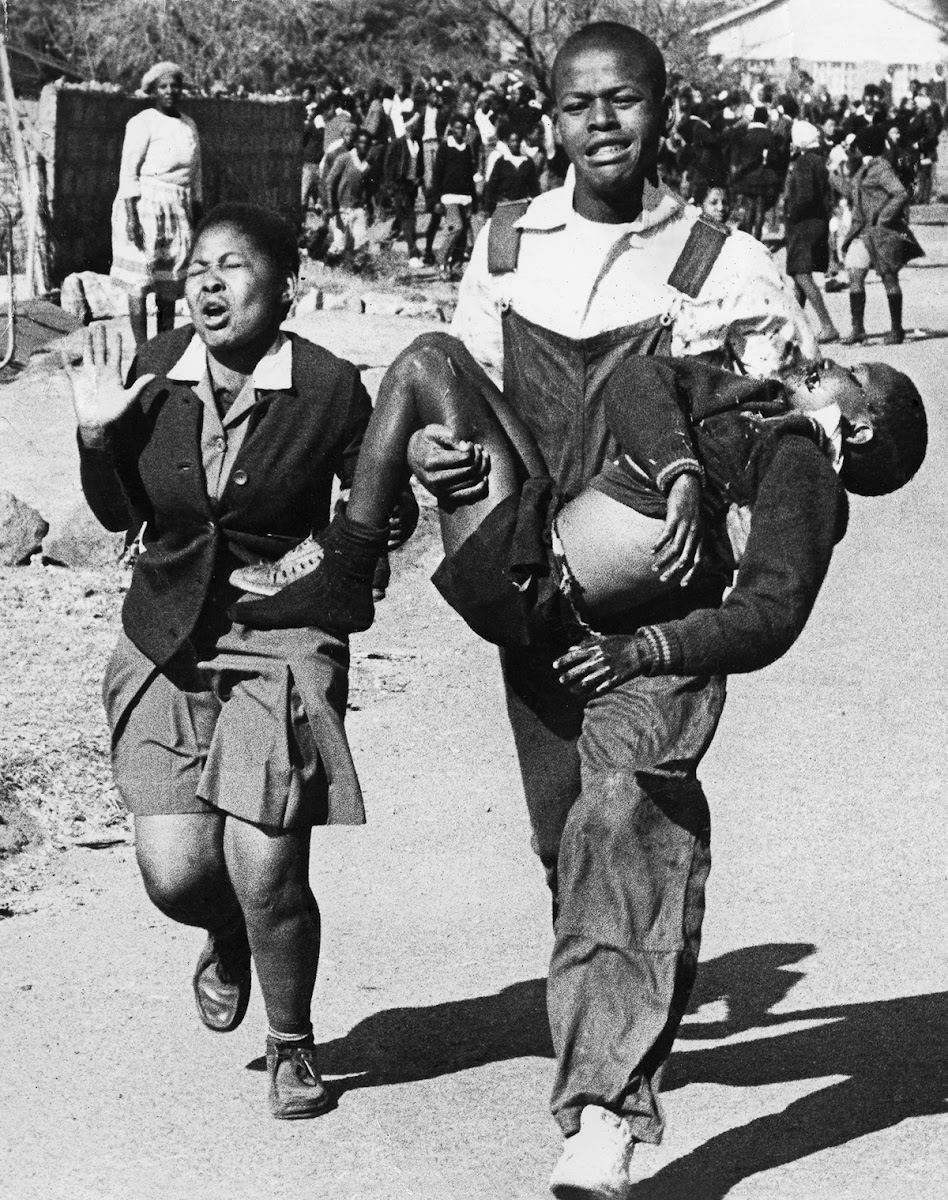
Sources and provenance for frame 2
Photographer: Sam Nzima. Date and identities are supported by the PLP exhibition and TRC testimony from Antoinette Sithole and Sam Nzima. This is one frame from the sequence, not a complete contact sheet. The source record does not state a free licence.
The public 948 × 1200 px file is preserved byte-for-byte; a WebP preview is generated separately. WITNESS has not cropped or colourised the image. The catalogue lists a larger image, but the server delivered this size.
Source image filePhotography Legacy Project / Google Arts & CultureFile on WITNESS · 948 × 12003. Against teaching in Afrikaans
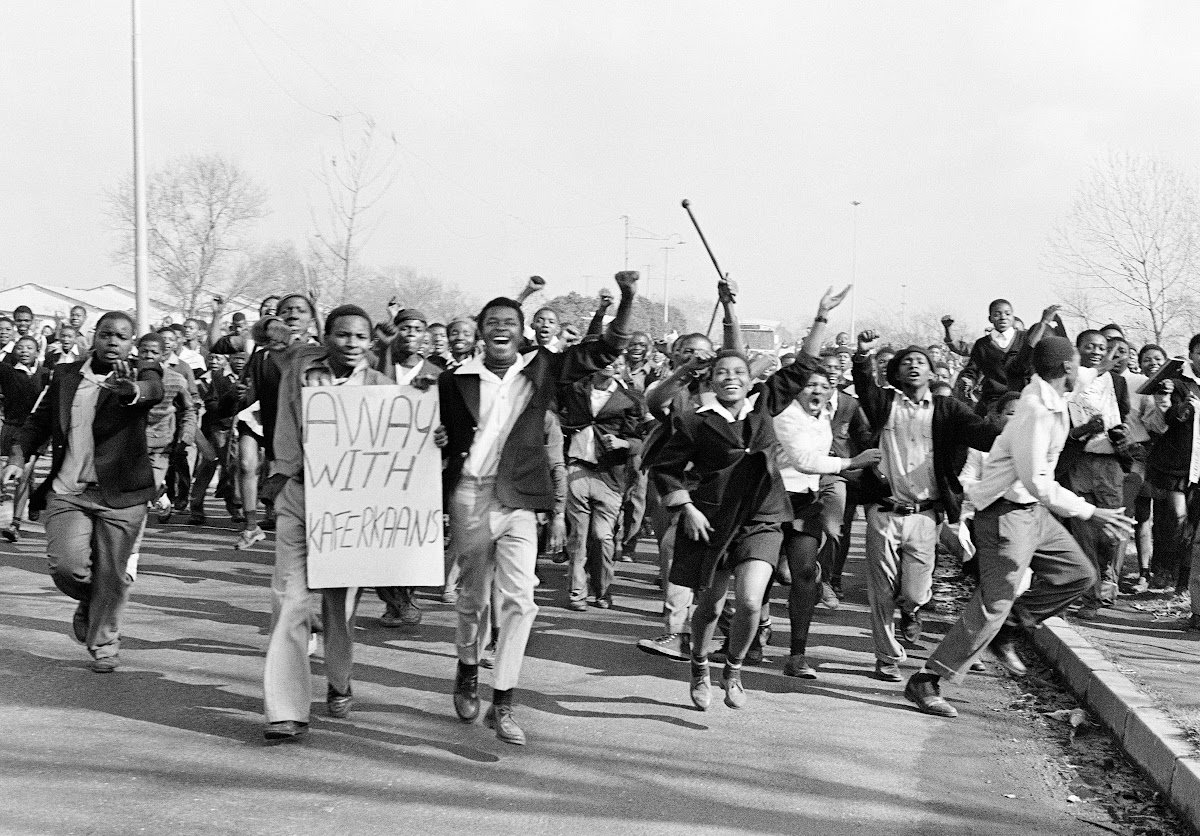
Sources and provenance for frame 3
Photographer: Peter Magubane. The source record does not state a free licence.
The public 1200 × 836 px file is preserved byte-for-byte; a WebP preview is generated separately. WITNESS has not cropped or colourised the image. The catalogue lists a larger image, but the server delivered this size.
Source image filePhotography Legacy Project / Google Arts & CultureFile on WITNESS · 1200 × 8364. March towards Orlando Stadium
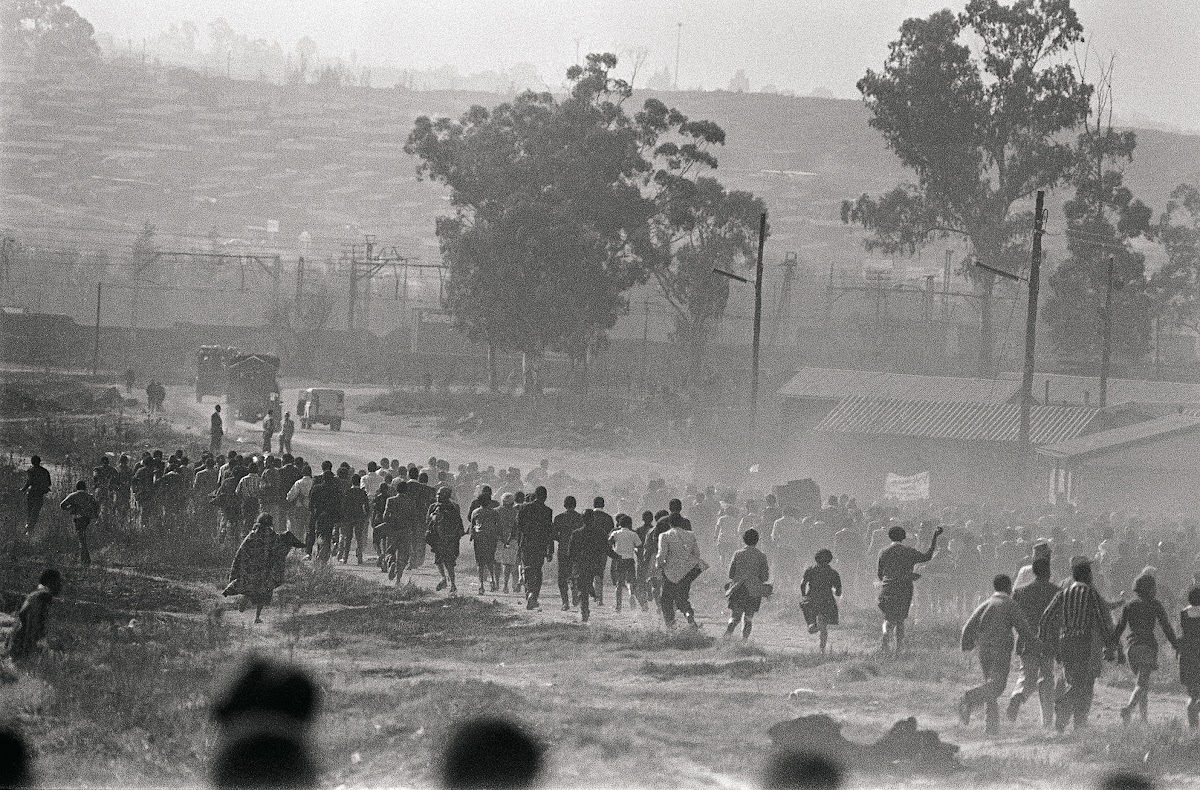
Sources and provenance for frame 4
Photographer: Alf Kumalo. The source record does not state a free licence.
The public 1200 × 790 px file is preserved byte-for-byte; a WebP preview is generated separately. WITNESS has not cropped or colourised the image. The catalogue lists a larger image, but the server delivered this size.
Source image filePhotography Legacy Project / Google Arts & CultureFile on WITNESS · 1200 × 7905. Police open fire
Sources and provenance for frame 5
Photographer: Sam Nzima. The source record does not state a free licence.
The public 1200 × 735 px file is preserved byte-for-byte; a WebP preview is generated separately. WITNESS has not cropped or colourised the image. The catalogue lists a larger image, but the server delivered this size.
Source image filePhotography Legacy Project / Google Arts & CultureFile on WITNESS · 1200 × 7356. Beside the police van

Sources and provenance for frame 6
Photographer: Jan Harman. PLP titles this image “Students confront police”. The caption does not identify the individuals or a date within 1976. The source record does not state a free licence.
The public 1200 × 900 px file is preserved byte-for-byte; a WebP preview is generated separately. WITNESS has not cropped or colourised the image. The catalogue lists a larger image, but the server delivered this size.
Source image filePhotography Legacy Project / Google Arts & CultureFile on WITNESS · 1200 × 9007. At the press car
Sources and provenance for frame 7
Photographer: Sam Nzima. Copy from the War Museum’s Youth Day 2021 exhibition, which cites Daily Maverick. Nzima and Antoinette described Hector being taken in a press car in their TRC testimony. The museum page’s inaccurate age and single-day death toll are not adopted here. The source record does not state a free licence.
The public 1000 × 818 px file is preserved byte-for-byte; a WebP preview is generated separately. WITNESS has not cropped or colourised the image.
Source image fileWar Museum / Daily MaverickFile on WITNESS · 1000 × 8188. The World, 16 June
Sources and provenance for frame 8
Newspaper front page; The World; principal photograph by Sam Nzima; reproduction maker uncredited. PLP presents this page as part of a scrapbook concerning the 1976 unrest. Its date is legible on the page; the casualty figures reflect the newspaper’s information when that edition appeared. The source record does not state a free licence.
The public 574 × 720 px file is preserved byte-for-byte; a WebP preview is generated separately. WITNESS has not cropped or colourised the image.
Source image filePhotography Legacy Project / Google Arts & CultureFile on WITNESS · 574 × 7209. Tear gas at Mzimhlope
Sources and provenance for frame 9
Photographer: Alf Kumalo. The source record does not state a free licence.
The public 1200 × 820 px file is preserved byte-for-byte; a WebP preview is generated separately. WITNESS has not cropped or colourised the image. The catalogue lists a larger image, but the server delivered this size.
Source image filePhotography Legacy Project / Google Arts & CultureFile on WITNESS · 1200 × 82010. Arrest in Soweto

Sources and provenance for frame 10
Photographer: Danie Coetzer / Bussan collection. The source record does not state a free licence.
The public 840 × 1200 px file is preserved byte-for-byte; a WebP preview is generated separately. WITNESS has not cropped or colourised the image. The catalogue lists a larger image, but the server delivered this size.
Source image filePhotography Legacy Project / Google Arts & CultureFile on WITNESS · 840 × 120011. Beside a body
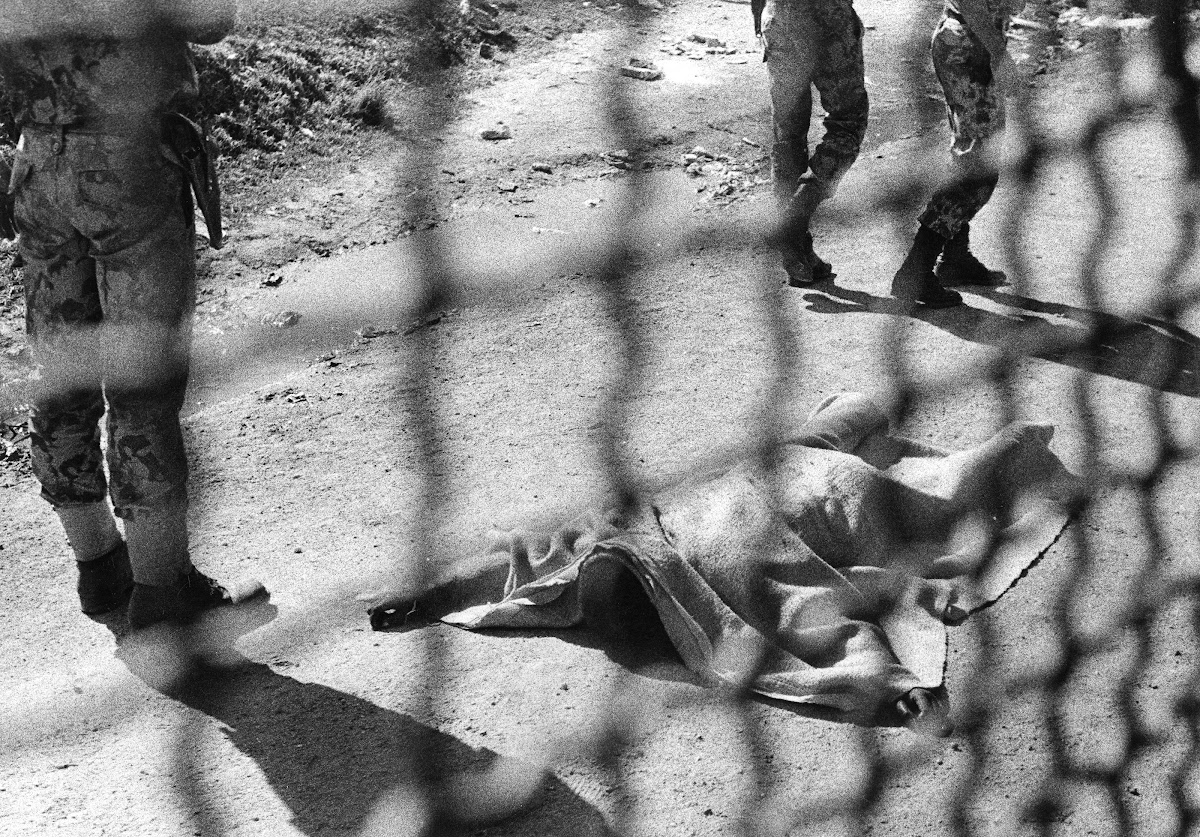
Sources and provenance for frame 11
Photographer: Danie Coetzer / Bussan collection. The catalogue does not identify this person as Hector Pieterson. No name or exact date is supplied. The source record does not state a free licence.
The public 1200 × 837 px file is preserved byte-for-byte; a WebP preview is generated separately. WITNESS has not cropped or colourised the image. The catalogue lists a larger image, but the server delivered this size.
Source image filePhotography Legacy Project / Google Arts & CultureFile on WITNESS · 1200 × 83712. Bodies near Mzimhlope
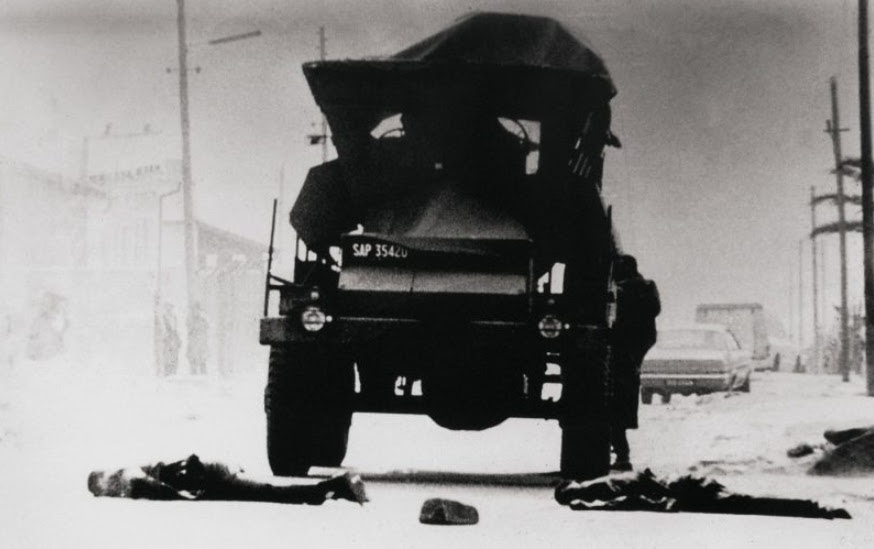
Sources and provenance for frame 12
Photographer: Alf Kumalo. The available copy has a limited resolution of 874 × 549 px. The record does not establish the exact day or the identities of those killed. The source record does not state a free licence.
The public 874 × 549 px file is preserved byte-for-byte; a WebP preview is generated separately. WITNESS has not cropped or colourised the image.
Source image filePhotography Legacy Project / Google Arts & CultureFile on WITNESS · 874 × 54913. Truck at Moroka police station
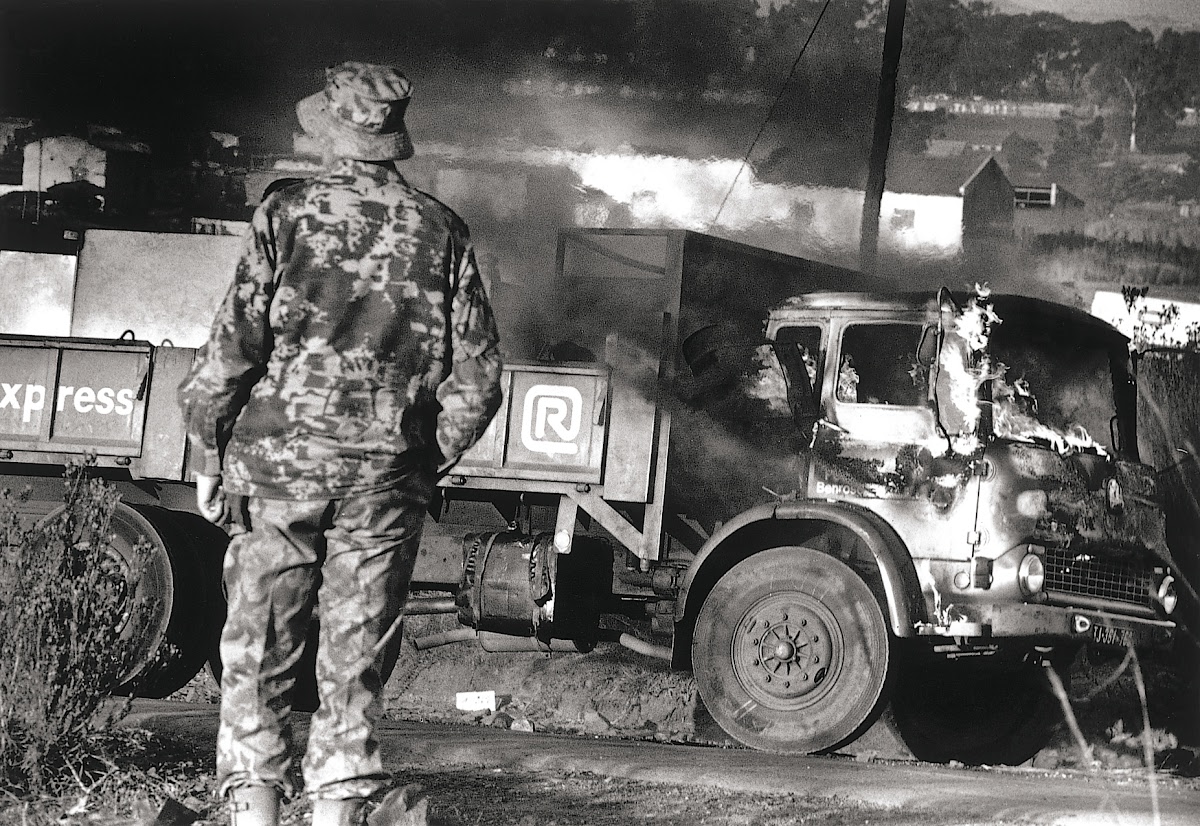
Sources and provenance for frame 13
Photographer: Alf Kumalo. The source record does not state a free licence.
The public 1200 × 826 px file is preserved byte-for-byte; a WebP preview is generated separately. WITNESS has not cropped or colourised the image. The catalogue lists a larger image, but the server delivered this size.
Source image filePhotography Legacy Project / Google Arts & CultureFile on WITNESS · 1200 × 82614. Alexandra, 17 June
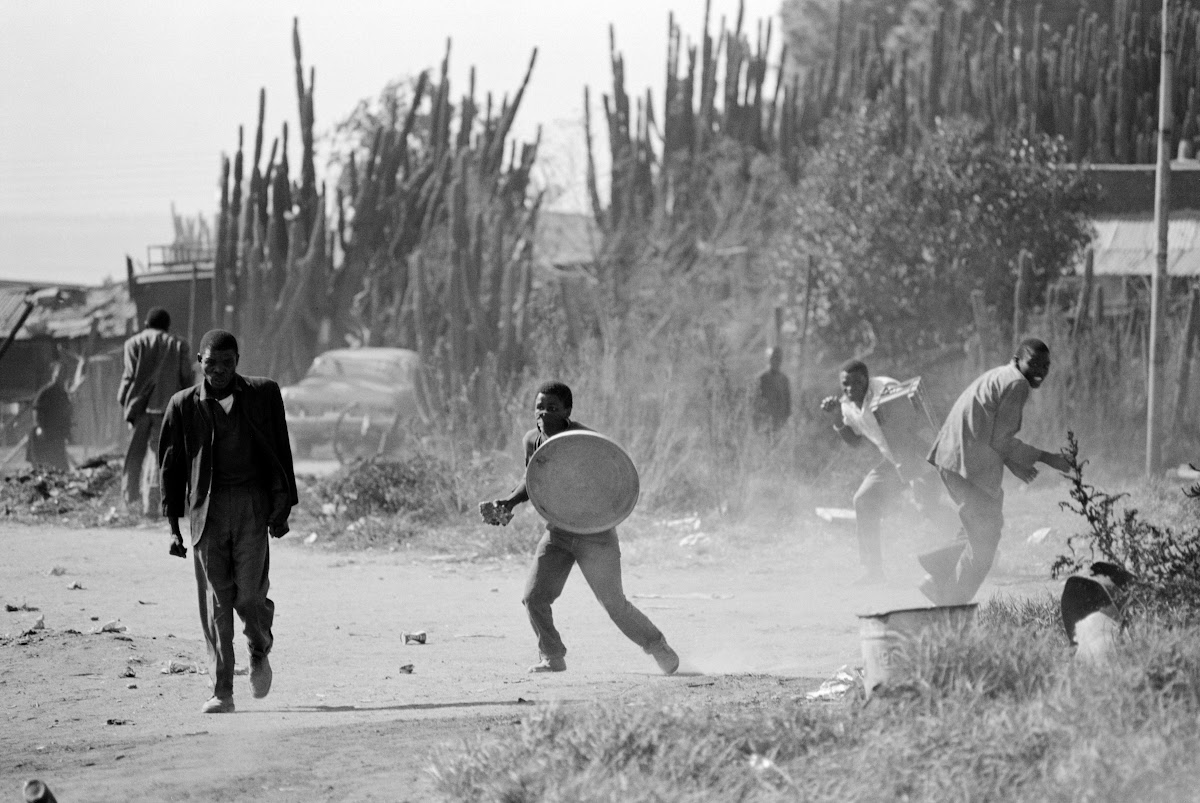
Sources and provenance for frame 14
Photographer: Peter Magubane. The source record does not state a free licence.
The public 1200 × 803 px file is preserved byte-for-byte; a WebP preview is generated separately. WITNESS has not cropped or colourised the image. The catalogue lists a larger image, but the server delivered this size.
Source image filePhotography Legacy Project / Google Arts & CultureFile on WITNESS · 1200 × 80315. Wounded in Alexandra
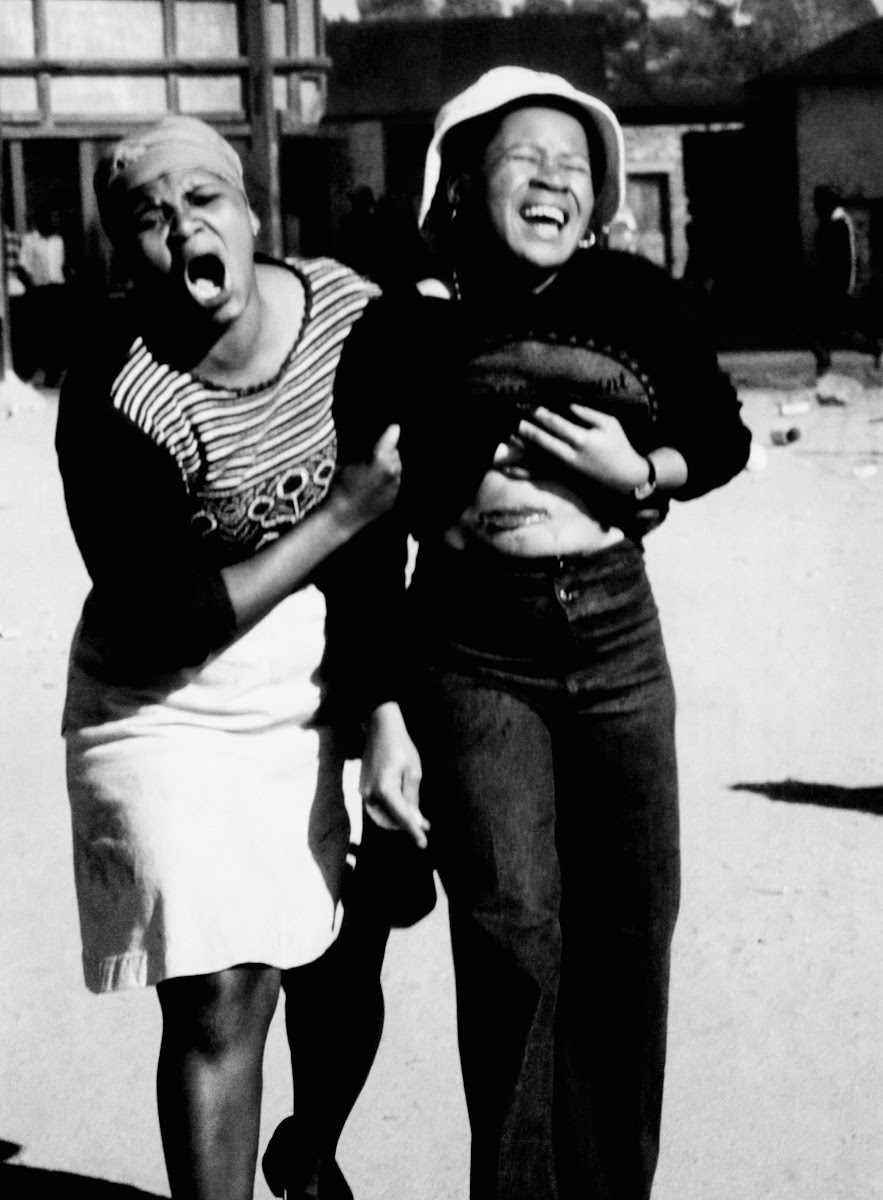
Sources and provenance for frame 15
Photographer: Peter Magubane. The nature and cause of the wound come from the archival caption; the photograph alone cannot establish them. The source record does not state a free licence.
The public 883 × 1200 px file is preserved byte-for-byte; a WebP preview is generated separately. WITNESS has not cropped or colourised the image. The catalogue lists a larger image, but the server delivered this size.
Source image filePhotography Legacy Project / Google Arts & CultureFile on WITNESS · 883 × 120016. A tearful face
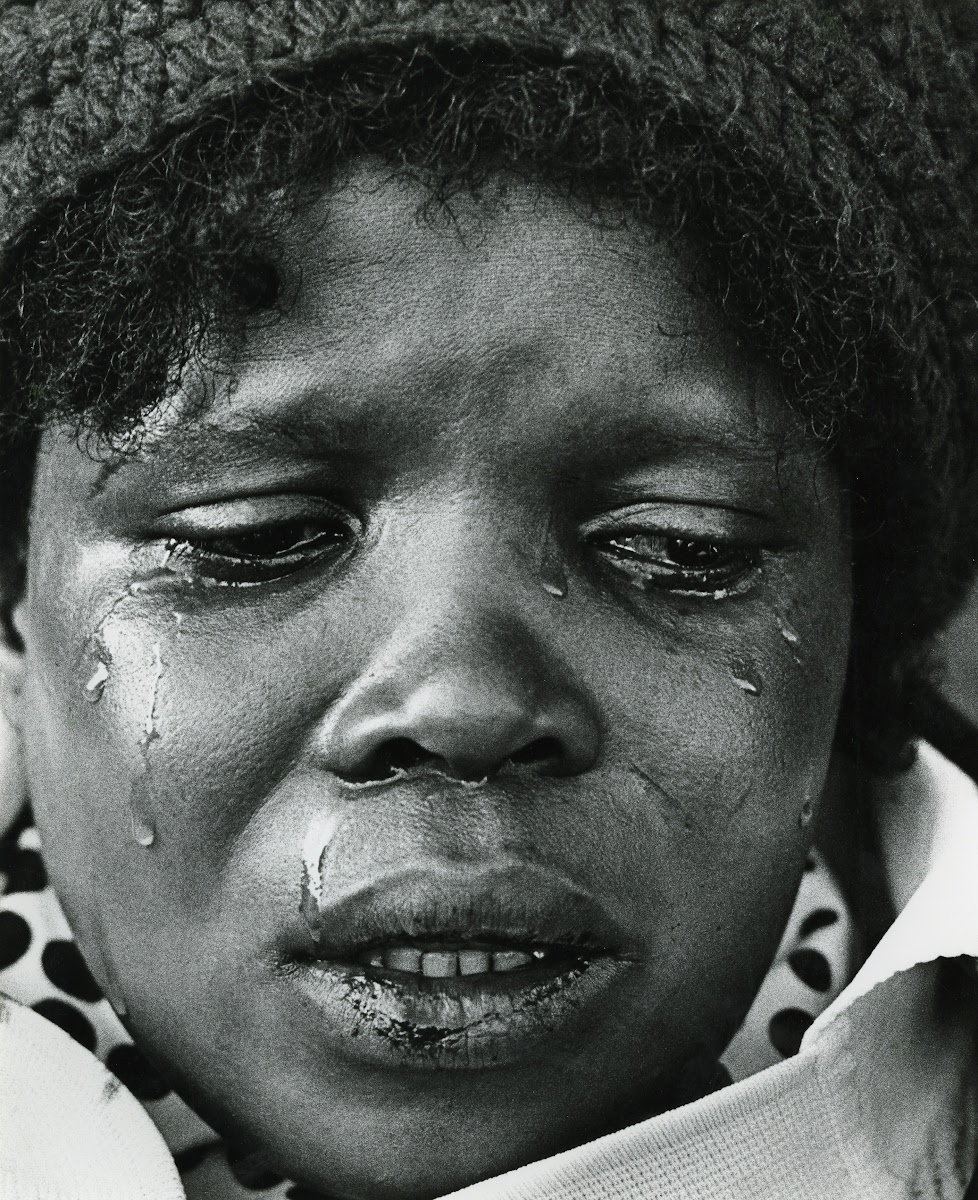
Sources and provenance for frame 16
Photographer: Peter Magubane. The image has not been connected to the funeral of a particular person. The source record does not state a free licence.
The public 978 × 1200 px file is preserved byte-for-byte; a WebP preview is generated separately. WITNESS has not cropped or colourised the image. The catalogue lists a larger image, but the server delivered this size.
Source image filePhotography Legacy Project / Google Arts & CultureFile on WITNESS · 978 × 120017. A wall in Dube

Sources and provenance for frame 17
Photographer: Peter Magubane. The people are unnamed; their relationship is not established. The source record does not state a free licence.
The public 1200 × 790 px file is preserved byte-for-byte; a WebP preview is generated separately. WITNESS has not cropped or colourised the image. The catalogue lists a larger image, but the server delivered this size.
Source image filePhotography Legacy Project / Google Arts & CultureFile on WITNESS · 1200 × 79018. Pupils in Langa
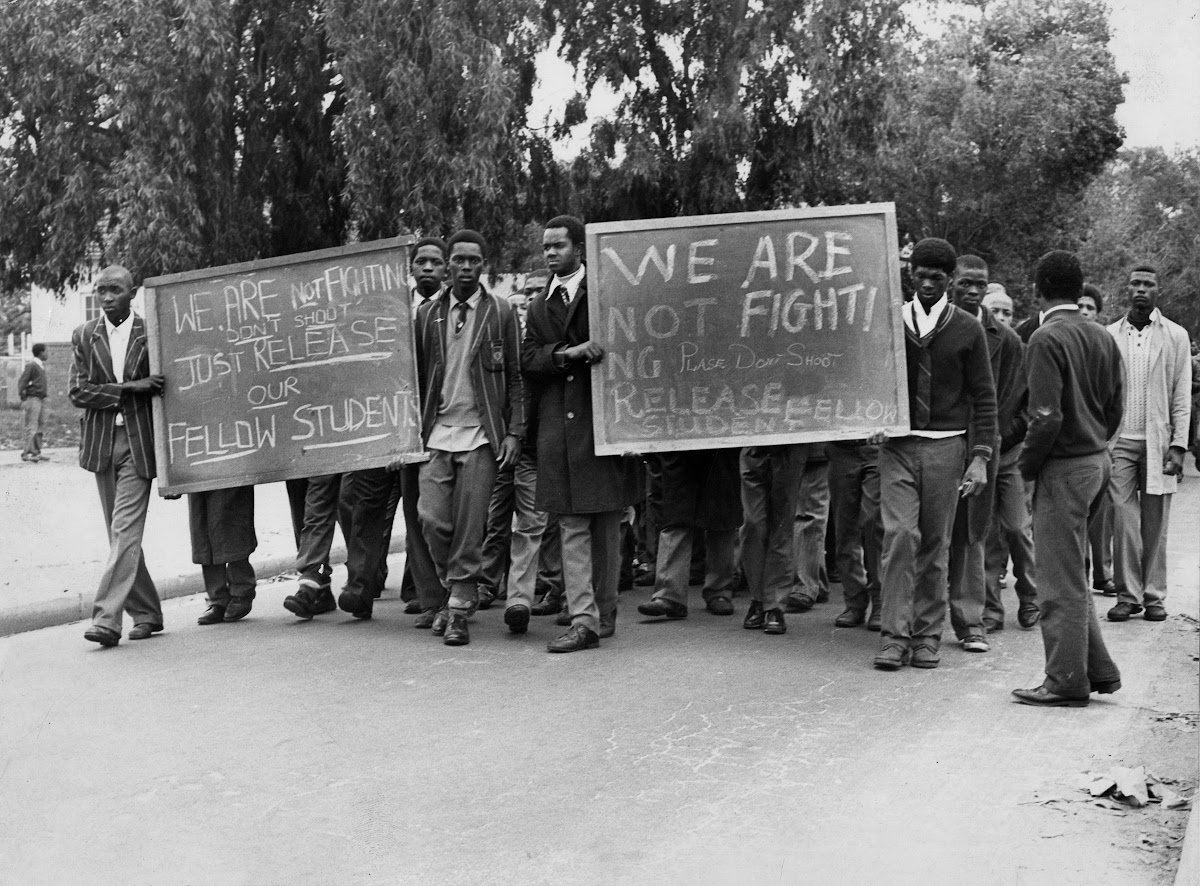
Sources and provenance for frame 18
Photographer: Photographer uncredited. The source record does not state a free licence.
The public 1200 × 886 px file is preserved byte-for-byte; a WebP preview is generated separately. WITNESS has not cropped or colourised the image. The catalogue lists a larger image, but the server delivered this size.
Source image filePhotography Legacy Project / Google Arts & CultureFile on WITNESS · 1200 × 88619. Solidarity in Cape Town
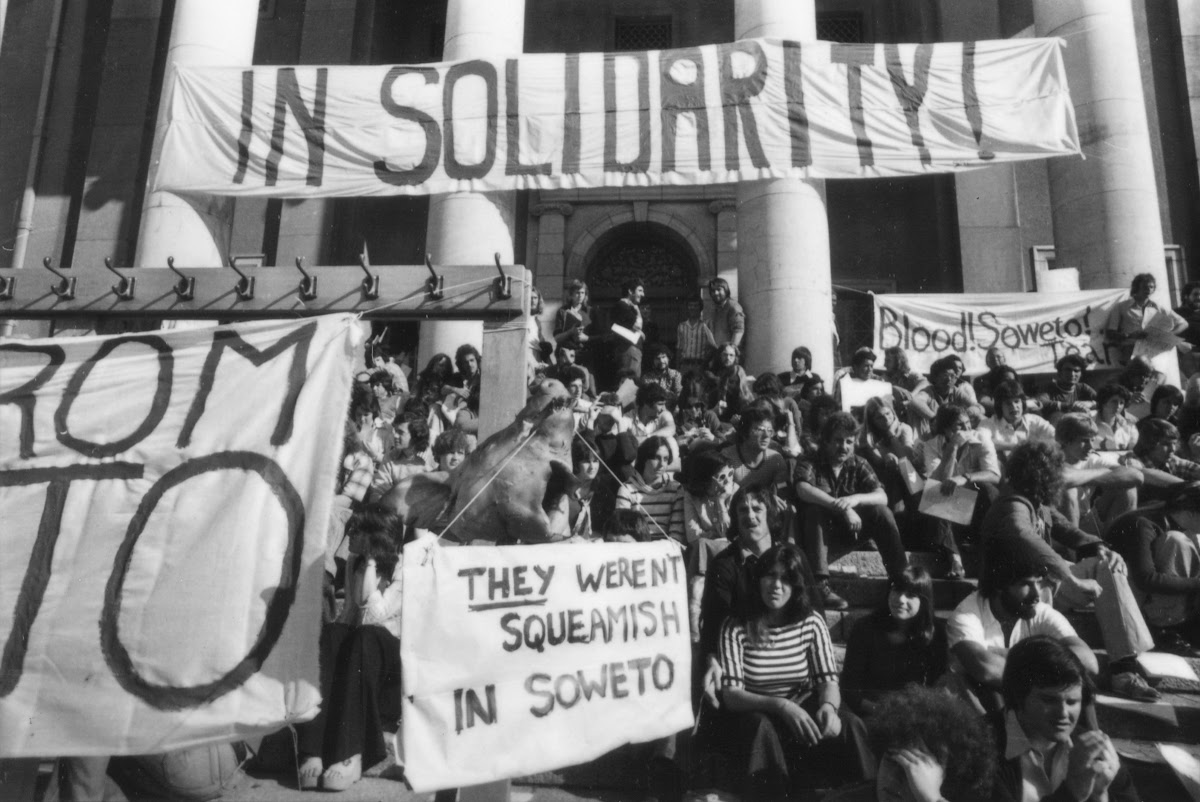
Sources and provenance for frame 19
Photographer: Photographer uncredited / Special Collections, UCT Libraries. PLP’s title names students, while its creator field contains a caption referring to university workers. Individual authorship is not established; the institutional credit is retained. The source record does not state a free licence.
The public 1200 × 802 px file is preserved byte-for-byte; a WebP preview is generated separately. WITNESS has not cropped or colourised the image. The catalogue lists a larger image, but the server delivered this size.
Source image filePhotography Legacy Project / Google Arts & CultureFile on WITNESS · 1200 × 80220. The Cape Times, 18 June
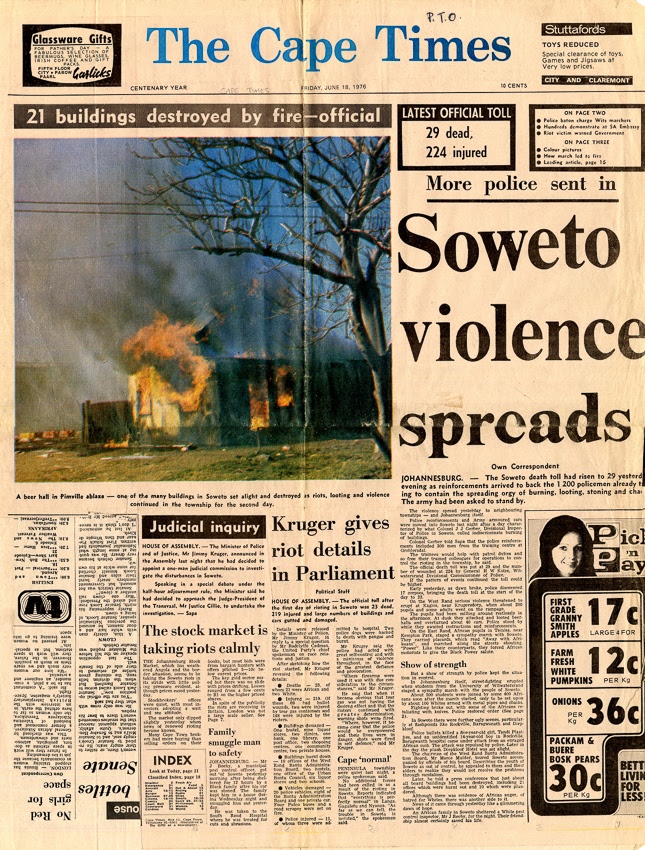
Sources and provenance for frame 20
Newspaper front page; The Cape Times; reproduction maker uncredited. The date is legible on the newspaper page presented by PLP in a 1976 scrapbook. Photographers of the individual illustrations are not listed in the record. The source record does not state a free licence.
The public 645 × 850 px file is preserved byte-for-byte; a WebP preview is generated separately. WITNESS has not cropped or colourised the image.
Source image filePhotography Legacy Project / Google Arts & CultureFile on WITNESS · 645 × 85021. Student leaders in Botswana
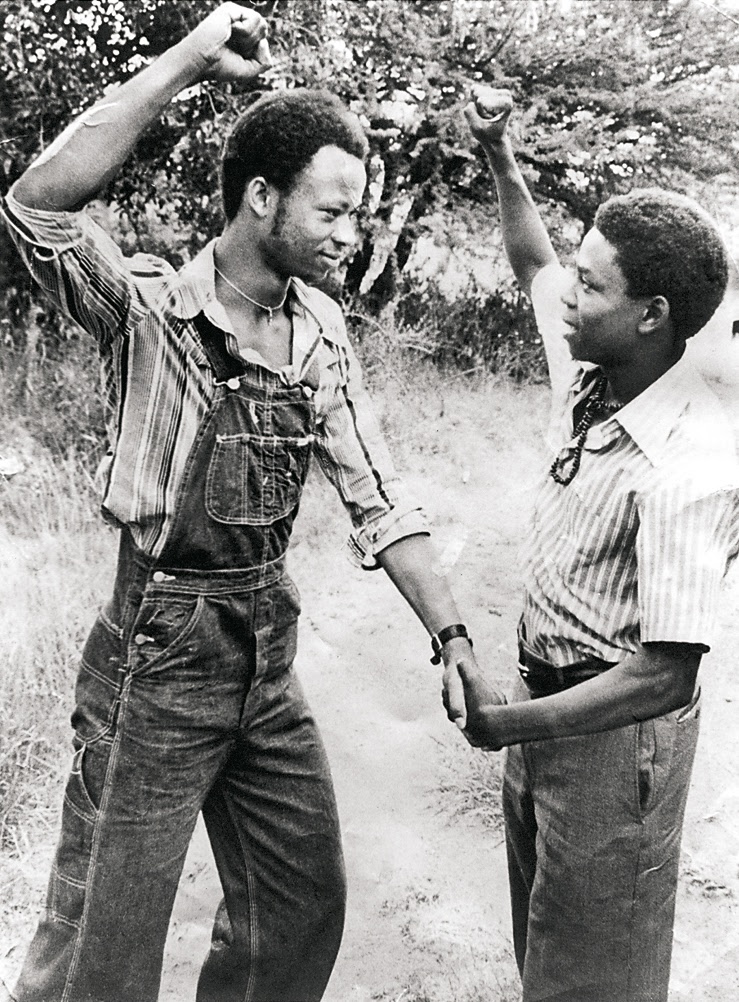
Sources and provenance for frame 21
Photographer: Alf Kumalo. The caption identifies two student leaders, not Mbuyisa Makhubu. The record does not specify the names from left to right. The source record does not state a free licence.
The public 739 × 1002 px file is preserved byte-for-byte; a WebP preview is generated separately. WITNESS has not cropped or colourised the image.
Source image filePhotography Legacy Project / Google Arts & CultureFile on WITNESS · 739 × 100222. Sam Nzima

Sources and provenance for frame 22
Photographer: Portrait photographer uncredited. Nzima’s authorship applies to the print he holds, not to this portrait. The portrait’s year has not been independently confirmed. The source record does not state a free licence.
The public 794 × 1200 px file is preserved byte-for-byte; a WebP preview is generated separately. WITNESS has not cropped or colourised the image. The catalogue lists a larger image, but the server delivered this size.
Source image filePhotography Legacy Project / Google Arts & CultureFile on WITNESS · 794 × 120023. Antoinette in 2012
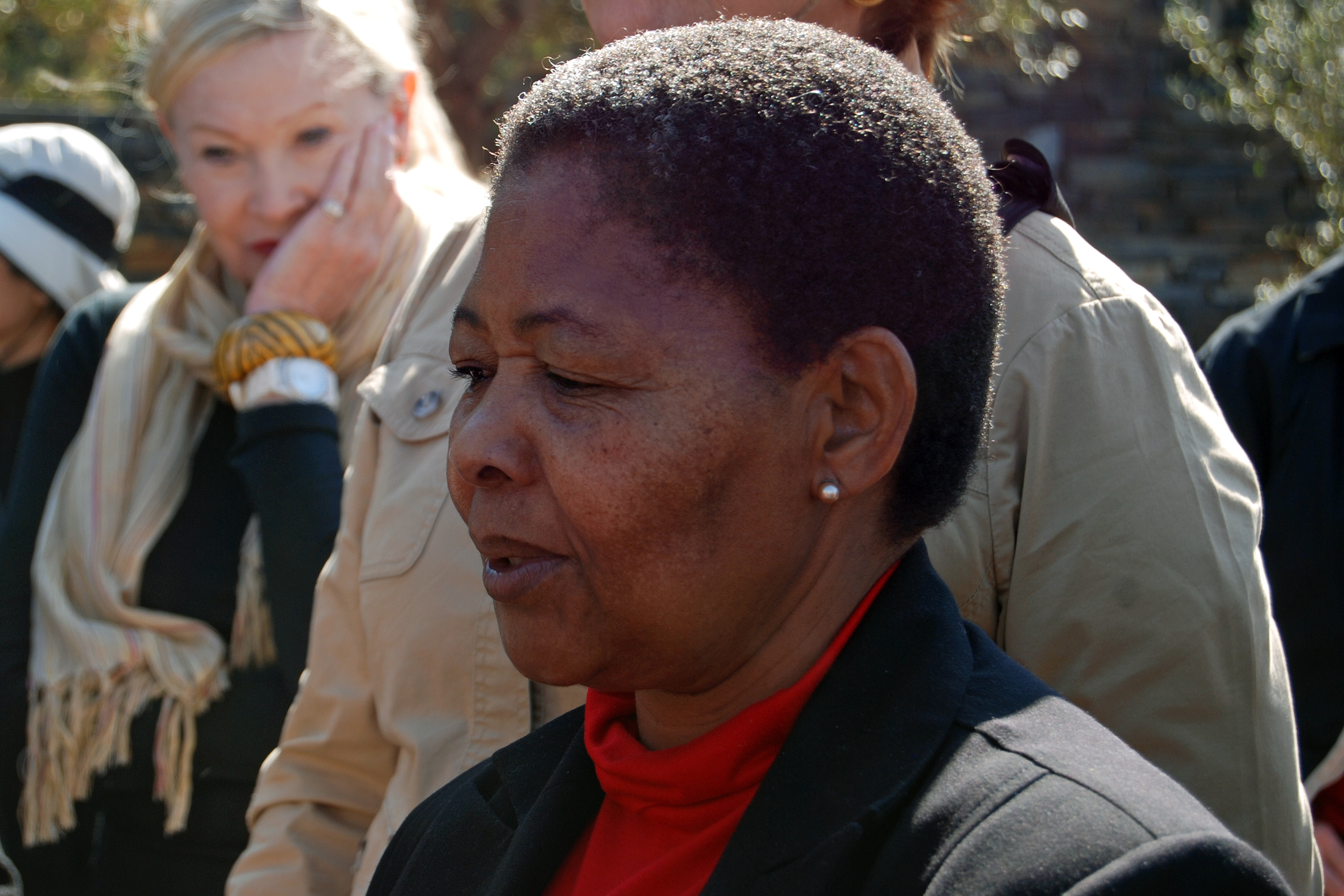
Sources and provenance for frame 23
Photographer: Harvey Barrison. Original file from the photographer’s Flickr page. Wikimedia Commons records a CC BY-SA 2.0 review on 19 September 2012; Flickr currently displays CC BY-NC-SA 2.0. The licensing records differ; no new free licence is asserted. © Harvey Barrison. Current author-side notice: CC BY-NC-SA 2.0.
The public 3393 × 2262 px file is preserved byte-for-byte; a WebP preview is generated separately. WITNESS has not cropped or colourised the image.
Source image fileCC BY-NC-SA 2.0Wikimedia Commons: licence review, 2012Harvey Barrison / FlickrFile on WITNESS · 3393 × 226224. Modern colourisation
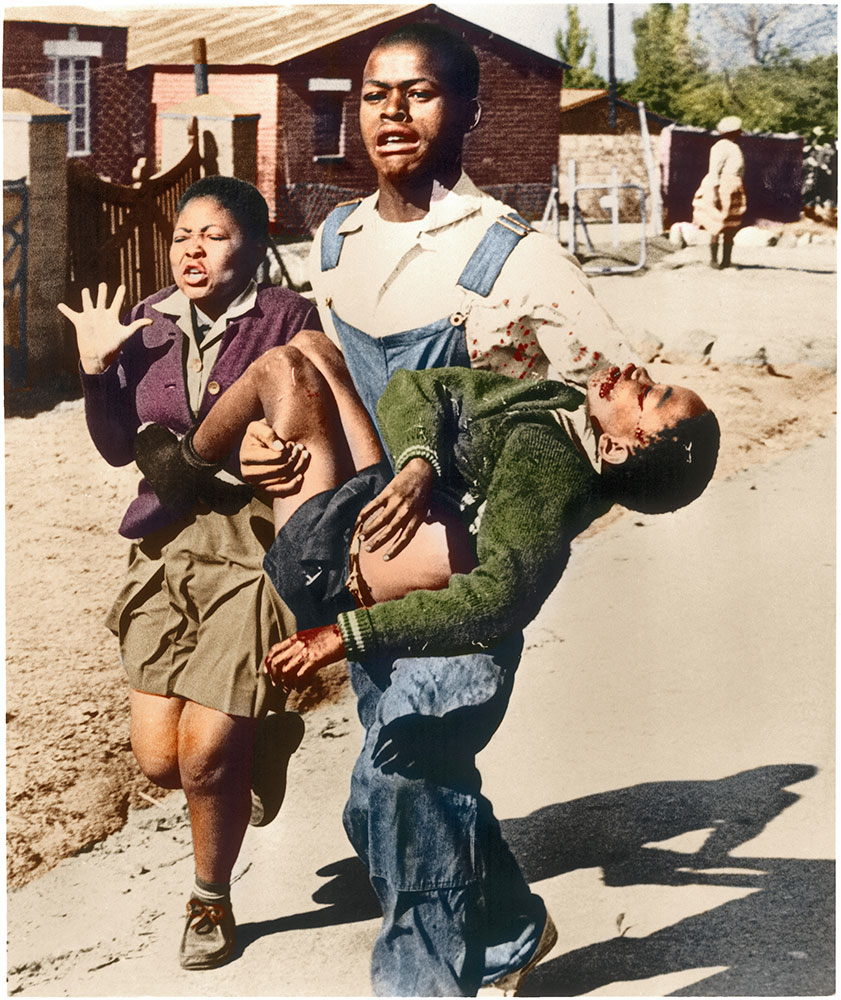
Sources and provenance for frame 24
Historical photograph: Sam Nzima. Colourisation: Sanna Dullaway for TIME. Modern colourisation of the black-and-white frame. Added colours are not verified as historically accurate; the working method is not established. WITNESS performed no new image treatment. No free licence is stated.
The public 841 × 1000 px file is preserved byte-for-byte; a WebP preview is generated separately. WITNESS has not cropped or colourised the image.
Source image fileSanna Dullaway / TIME; Sam NzimaFile on WITNESS · 841 × 1000