W–053 · 1942 · Ivanhorod, Ukraine
An Execution Photograph in a Letter
A German serviceman sent a photograph of an execution home from the Eastern Front. The photograph was intercepted in Warsaw and passed to Jerzy Tomaszewski. On the back was the inscription “Ukraine 1942. Judenaktion in Iwangorod”—“Ukraine, 1942. Jewish action in Ivanhorod.” The Nazis used “action” as a euphemism for mass killing. An image made from the perpetrators’ side entered a collection of evidence of their crimes.
1. The Ivanhorod execution
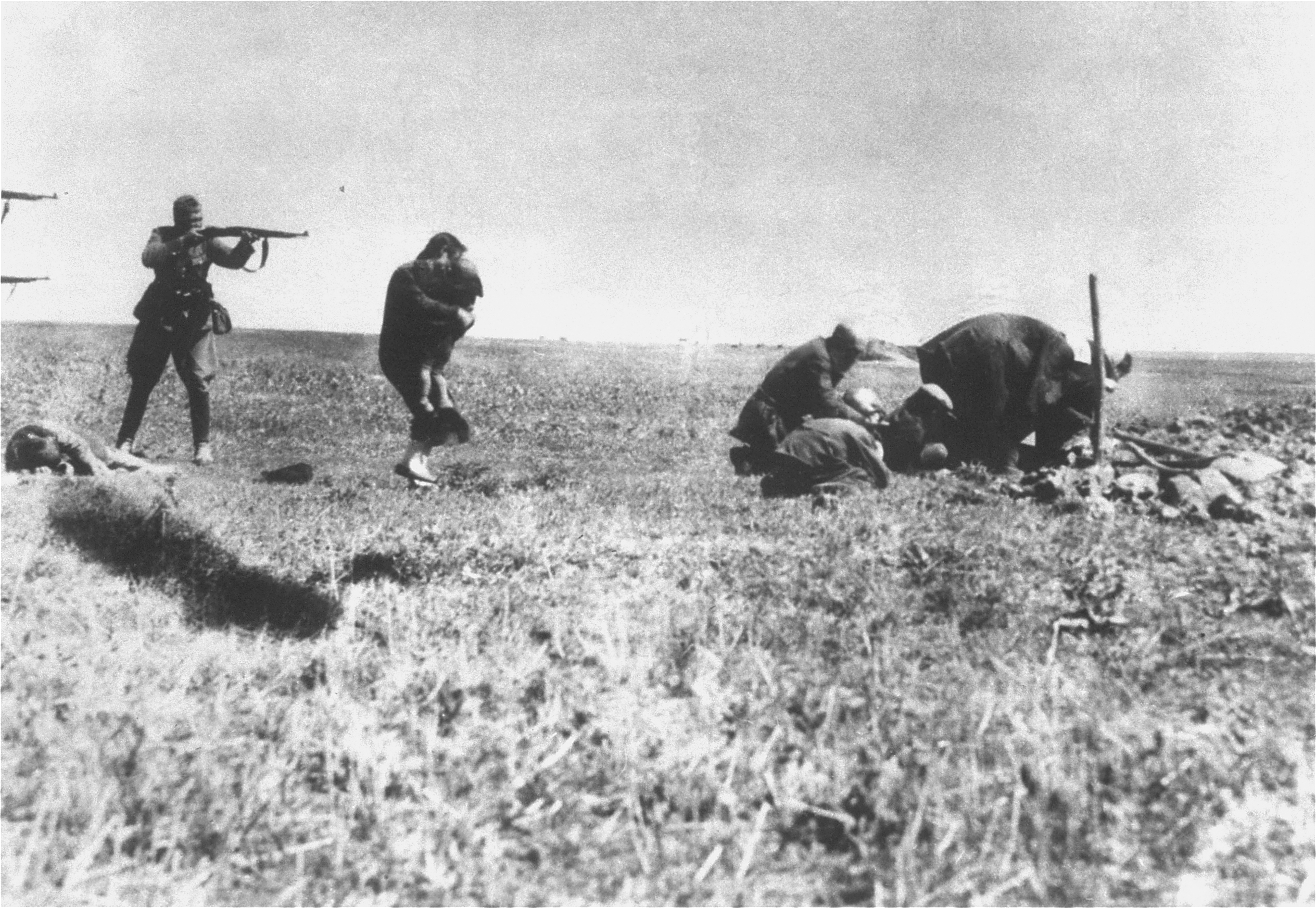
Provenance and sources for frame 1
File and rights
Complete 2528 × 1744 monochrome copy from Wikimedia Commons. Photographer unidentified; the museum attributes the exposure to a German member of the execution squad. Jerzy Tomaszewski preserved the image and was not its photographer. Commons applies a Polish public-domain classification; this is not a universal assurance of unrestricted reuse.
2. Inscription: Ivanhorod
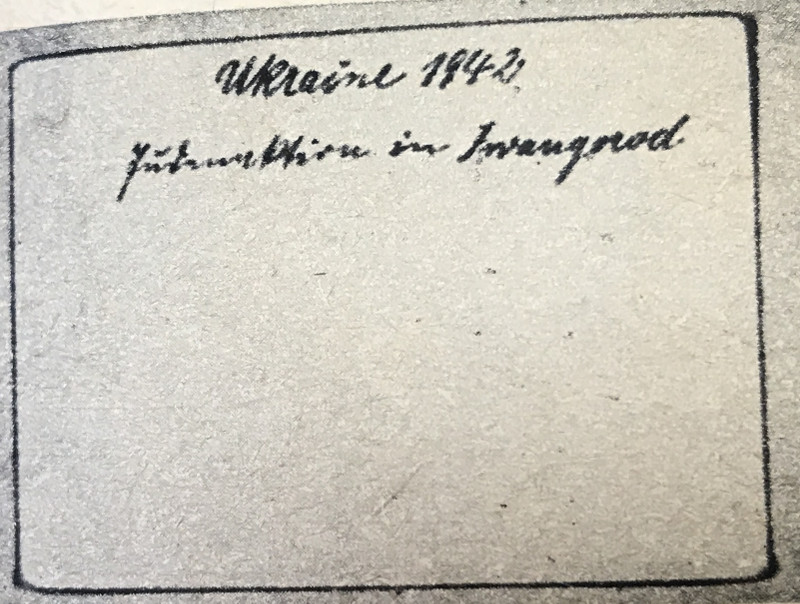
Provenance and sources for frame 2
File and rights
800 × 604 file published by a research blog that traces it to reproductions in Świat in 1962. The original magazine issue has not been checked. This is a digital copy of a printed reproduction, not a scan of the original reverse; no free licence is stated.
After Germany invaded the Soviet Union in June 1941, units that shot Jews followed the advancing front. The killers included the Einsatzgruppen and other German forces, among them the police. Entire communities were murdered: men, women and children. The Auschwitz-Birkenau Museum dates this execution to 1942 at Ivanhorod, a village in Ukraine. Yad Vashem identifies the gunmen as German policemen. Neither museum account names the photographer or a specific unit.
In 1959, the photograph appeared on the cover of the Polish album 1939–1945. We Have Not Forgotten. Later publications often cropped it to three figures: a man with a rifle, a woman and the child in her arms. The complete image shows other people bent towards the ground on the right and two more gun barrels on the left. Beyond the familiar crop, the same mass execution continues.
In January 1962, the far-right West German newspaper Deutsche Soldaten-Zeitung called the photograph a Polish forgery. The article’s author, Otto Croy, challenged the gunman’s weapon and uniform. Tomaszewski and Tadeusz Mazur, one of the album’s editors, replied in the Polish magazine Świat on 25 February by publishing another photograph from the same source. It shows five armed men standing behind bodies. The dispute brought a second document into print.
3. The second published photograph
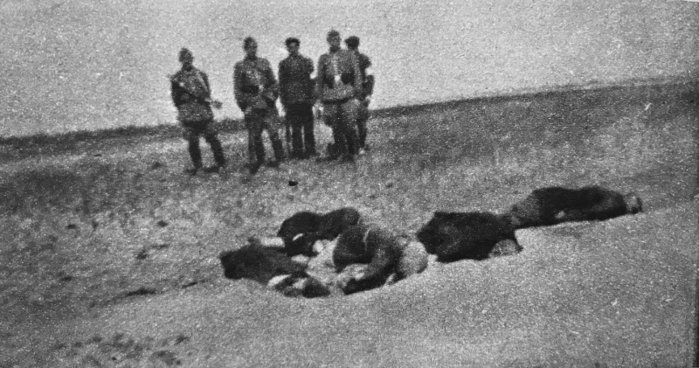
Provenance and sources for frame 3
File and rights
699 × 368 copy from Wikimedia Commons, traced to a research blog. Commons associates publication with Świat, 25 February 1962. The reverse names a different village, so its chronological relationship to Ivanhorod is not established. The photographer and the people depicted are unidentified. Commons’ Polish public-domain classification does not establish unrestricted reuse in every country.
The second print also bears the words “Ukraine, 1942,” but names a different place: “Gr. Sewastjanowka,” or Greater Sevastyanovka. The rest of the inscription means “shooting of Jews.” This photograph therefore cannot be presented as the next stage of the Ivanhorod scene. Reproductions of the two reverses preserve both place names; the documents’ connection through their owner does not establish a shared date or the identities of the people depicted.
4. Inscription: Sevastyanovka

Provenance and sources for frame 4
File and rights
800 × 411 copy from the same secondary publication as the Ivanhorod reverse. The German inscription is legible in the image itself. An archival master and a free licence have not been established.
Auschwitz-Birkenau and Yad Vashem publish the Ivanhorod photograph as evidence of the murder of Jews. Yad Vashem credits the United States Holocaust Memorial Museum and Jerzy Tomaszewski, who supplied the image. Tomaszewski preserved another person’s photograph; he did not take it. The museum captions name neither the woman and child nor the other victims. Their deaths entered the public record while their individual histories remained unknown.