Naito and the LEF Circle
W–079
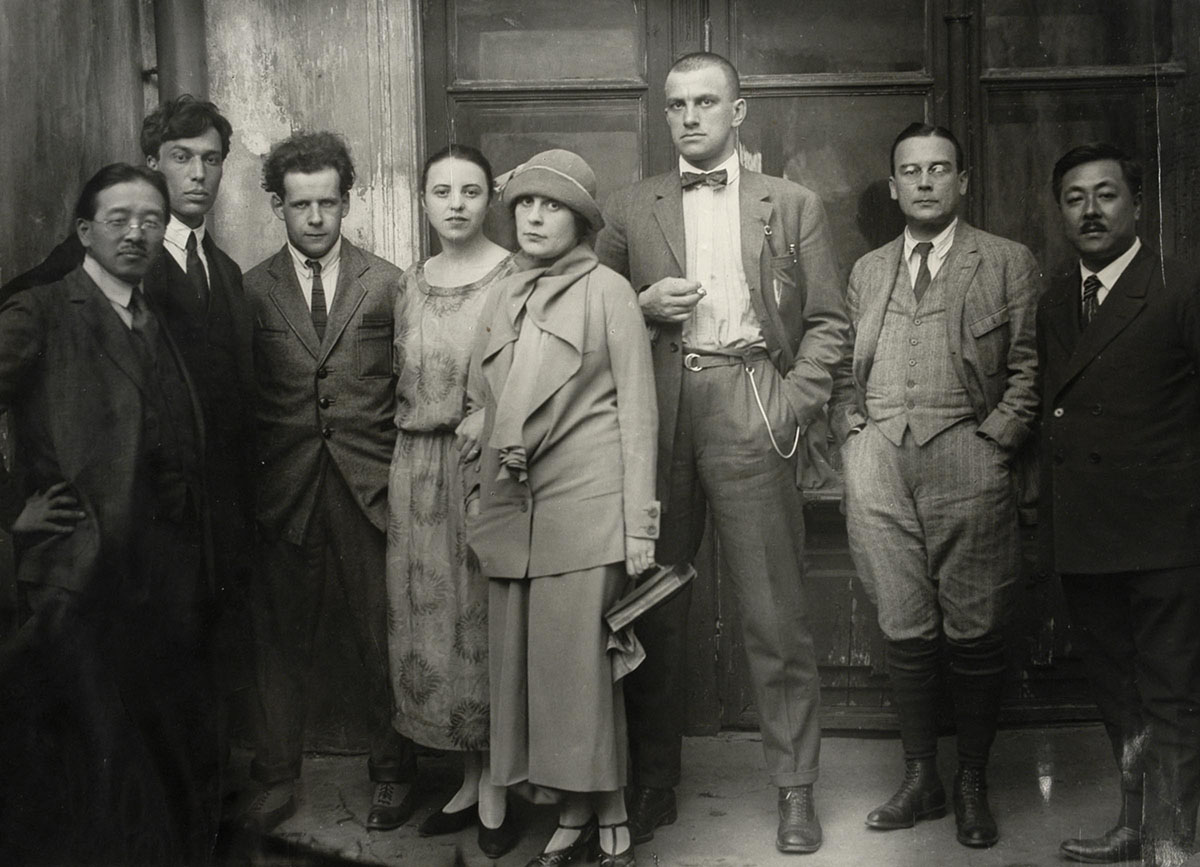
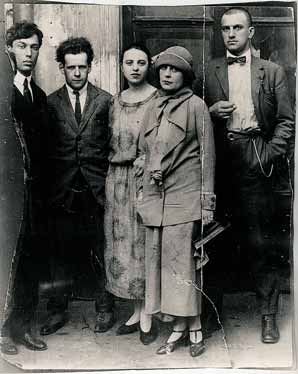
Tamiji Naito arrived from Japan carrying letters of recommendation. Writing to Leon Trotsky on 24 March 1924, Sen Katayama described him as a longstanding supporter of his movement and a representative of the Nichiro Sofukai society. Katayama asked that Naito receive assistance, explaining that the visit aimed to bring the Russian and Japanese peoples closer together. In Moscow, Naito met Mayakovsky, Pasternak and their friends in the LEF circle.
The Left Front of the Arts formed around Vladimir Mayakovsky in 1923. Its members saw the search for new artistic forms as part of building a new society. The circle included Sergei Eisenstein, Osip Brik, Sergei Tretyakov and Aleksandr Rodchenko, who designed the covers of its journals, Lef and Novyi Lef. Lilya Brik and Olga Tretyakova also attended the gathering with Naito.
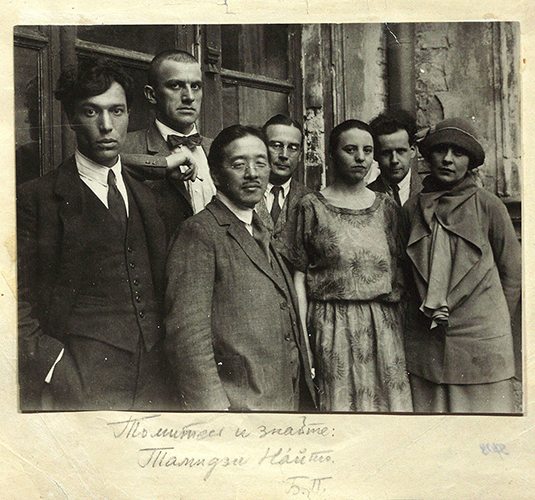
One of the prints reproduced by the State Mayakovsky Museum bears the handwritten words “Томитесь и знайте:” followed on the next line by “Тамидзи Найто”. A literal WITNESS translation is “Pine away and know: Tamidzi Naito”; the Russian phrase plays on the visitor’s name. Russia in Photographs attributes the pun to Pasternak and says that Naito stayed at the Knyazhy Dvor hotel on Volkhonka Street. More than one group photograph of the gathering survives. Museum collections date them to 1924, while captions to different copies disagree about the month and day.
Olga’s husband, the writer and playwright Sergei Tretyakov, was one of LEF’s theorists. He translated Bertolt Brecht into Russian and corresponded with him. In 1937, Tretyakov was accused of spying for Japan. Open List, citing execution records, gives his arrest date as 25 July. On 10 September, the Military Collegium of the USSR Supreme Court sentenced him to death, and he was executed that day. Olga was arrested on 5 November 1937.
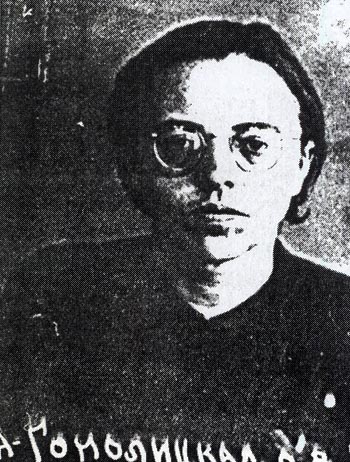
On 20 December 1938, in Butyrka prison, Olga withdrew her confession to espionage in writing. She said that she had given statements under pressure from the investigators. According to her account, questioning continued for three days with almost no interruption, and the investigator put information into the record that she had never supplied. Questioned again that day, Olga denied having been recruited as a spy and said that her conversations with the German writer Ottwalt had concerned literature. The investigators nevertheless accused her of participating in her husband’s alleged anti-Soviet activities and passing information to German intelligence agents.
Anne Wilkes Tucker, curator at the Museum of Fine Arts, Houston, later linked Olga’s conviction to the photograph of her standing with Naito. Tucker said another picture from the gathering had been used against Sergei. PhotoWings published her account. The available records do not establish the role of particular prints in the two cases. The published documents from Olga’s case focus principally on her husband and her contacts with German writers. A note attached to the indictment explicitly states that the case contained no physical evidence.
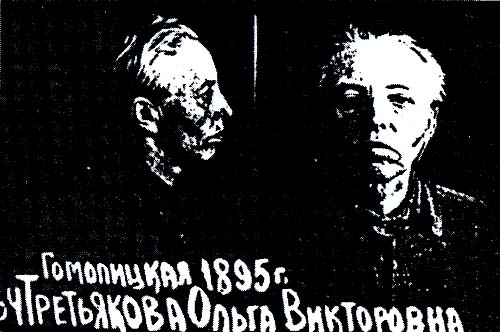
The same PhotoWings page incorrectly says that Olga died in the Gulag. She was released from the camp in 1946 and subsequently worked at a clinic, as a bookkeeper and as a postal worker. On 19 April 1951 she was arrested again and sent to a compulsory settlement in northern Kazakhstan. She returned to Moscow in 1954. Her daughter, Tatyana Gomolitskaya-Tretyakova, recorded her return, and literary scholar Irina Belobrovtseva later recalled meeting Olga in person.
After her return, Olga sought Sergei’s rehabilitation. He was posthumously rehabilitated on 26 February 1956. Her daughter recalled that Olga collected his books from friends, tracked down articles in the Lenin Library and found his play I Want a Child! in Meyerhold’s papers at the Central State Archive of Literature and Art. Olga died in 1973.
Photographs and documents
1. Eight people at the gathering
Sources and provenance for frame 1
From left: Tamiji Naito, Boris Pasternak, Sergei Eisenstein, Olga Tretyakova, Lilya Brik, Vladimir Mayakovsky and Arseny Voznesensky. The man at far right is identified in the Wikimedia Commons caption as a Japanese-language interpreter; his name is unknown. Moscow, 1924.
The Museum of Fine Arts, Houston dates the photograph to 1924 and credits Anatoly Semenka; its print is numbered 98.546. This digital file comes from Wikimedia Commons. PhotoWings publishes the same view with a credit to the museum collection and Anne Wilkes Tucker. Commons lists the photographer as unknown and marks the file public domain. Its attribution differs from the museum’s, and the rights status of the selected copy has not been independently confirmed. The museum marks its own reproduction © The Museum of Fine Arts, Houston. Captions disagree: Commons gives 11 May, while MMOMA’s journal gives 8 May for a damaged copy; the Houston catalogue states only 1924. The 1200 × 867 px file is preserved unchanged. A free reuse licence has not been confirmed.
Museum of Fine Arts, Houston: print 98.546 Wikimedia Commons: file record PhotoWings: Anne Wilkes Tucker’s accountMFAH / Wikimedia CommonsFile on WITNESS · 1200 × 8672. Seven people at the gathering

Sources and provenance for frame 2
File from Russia in Photographs, record 21907, credited to MAMM / MDF and Anatoly Semenka. The record gives January 1924, whereas the same project’s Foreigners in the USSR exhibition says 11 May. The State Mayakovsky Museum dates its reproduction to 1924. The precise day and month remain unresolved, as does the order in which the two group photographs were taken. The 800 × 600 px file is preserved unchanged. A free reuse licence has not been confirmed.
MAMM / MDF: photograph record State Mayakovsky Museum: photographic chronologyMAMM / MDF · Russia in PhotographsFile on WITNESS · 800 × 6003. A print with a handwritten inscription
Sources and provenance for frame 3
File from the State Mayakovsky Museum website. Its caption names the seven people and gives Moscow, 1924. Attribution of the photograph follows the MAMM / MDF record for the same view. Unlike the MAMM reproduction, this copy retains the lower margin: the first line reads “Томитесь и знайте:” and the second “Тамидзи Найто”. Russia in Photographs attributes the pun to Pasternak and transcribes it with different punctuation and a different spelling of the name: “Томитесь и знайте – Тамизи Найто”. The museum caption does not identify the writer of the inscription or provide an archive number. The 535 × 500 px file is preserved unchanged, including its margins and handwritten lines. A free reuse licence has not been confirmed.
State Mayakovsky Museum: photographic chronology MAMM / MDF: the same group photograph Russia in Photographs: attribution of the punState Mayakovsky MuseumFile on WITNESS · 535 × 5004. Sergei Tretyakov, 1928
Sources and provenance for frame 4
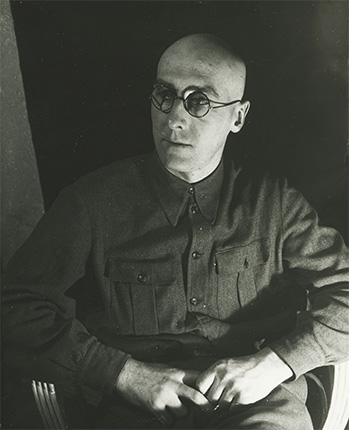
The Open List caption identifies Sergei Tretyakov, dates the portrait to 1928 and credits Aleksandr Rodchenko and the State Mayakovsky Museum collection. The digital reproduction comes from Open List, which supplies neither an accession number nor the precise location. The portrait postdates the gathering with Naito. The 349 × 430 px file is preserved unchanged. A free reuse licence has not been confirmed.
Open List: Sergei TretyakovOpen ListFile on WITNESS · 349 × 4305. Brecht and Tretyakov
Sources and provenance for frame 5
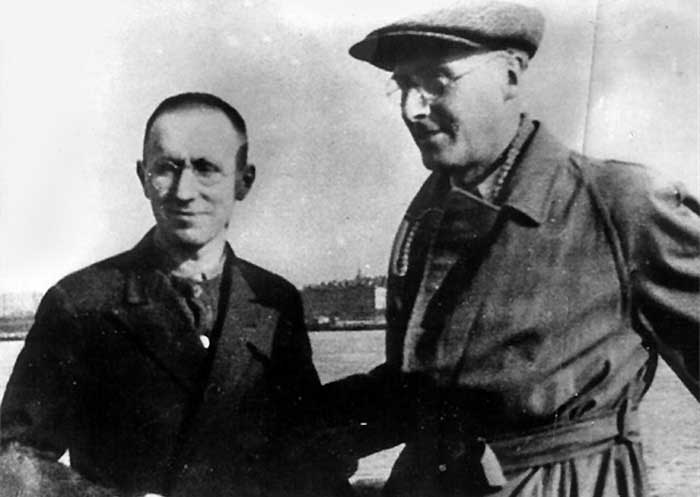
Open List publishes the image with a caption identifying Bertolt Brecht and Sergei Tretyakov. It supplies no photographer, date, location or archive number. Tatyana Gomolitskaya-Tretyakova’s memoir documents their literary connection: Sergei translated Brecht and wrote to him. This does not establish a date for the photograph. The image is separate from the 1924 gathering with Naito. The 700 × 497 px file is preserved unchanged. A free reuse licence has not been confirmed.
Open List: Sergei Tretyakov Tatyana Gomolitskaya-Tretyakova: On My Father, 1991Open ListFile on WITNESS · 700 × 4976. Sergei Tretyakov: case-file photograph

Sources and provenance for frame 6
Open List identifies this as a photograph from Sergei Tretyakov’s investigation file. It does not give the photographer’s name or the exact date and place. The criminal case dates to 1937; the source does not date the photograph separately. The 350 × 400 px file is preserved unchanged. A free reuse licence has not been confirmed.
Open List: Sergei TretyakovOpen ListFile on WITNESS · 350 × 4007. Olga Tretyakova: prison portrait
Sources and provenance for frame 7
Reproduced by Agitclub from the memorial collection «Верните мне свободу» (Return My Freedom; Moscow, Medium, 1997), based on documents from the Central FSB Archive. The page identifies Olga Tretyakova and credits an unnamed prison photographer, citing her case file. Neither the year nor the photographer’s name is supplied. Biographical details were checked against Open List. The 350 × 462 px file is preserved unchanged; the reproduction has little fine detail. A free reuse licence has not been confirmed.
Documents from Olga Tretyakova’s case Open List: Olga TretyakovaAgitclub / «Верните мне свободу», 1997File on WITNESS · 350 × 4628. Olga Tretyakova’s second arrest
Sources and provenance for frame 8
Agitclub captions this reproduction “Olga Tretyakova, 1951” beside the questionnaire from her second arrest on 19 April 1951. The publication cites «Верните мне свободу» (Return My Freedom, 1997) and documents from the Central FSB Archive. The exact day of the photograph and the photographer’s name are not given. Open List also records the second arrest. The 500 × 332 px file is preserved unchanged; the reproduction has very high contrast and lacks fine detail. A free reuse licence has not been confirmed.
Documents from Olga Tretyakova’s case Open List: Olga TretyakovaAgitclub / «Верните мне свободу», 1997File on WITNESS · 500 × 3329. A damaged archival print
Sources and provenance for frame 9
Reproduction from MMOMA’s DI journal, no. 3, 2007, p. 90 (PDF page 92). The caption names Anatoly Semenka and gives 8 May 1924, differing from other sources. Its technical description records rephotography onto a 35 mm negative and a later print. The journal reproduces a print whose edges were already missing; WITNESS has not cropped the image. The article discusses photographs damaged by private owners before reaching RGALI, but does not explain the history of this particular print. Who damaged it, when and why remain unknown. The JPEG was extracted from the PDF without re-encoding; the 298 × 374 px file is preserved unchanged. A free reuse licence has not been confirmed.
MMOMA: DI, no. 3, 2007, p. 90РГАЛИ / MMOMA, DI, 2007File on WITNESS · 298 × 374