W–009 · Documentary photograph and sources
Six Years Old, Four Marshals
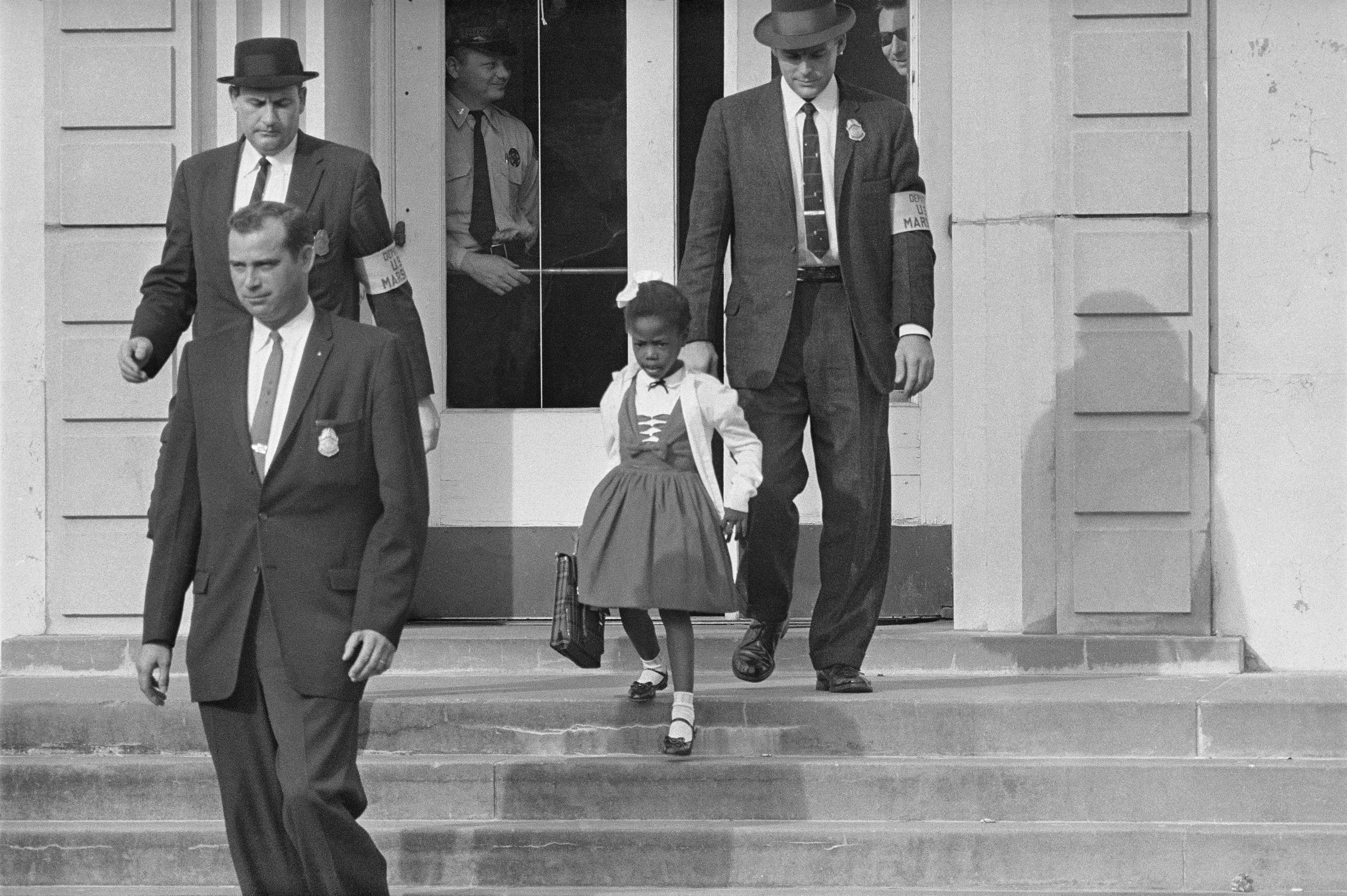
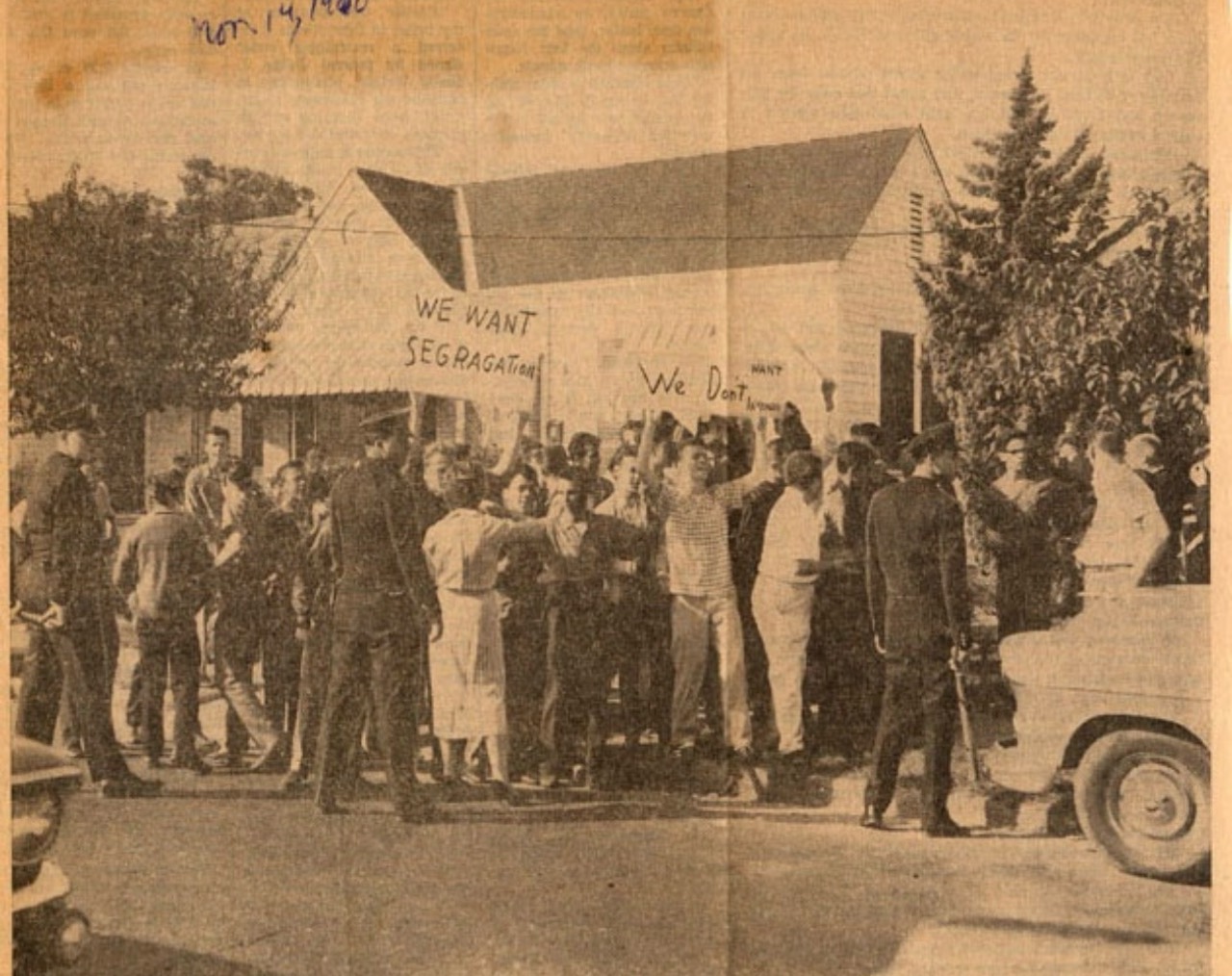
Six-year-old Ruby Bridges spent her first day at William Frantz Elementary in the principal’s office. She arrived on 14 November 1960 with her mother and four federal marshals. Outside the New Orleans school, opponents of Black and white children learning together gathered. White parents removed their children; classes all but stopped.
1. After the first day
Provenance and sources for frame 1
From US Department of Justice records at the National Archives, 60-G-154-1. The archive dates the photograph to 14 November 1960 and shows Ruby leaving school; it does not name the photographer. Displayed file: 3000 × 1996 pixels. The source record discusses public-domain status; check which jurisdiction it covers. The photographer is not identified in the cited record. The original archival file is retained. Full image record in Russian.
docsteach.orgView image file2. Colourised version
Provenance and sources for frame 2
Creator and provenance
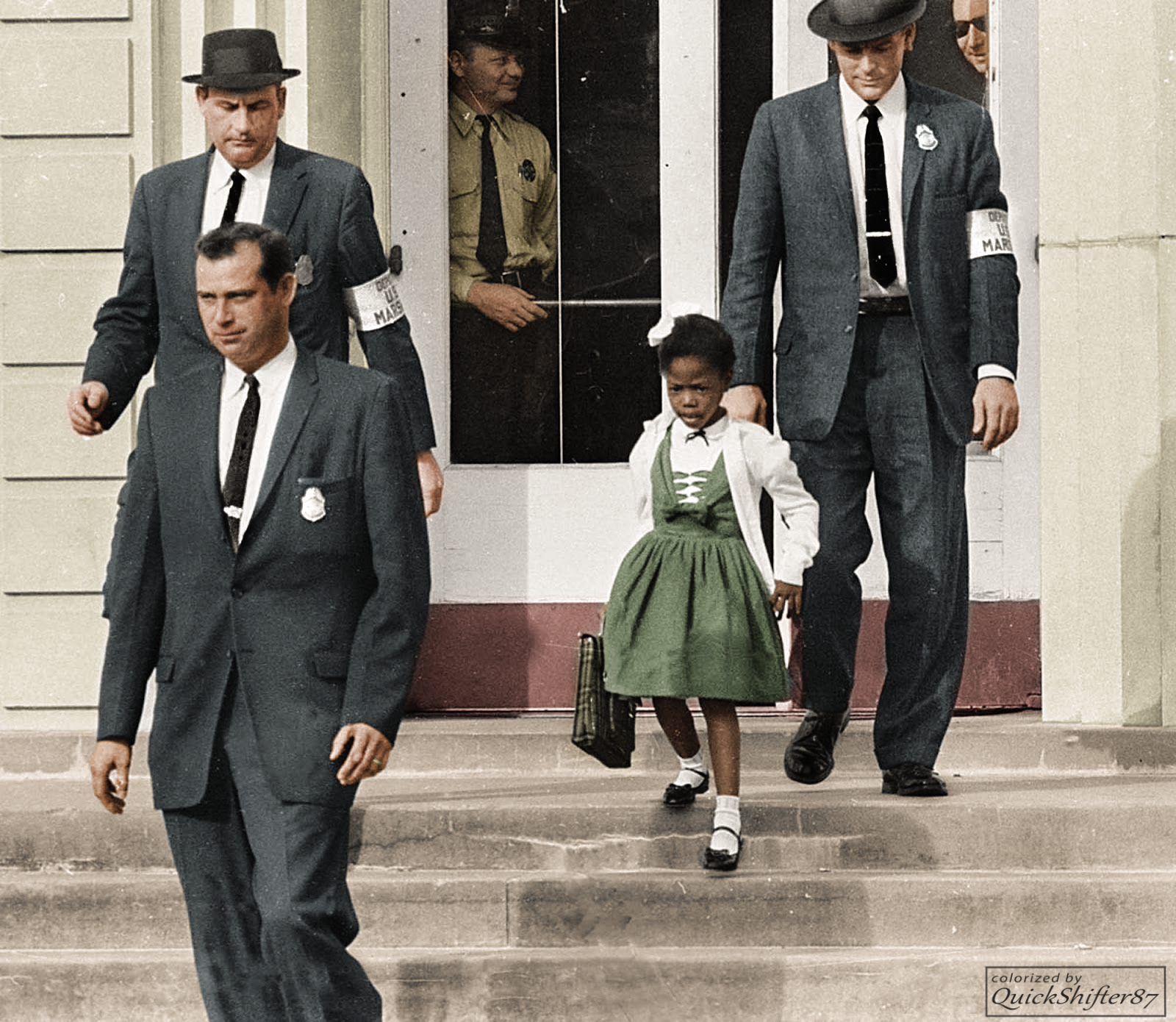
The underlying photograph is the U.S. Department of Justice / NARA black-and-white record 60-G-154-1, dated 14 November 1960. QuickShifter87 published this signed digital colourisation; its colours are interpretive.
File and rights
1,600 × 1,390 JPEG from the colourist's own post, including the visible signature. The original photograph is in the U.S. public domain; no free licence is stated for the colourisation.
Six years had passed since the US Supreme Court’s decision in Brown v. Board of Education. Racial segregation in public schools had been ruled unconstitutional, but New Orleans resisted change. Federal judge J. Skelly Wright pressed for the ruling to be enforced. On 14 November, four Black girls entered schools that had previously admitted only white children. Ruby was the only one of the four assigned to William Frantz. Accompanied by marshals, Gail Etienne, Tessie Prevost and Leona Tate entered McDonogh No. 19. They became known as the New Orleans Four.
Barbara Henry, newly arrived from Boston, agreed to teach Ruby. Lessons took place in a separate classroom with Ruby as its only pupil. Marshals escorted her to school and kept watch at the door while she learned. Herschel Garner and Charles Burks were among those involved in protecting school integration in New Orleans.
3. Outside William Frantz
Provenance and sources for frame 3
Amistad Research Center holds a newspaper reproduction with a handwritten date of 14 November 1960. The Children’s Museum of Indianapolis credits the same view to Bettmann/Corbis. Ruby is not in this photograph. The larger copy was supplied by the WITNESS owner; it lacks the printed caption preserved on a smaller research copy. The negative was not obtained. Displayed file: 1280 × 1014 pixels. No free licence has been established for this file. The photographer is not identified in the cited record. Full image record in Russian.
artsandculture.google.comdktix1rrcd7mv.cloudfront.netView image fileOutside school, Ruby faced threats. Remembering those days, she described protesters carrying a Black doll in a child-sized coffin. Online, her account is often linked to a photograph of a coffin procession at the Louisiana State Capitol. But that photograph was taken on 23 November in Baton Rouge: the participants were staging a “funeral” for Judge Wright. The sources do not establish that Ruby was shown the same doll.
The resistance reached her family as well. Ruby’s father lost his job; shops refused to sell food to her mother. Her grandparents in Mississippi were evicted from the farm where they had worked as sharecroppers for a quarter of a century. Supporters of integration also sent money and offered help. Ruby stayed in school; in her second year she joined a classroom with other children.
In January 1964, Look published Norman Rockwell’s painting The Problem We All Live With. He placed the girl between four marshals and cropped the composition so the adults’ faces could not be seen. It was a new work drawn from Ruby’s story, and became one of the best-known images of school desegregation.
4. Back to school
Provenance and sources for frame 4
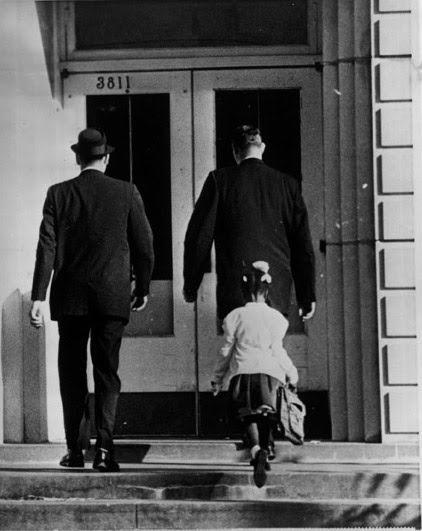
Amistad Research Center labels this view “Negro Girl Enters Integrated School” and dates it to 28 November 1960. Its photographer is unidentified; no larger public file was found. Displayed file: 422 × 531 pixels. The photographer is not identified in the cited record. Full image record in Russian.
artsandculture.google.comView image fileRuby graduated from an integrated high school, worked in the travel industry and married; she had four sons. Later, she wrote books about her experience. In 1999, she founded the Ruby Bridges Foundation, dedicated to education and overcoming racial prejudice. In Through My Eyes, she told the story of her school days in her own words.
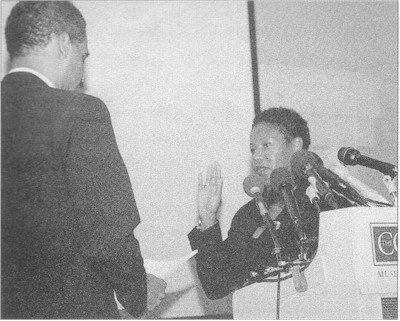
On 10 August 2000, Ruby Bridges took the oath as an honorary deputy US marshal at the Corcoran Gallery in Washington. Deputy Attorney General Eric Holder administered it. A Rockwell exhibition was on view, and Ruby saw the original painting of the girl protected by four marshals for the first time.
5. An honorary marshal
Provenance and sources for frame 5
An official US Marshals Service picture from a ceremony at the Corcoran Gallery in Washington, DC, on 10 August 2000. Ruby Bridges appears with Eric Holder. The agency does not name the photographer or provide a larger copy. Displayed file: 400 × 321 pixels. Full image record in Russian.
prod.usmarshals.govjustice.govView image file