W–012 · Documentary photograph and sources
Separate Water
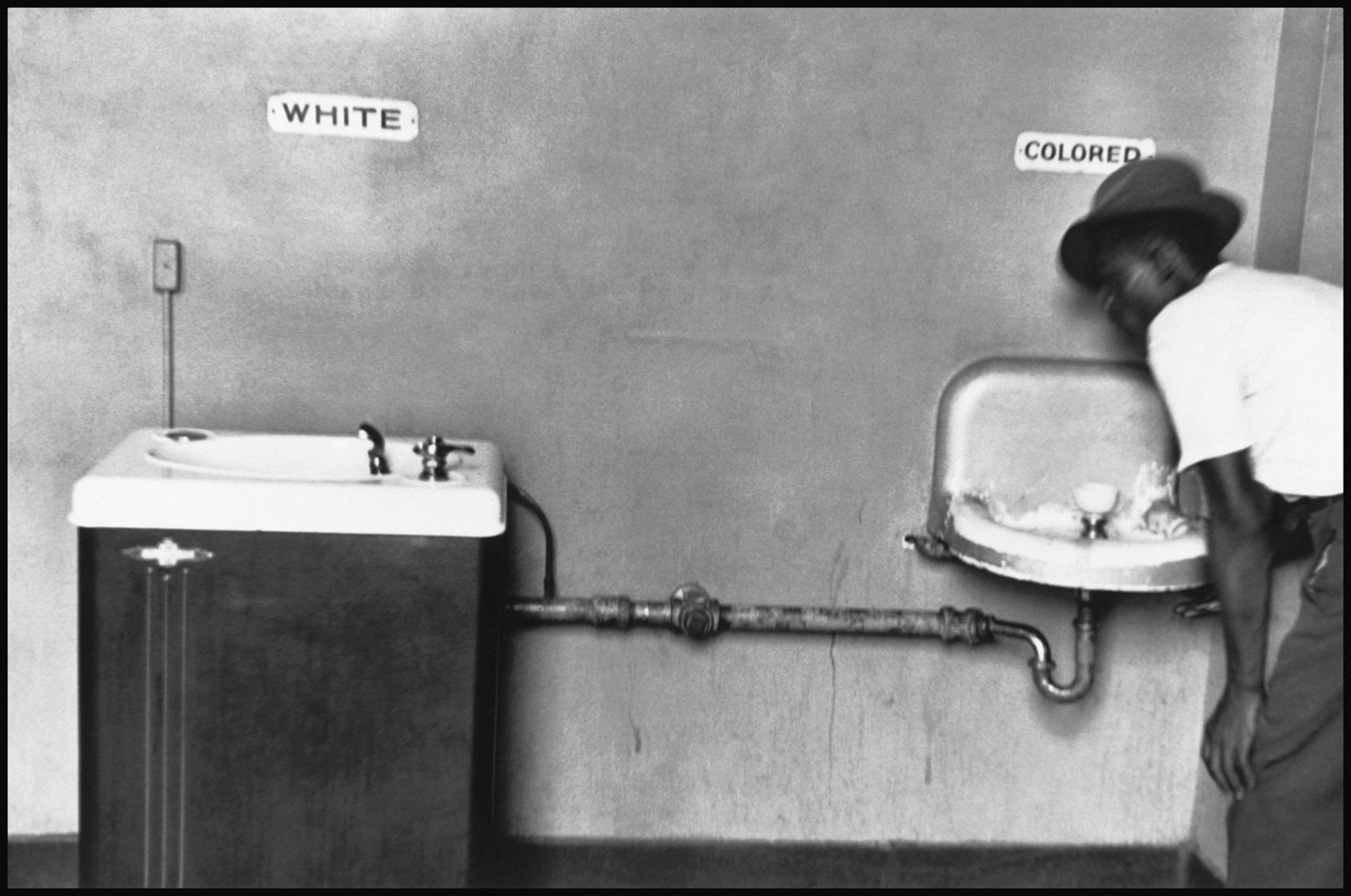
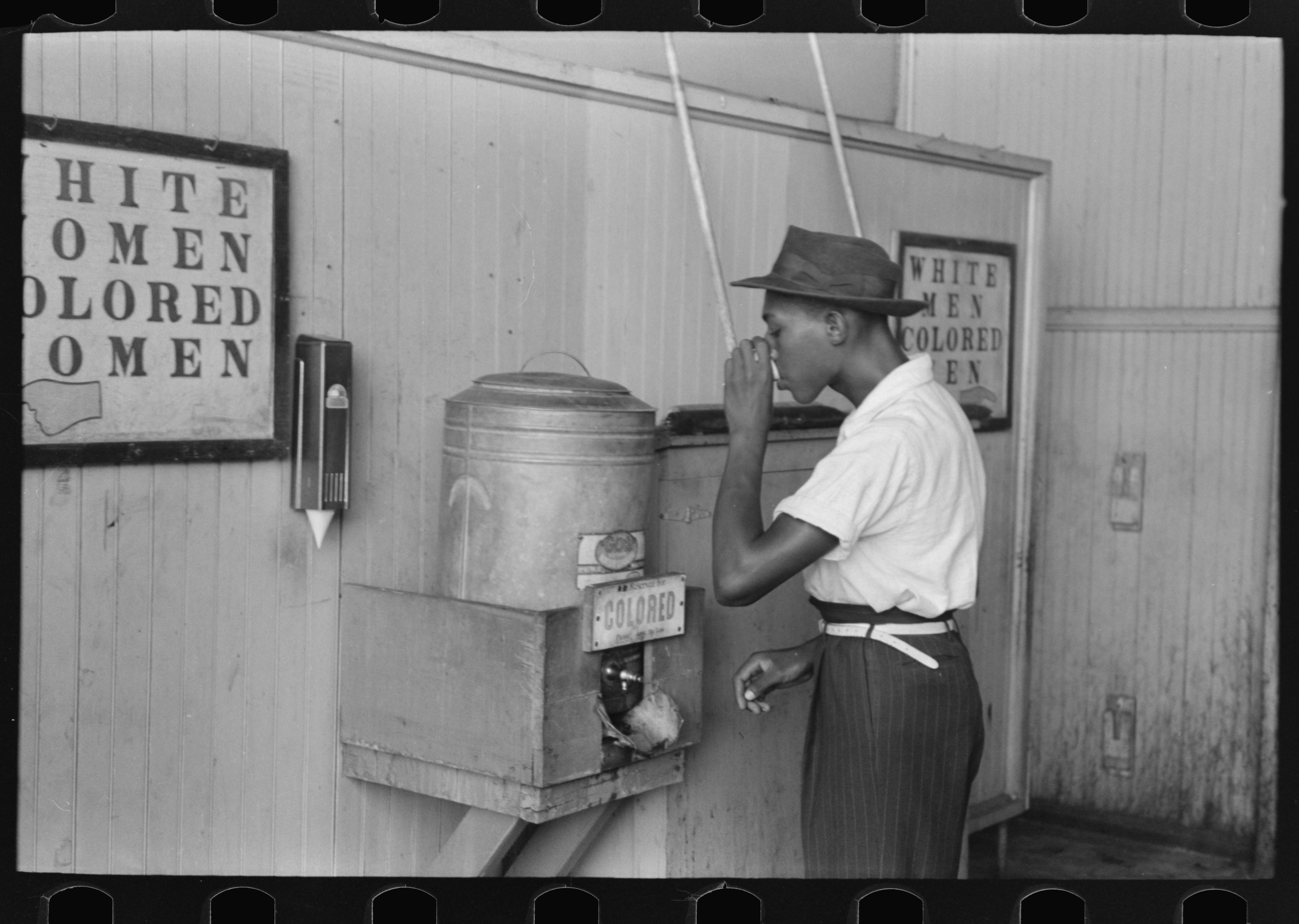
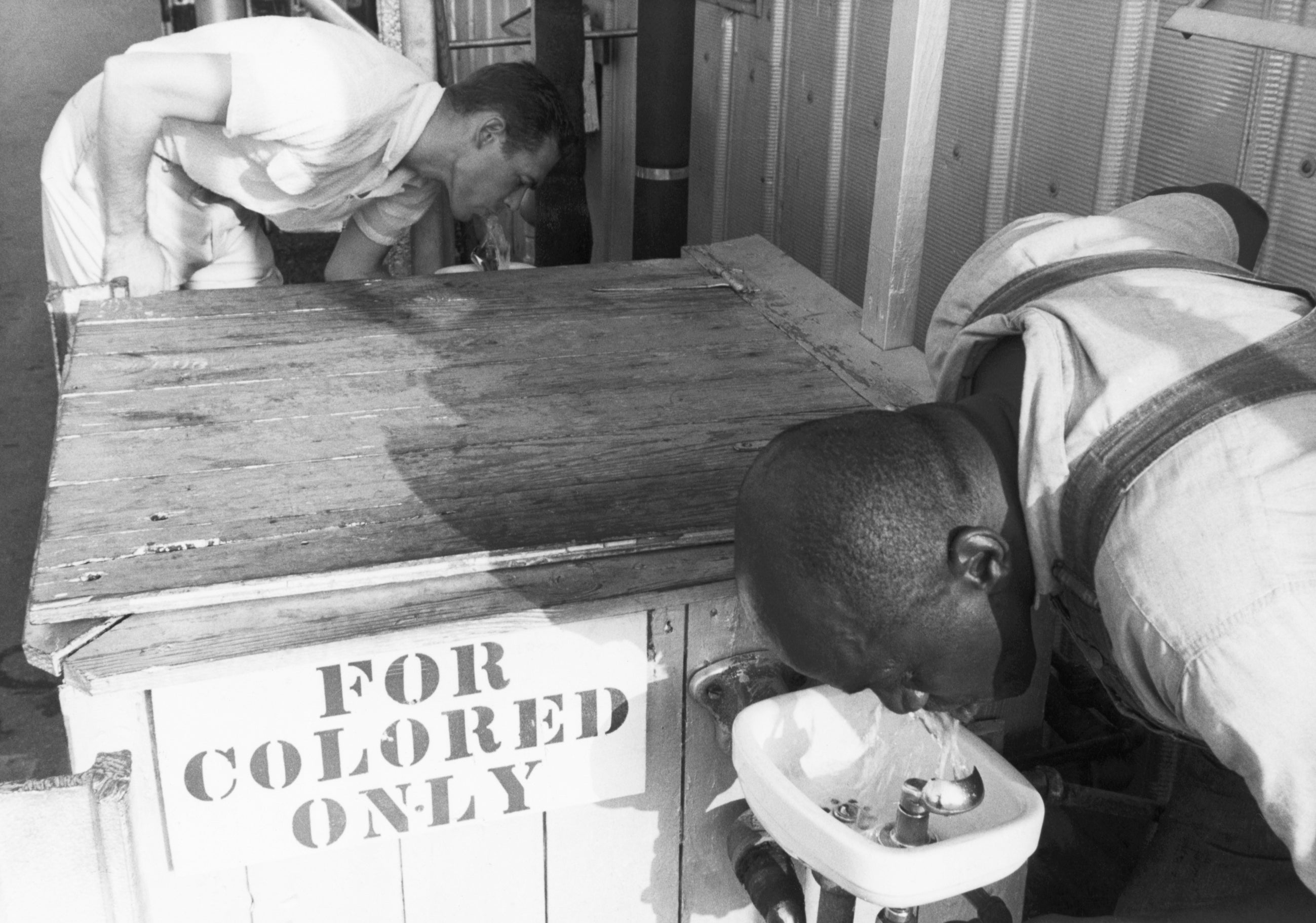
In the American South, a sign above a drinking fountain told people who could use it. “White” marked the fountain for white people; “Colored” marked the one for Black people. The same words divided restrooms and waiting rooms. Racial segregation reached into ordinary places where people came for water, a ticket or groceries.
1. Two fountains in Wilmington
Provenance and sources for frame 1
Displayed file: 3840 × 2547 pixels. Full image record in Russian.
norman.hrc.utexas.edutime.comView image fileIn 1896, the US Supreme Court’s decision in Plessy v. Ferguson established the doctrine of “separate but equal.” It allowed separation by race on the condition that services were equal. In practice, the facilities and the treatment people received were not.
Railway stations, courthouses, shops and workplaces provided separate entrances, rooms and restrooms. Some laws explicitly required employers to maintain separate toilets. The public bathhouses at Hot Springs were divided four ways: for white women, white men, Black women and Black men. Where a statute did not require separation, local rules, custom, policing and the threat of violence could sustain it.
2. A cooler marked “Colored”
Provenance and sources for frame 2
Displayed file: 4269 × 3038 pixels. The source record discusses public-domain status; check which jurisdiction it covers. Full image record in Russian.
loc.govblogs.loc.govView image fileElliott Erwitt photographed two such fountains in Wilmington, North Carolina, in 1950. Looking back, he spoke about the failure of the “separate but equal” formula. The signs demanded separation; the fountains themselves revealed the inequality.
The Civil Rights Act of 1964 prohibited racial discrimination in hotels, restaurants and other public accommodations within its scope. Discrimination did not disappear, but people could now invoke federal law in demanding equal service.
3. Two fountains at once
Provenance and sources for frame 3
Displayed file: 2598 × 1822 pixels. The source identifies this image as copyrighted. Full image record in Russian.
gettyimages.comarchives.govView image file