W–058 · 18 April 1945 · Buchenwald, near Weimar, Germany
Buchenwald After Liberation
People who had recently been held behind the camp wire were being carried into the SS barracks. After Buchenwald’s liberation, about 4,700 sick prisoners needed urgent care. The American 120th Evacuation Hospital arrived on the evening of 15 April 1945. Its staff worked with 270 doctors and nurses from among the former prisoners, led by the French physician Joseph Anselme Brau. The camp was free, but exhaustion and disease were still killing people.
1. The crematorium courtyard
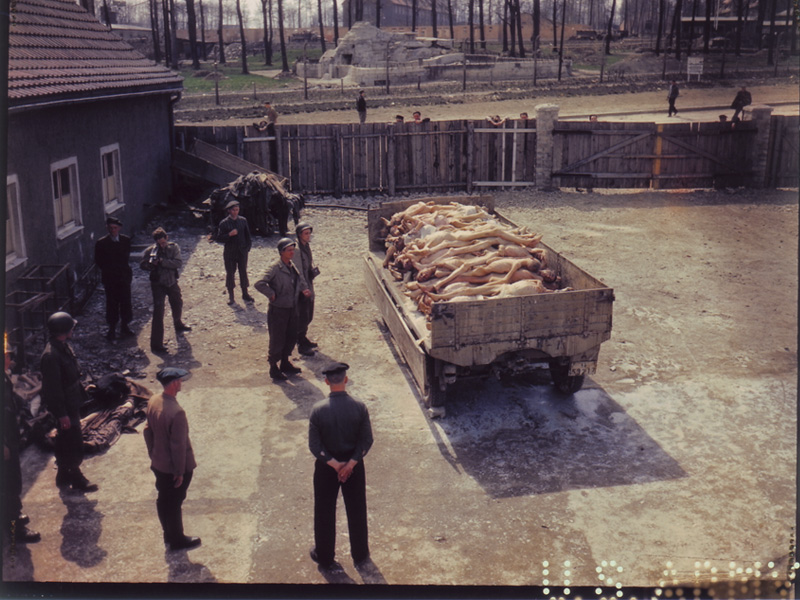
Provenance and sources for frame 1
File and rights
Historical colour photograph. Archive: National Archives; photographer and date identified by the Buchenwald Memorial. Public 800 × 600 copy from Wikimedia Commons. Commons identifies this official U.S. military work as public domain in the United States. The file is preserved unchanged. The selection contains five of Miller’s thirteen surviving colour slides. It is arranged by subject; the exposure order within that day is not established.
Buchenwald had existed for almost eight years. It was established in the summer of 1937 on the Ettersberg near Weimar. Prisoners were subjected to forced labour, starvation, beatings and murder. In the winter of 1945, further transports arrived from camps the SS were evacuating ahead of the advancing Allies. The overcrowded Little Camp received people already exhausted by the journey. A camp medical report recorded more than 13,000 prisoner deaths at Buchenwald and its subcamps in the first three months of 1945.
2. Outside Block 55
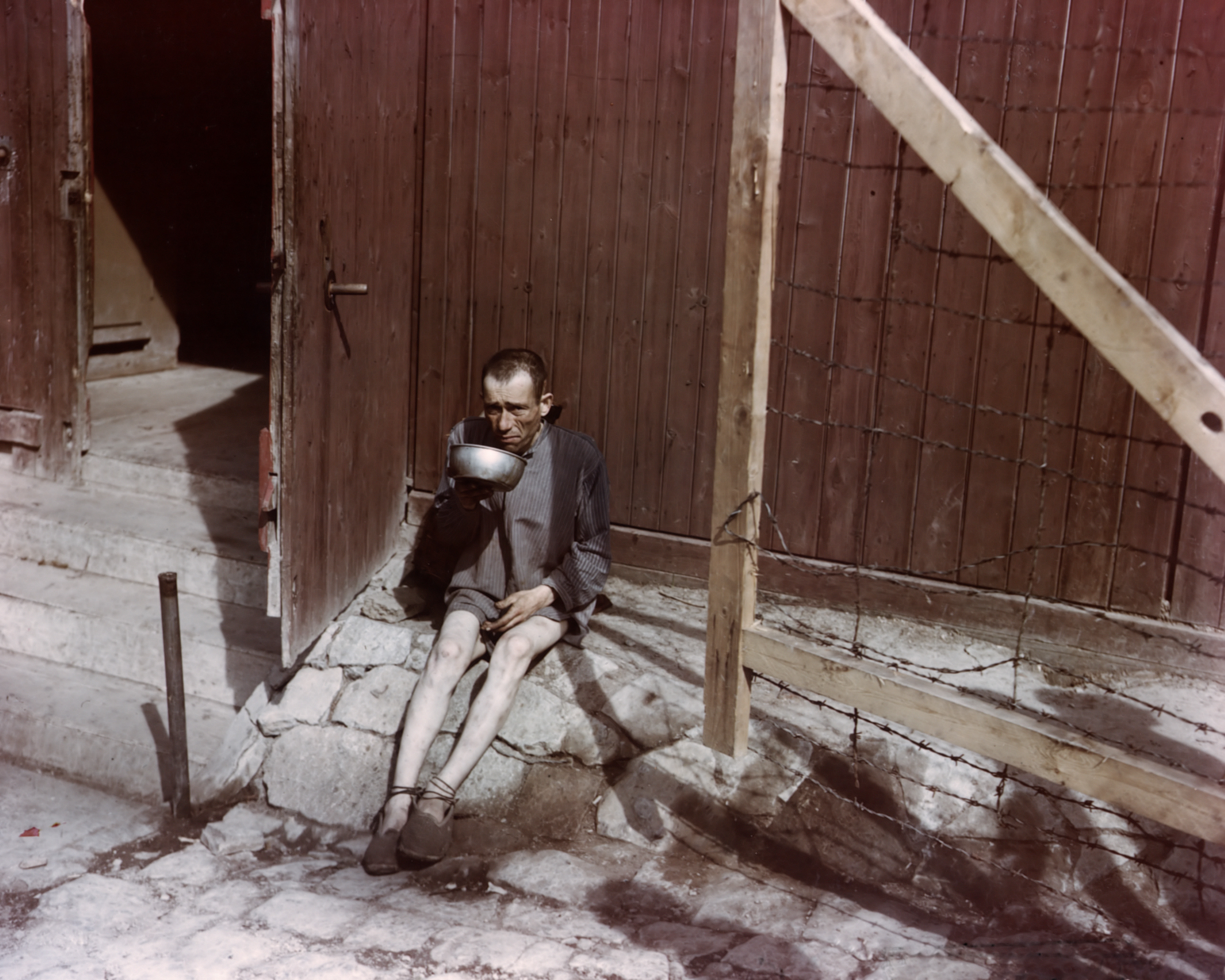
Provenance and sources for frame 2
File and rights
Historical colour photograph. Archive: National Archives; photographer and date identified by the Buchenwald Memorial. Public 3620 × 2896 copy from Wikimedia Commons. Commons identifies this official U.S. military work as public domain in the United States. The file is preserved unchanged.
In early April, the SS forced thousands of prisoners out of Buchenwald on foot. On 11 April, American tanks overran the nearby garrison and the prisoners’ underground organisation took control of the camp. American reconnaissance troops entered that afternoon. More than 21,000 people remained at Buchenwald.
While doctors treated the sick, the camp was being opened to the outside world. On 16 April, the American command brought about a thousand Weimar residents here. Former prisoners explained the camp’s workings and showed visitors where people had been killed. Army photographers and correspondents gathered evidence of the crimes. Two days later, Ardean R. Miller III was working there, one of only four U.S. Army photographers using colour film in Europe. A week had passed since liberation; bodies still lay in the crematorium courtyard and the hospital was receiving patients.
3. A conversation in the Little Camp

Provenance and sources for frame 3
File and rights
Historical colour photograph. Archive: National Archives; photographer and date identified by the Buchenwald Memorial. Public 380 × 544 copy from Wikimedia Commons. Commons identifies this official U.S. military work as public domain in the United States. The file is preserved unchanged. The vertical slide is reproduced with its mount; the available copy is small.
Eleven hospital wards were set up in the former SS barracks. By 22 April, the medical teams had begun to curb the deaths. Investigators were gathering testimony and evidence of the crimes. In June 1945, former commandant Hermann Pister was found and arrested in a prisoner-of-war camp near Munich. At the Dachau trial in 1947, he was sentenced to death; he died in custody before the sentence was carried out.
4. Evidence in the cellar

Provenance and sources for frame 4
File and rights
Historical colour photograph. Archive: National Archives; photographer and date identified by the Buchenwald Memorial. Public 594 × 470 copy from Wikimedia Commons. Commons identifies this official U.S. military work as public domain in the United States. The file is preserved unchanged.
Black-and-white photographs of the liberated camps were appearing outside Germany in the spring of 1945. Miller’s colour work followed a different path. According to the Buchenwald Memorial, the Army then regarded colour photography as an experiment, and the images remained unused for many years. The thirteen surviving slides were rediscovered and published only in the 1990s.
5. At the camp gate
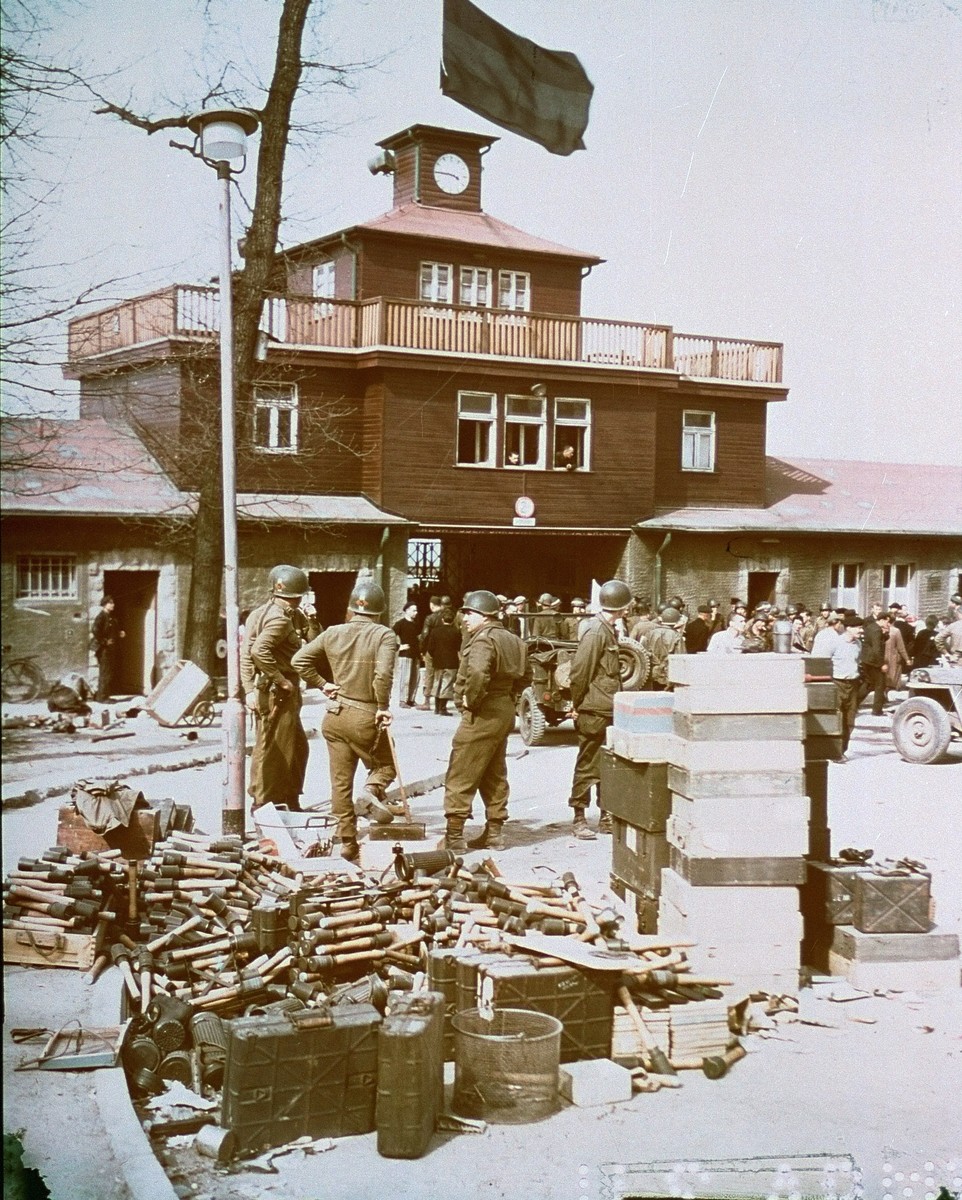
Provenance and sources for frame 5
File and rights
Historical colour photograph. Archive: National Archives; photographer and date identified by the Buchenwald Memorial. Public 962 × 1200 copy from Wikimedia Commons. Commons identifies this official U.S. military work as public domain in the United States. The file is preserved unchanged.