W–038 · Documentary photograph and sources
Stutthof: From Trial to Execution
Jenny-Wanda Barkmann returned in handcuffs to the camp where she had been a guard. In May 1946, she and other defendants were brought to Stutthof with the court and journalists. The first trial for crimes committed in the camp was already under way in Gdańsk. Mikołaj Sprudin photographed Barkmann beside a heap of prisoners’ shoes.
1. Beside the pile of shoes

Provenance and sources for frame 1
Mikołaj Sprudin / PAP, May 1946, Sztutowo. The feed uses a small catalogue copy; opening the image shows a larger public Alamy comp with its watermarks intact, not the licensed agency master. PAP / Alamy lists the work as Rights Managed. Displayed file: 1300 × 919 pixels. The agency lists it as Rights Managed. Full image record in Russian.
alamy.comView image fileThe first prisoners, brought from Gdańsk on 2 September 1939, built Stutthof themselves. They were Poles arrested at the beginning of the war, a day after Germany invaded Poland. Around 110,000 people passed through the camp and its satellite sites, including tens of thousands of Jews. Approximately 65,000 died: murdered, or lost to hunger, disease, exhausting labour and the evacuation. When the Red Army entered the camp on 9 May 1945, around 150 people remained.
2. In the dock
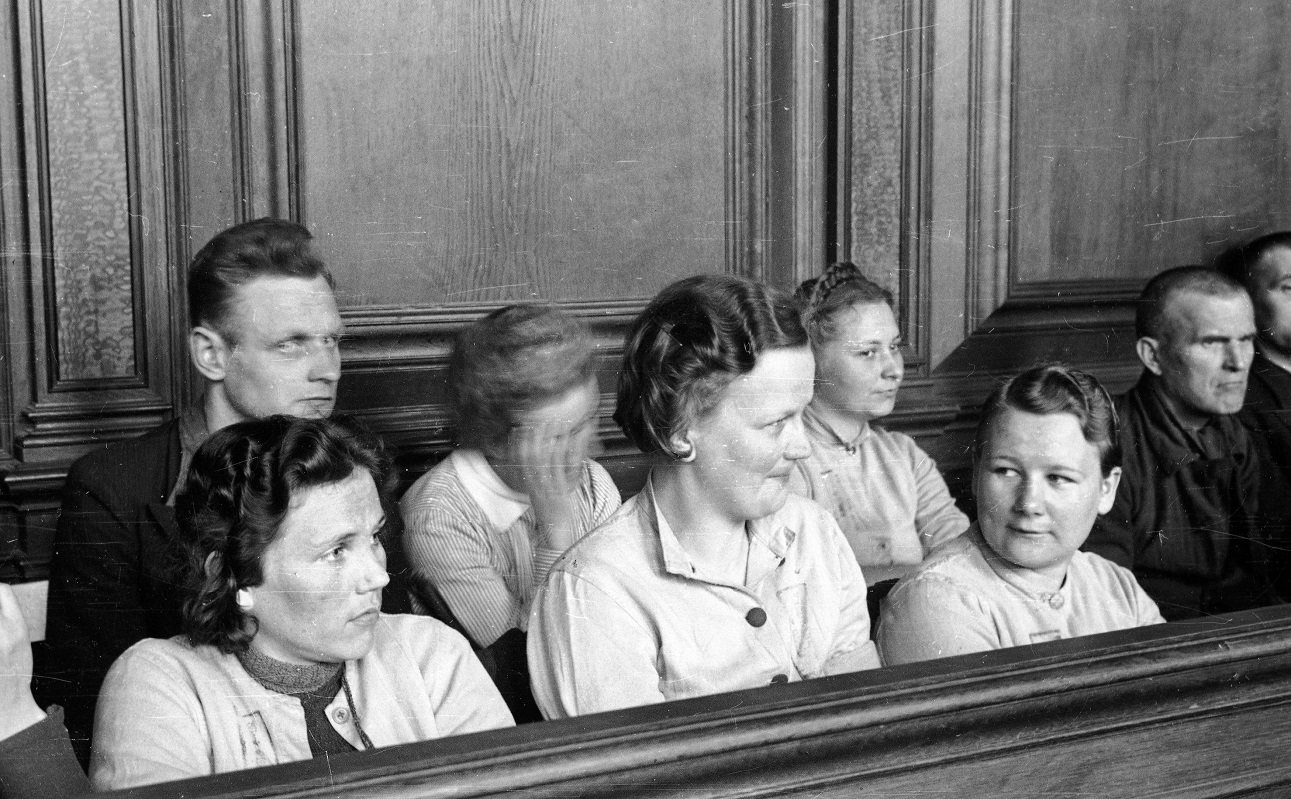
Provenance and sources for frame 2
A courtroom photograph from the National Digital Archives of Poland, reproduced by Gedanopedia. The photographer and exact day between April and May 1946 are not stated. Displayed file: 1291 × 799 pixels. No free licence has been established for this file. Full image record in Russian.
gdansk.gedanopedia.plView image fileFifteen defendants appeared before the Special Criminal Court in Gdańsk on 25 April 1946. They included SS men, female guards and former prisoners given power over other inmates. They were tried for abuse and for the deaths of prisoners. The court called forty-two witnesses, mostly Stutthof survivors; other former inmates submitted written testimony. It also considered a sixty-page diary kept by the former Italian consul Aldo Coradello, describing daily life in the camp and the killings there.
3. The inspection party

Provenance and sources for frame 3
Mikołaj Sprudin / PAP, May 1946, Sztutowo, Alamy ID 2H8Y1YC. The feed uses a small preview and the full-size link opens the public watermarked comp, not the licensed master. PAP / Alamy lists Rights Managed use. Displayed file: 1300 × 929 pixels. The agency lists it as Rights Managed. Full image record in Russian.
alamy.comView image fileDuring the inspection, defendants were led through the grounds in pairs, handcuffed. The next day a newspaper reported that Jan Breit had shown the camp hospital and Barkmann the gas chamber. According to the inspection record cited by a researcher of the trial, the visit took place on 29 May. The PAP photographs in the Alamy catalogue are dated 31 May. The two records disagree; this series is therefore dated simply May 1946.
4. The body-burning site

Provenance and sources for frame 4
Mikołaj Sprudin / PAP, May 1946, Sztutowo, Alamy ID 2H8Y1Y8. The feed uses a small preview and the full-size link opens the public watermarked comp, not the licensed master. PAP / Alamy lists Rights Managed use. Displayed file: 1300 × 919 pixels. The agency lists it as Rights Managed. Full image record in Russian.
alamy.comView image fileHearings ended on 31 May. The court delivered its verdict the following day: eleven people, five women and six men, were sentenced to death; two received prison terms; two were acquitted. Barkmann was among those condemned. Bolesław Bierut declined to grant clemency. The execution was set for early July.
5. Wanda Klaff before execution
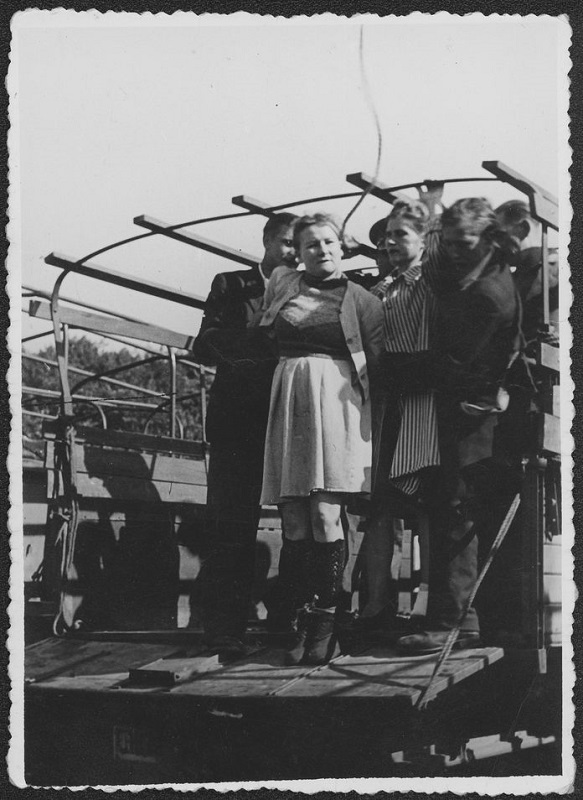
Provenance and sources for frame 5
A documentary view of the public execution in Gdańsk on 4 July 1946, from the Stutthof Museum archive via Gedanopedia. The photographer is not identified. Displayed file: 583 × 800 pixels. No free licence has been established for this file. Full image record in Russian.
gdansk.gedanopedia.plView image file6. Before the sentence was carried out
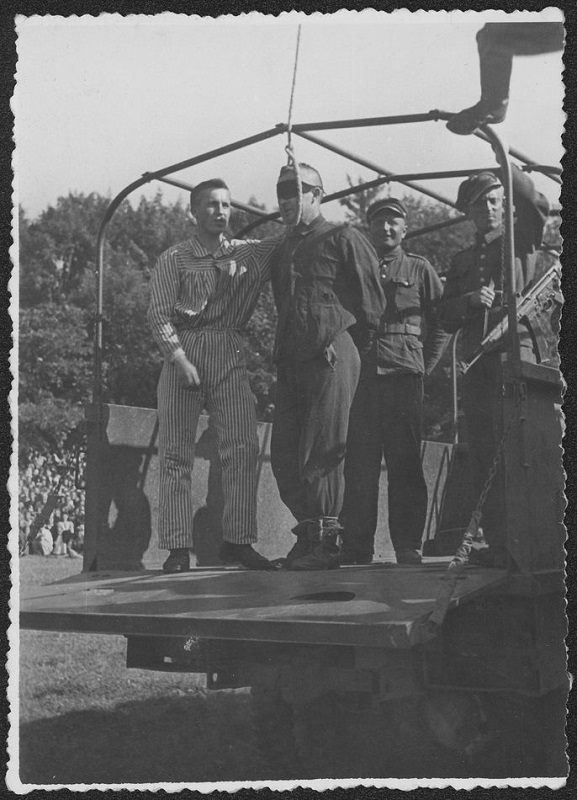
Provenance and sources for frame 6
A documentary view of the public execution in Gdańsk on 4 July 1946, from the Stutthof Museum archive via Gedanopedia. The photographer is not identified. Displayed file: 577 × 800 pixels. No free licence has been established for this file. Full image record in Russian.
gdansk.gedanopedia.plView image fileAll eleven were hanged on 4 July beside Pohulanka Street in Gdańsk. Tens of thousands came to the hill, including children. The city ran extra buses, and factories brought workers on lorries. The condemned arrived in trucks too; the truck beds served as platforms. When the vehicles pulled away, the sentences were carried out. Former prisoners and relatives of victims, dressed in striped camp uniforms, acted as executioners. Photographs survive of the preparations, the executions and the site afterwards.
7. The execution of Elisabeth Becker
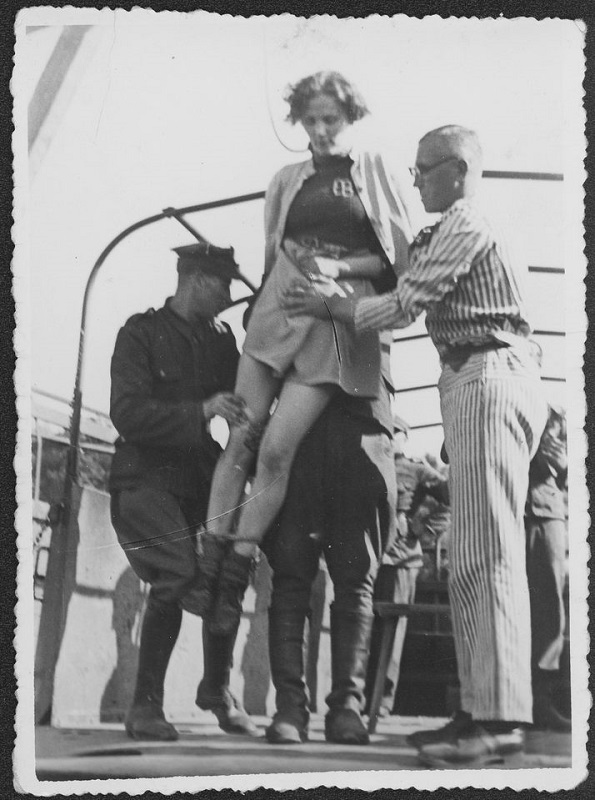
Provenance and sources for frame 7
A documentary view of the public execution in Gdańsk on 4 July 1946, from the Stutthof Museum archive via Gedanopedia. The photographer is not identified. Displayed file: 595 × 800 pixels. No free licence has been established for this file. Full image record in Russian.
gdansk.gedanopedia.plView image fileThe mass spectacle provoked debate. Jan Kott, Stanisław Ossowski and other writers and scholars spoke out against public executions. In September, Justice Minister Henryk Świątkowski condemned them as well. Poland’s last such execution had already taken place that summer: on 21 July 1946, seventeen days after Pohulanka, Arthur Greiser was hanged in Poznań.
8. The public execution
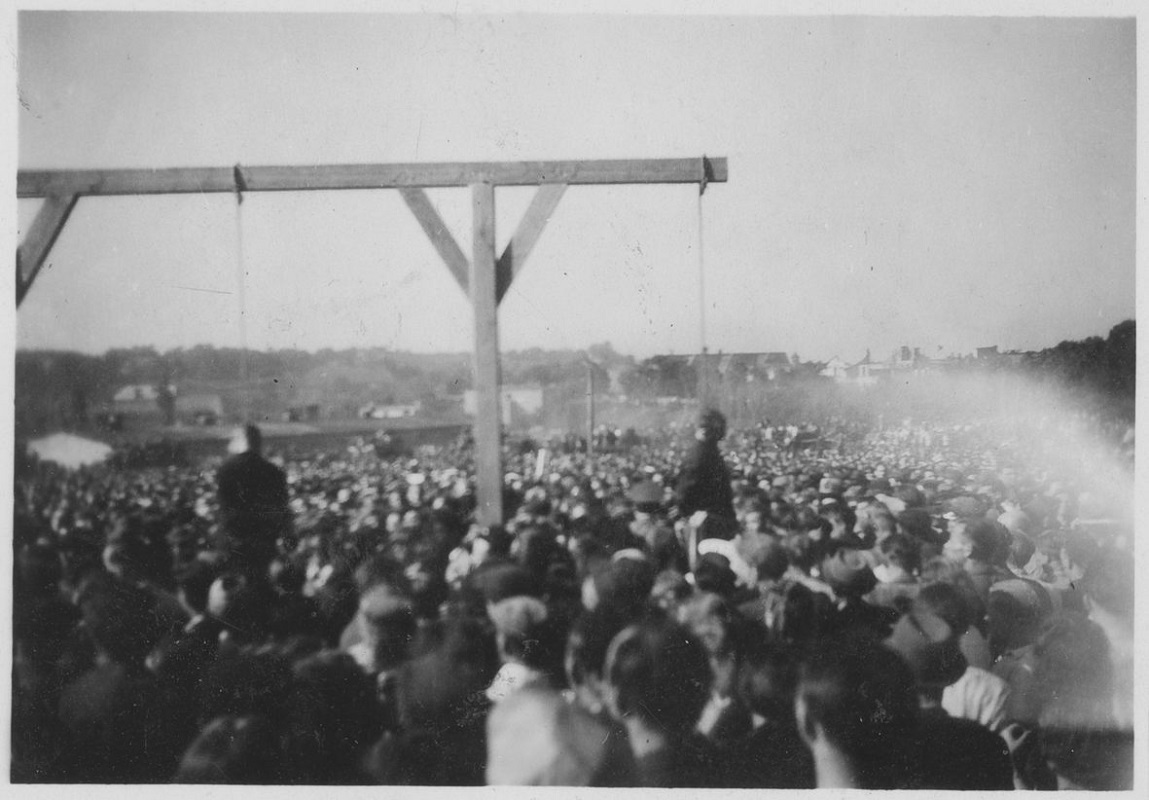
Provenance and sources for frame 8
A documentary view of the public execution in Gdańsk on 4 July 1946, from the Stutthof Museum archive via Gedanopedia. The photographer is not identified. Displayed file: 1149 × 800 pixels. No free licence has been established for this file. Full image record in Russian.
gdansk.gedanopedia.plView image fileThe Stutthof proceedings continued. Three more trials were held in Gdańsk in 1947: sixty-nine defendants were sentenced, ten of them to death. By then public executions had been abandoned. Pohulanka remained part of the history of the first trial, together with the defendants’ return to the camp in May, the prisoners’ testimony and Sprudin’s photographs.
9. After the executions
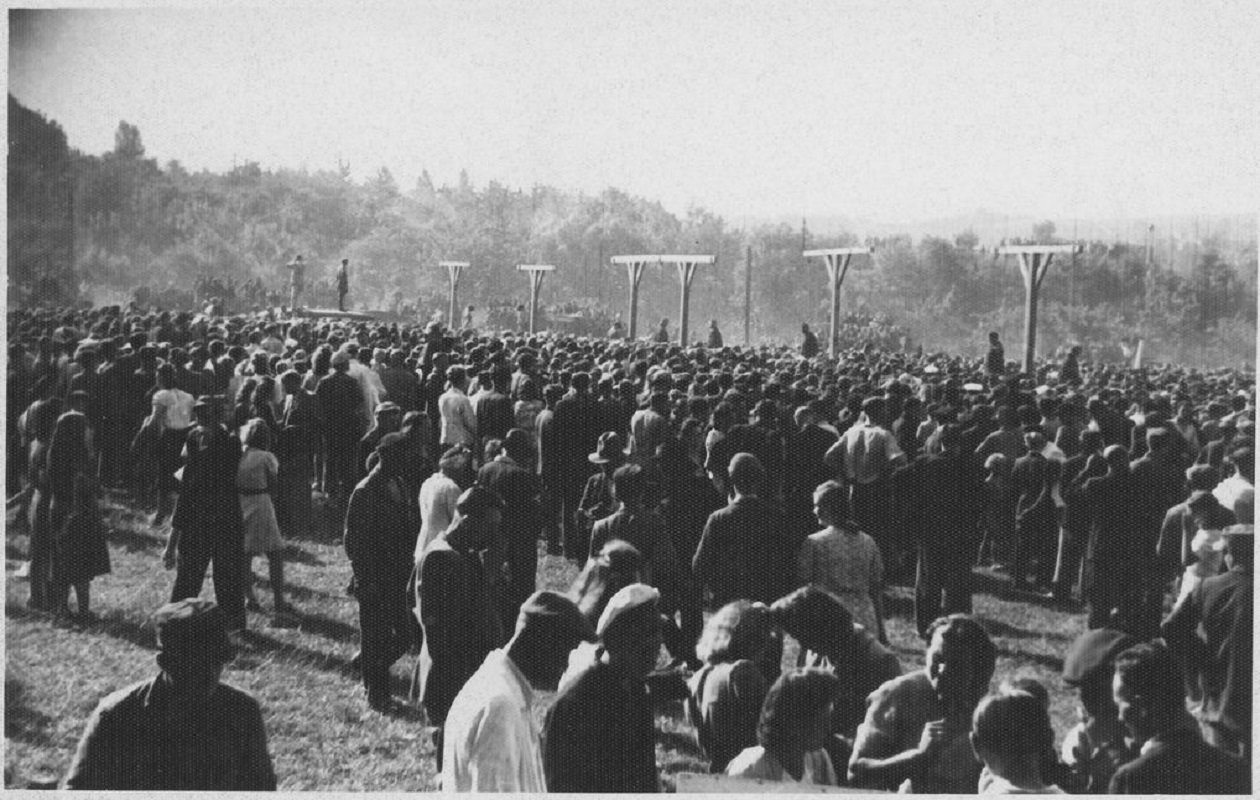
Provenance and sources for frame 9
A documentary view of the public execution in Gdańsk on 4 July 1946, from the Stutthof Museum archive via Gedanopedia. The photographer is not identified. Displayed file: 1260 × 800 pixels. No free licence has been established for this file. Full image record in Russian.
gdansk.gedanopedia.plView image file