W–060 · November 1978 · Jonestown, Guyana
After Jonestown
On 18 November 1978, several Jonestown residents reached the Port Kaituma airstrip with Congressman Leo Ryan. They had asked him to help them leave the Peoples Temple settlement. As the party boarded the aircraft, armed Temple members opened fire. Ryan, three journalists and Patricia Parks, who had chosen to leave the community, were killed. Survivors who remained on the ground hid near the airstrip until the following morning.
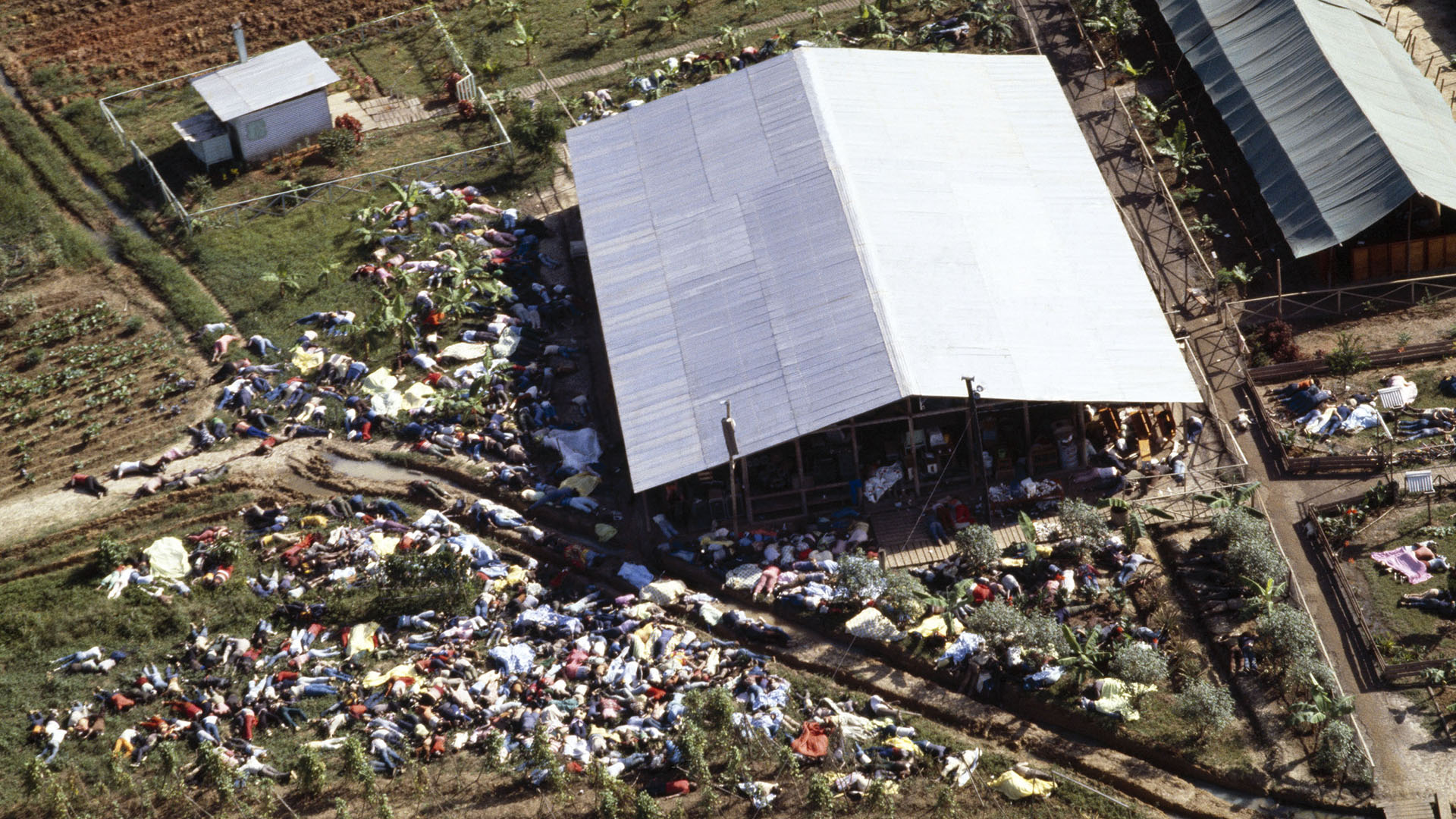
1. The pavilion after the deaths
Provenance and sources for frame 1
File and rights
A&E editorial reproduction, 1920 × 1080, retained without additional cropping. Its proportions differ from the 3000 × 2043 file listed by Getty; the archival master was not obtained. Getty offers licensing and states NO U.S. TABLOID SALES; no free licence is stated. The catalogue date of 18 November conflicts with Kennerly's account of arriving later. This two-image selection combines separate shoots and does not present his full report. File: https://res.cloudinary.com/aenetworks/image/upload/v1/AE_GettyImages-2512986
Jonestown was an agricultural project established by Peoples Temple, an American religious movement. Its members moved from the United States to Guyana for the communal life Jim Jones promised them. Relatives reported that people were being held against their will and pressed for an investigation. Former members described rehearsals for collective suicide. Ryan came to investigate these accounts; on the first evening of his visit, a resident passed a reporter a note asking for help to leave.
At the settlement on 18 November, Jones ordered residents to gather at the communal pavilion. There, people were given a cyanide-laced drink. A surviving recording captures Jones urging those assembled to accept death; one woman objects and others argue with her. Adults poisoned the children. The recordings and survivors' accounts do not establish how many adults took the poison willingly and how many were coerced.
Nine hundred and nine people died at Jonestown itself. Jones was found with a gunshot wound to the head. Five more people died at the Port Kaituma airstrip and four at the Temple house in Georgetown. Across the three locations, the death toll was 918, including 304 people under eighteen.
Photographer David Hume Kennerly heard about the attack on Ryan while in Miami and flew to Guyana with TIME correspondent Don Neff. They later reached Jonestown in a small aircraft. Kennerly recalled initially mistaking the bodies around the pavilion for living people. The aircraft circled several times, its pilot tilting a wing so that he could take photographs.
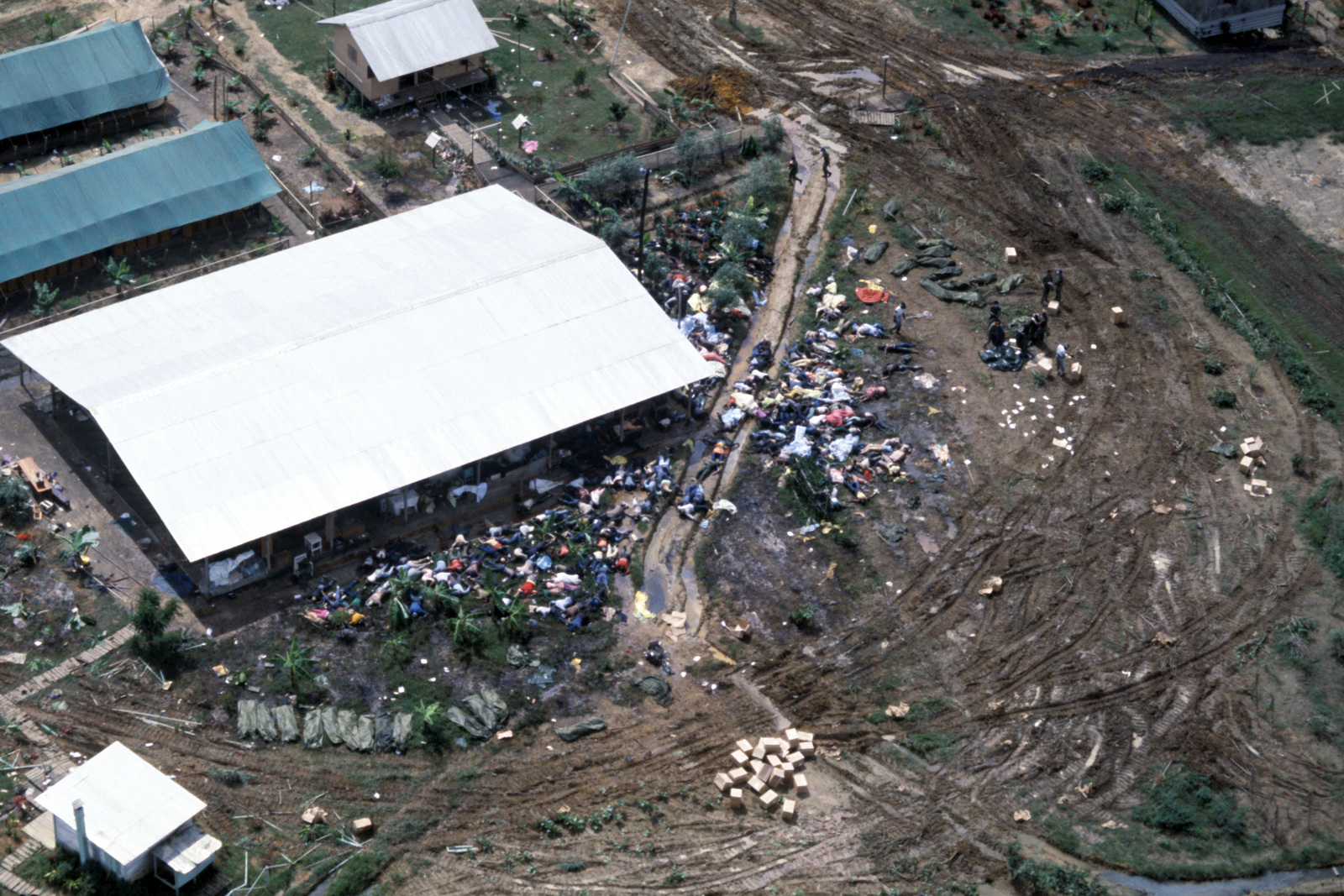
Hundreds of bodies had to be removed from the remote settlement. In military photographer Jose L. Sanchez's image of 20 November, US Army personnel place remains in body bags. The work of identifying the dead continued for decades, with researchers comparing residents' lists against survivors' accounts and information from relatives. In May 2011, four granite plaques bearing the names of those who died on 18 November 1978 were installed at Evergreen Cemetery in Oakland.
2. Recovery operation
Provenance and sources for frame 2
File and rights
A separate shoot and photographer; public file 1600 × 1067. US federal government photograph in the US public domain; National Archives record: https://catalog.archives.gov/id/6413444