W–044 · 6–26 June 1966 · Mississippi, United States
The March After the Shots
On 5 June 1966, James Meredith set out from Memphis on the road to Jackson. He intended to cross Mississippi almost alone, showing Black residents that threats need not rob them of the vote. Four years earlier he had become the first Black student to enroll at the University of Mississippi. His arrival on campus had been met with violent riots.
On the second day, near Hernando, Aubrey James Norvell shot him with a shotgun. Meredith lay wounded on Highway 51. Associated Press photographer Jack Thornell recorded the scene from more than one angle: in one frame Meredith turns towards the brush, where the gunman is visible; in another he reaches towards the verge, facing the camera. The original photographs are black and white. A later colour version of the second frame cannot tell us what the scene looked like in colour.
1. After the shots
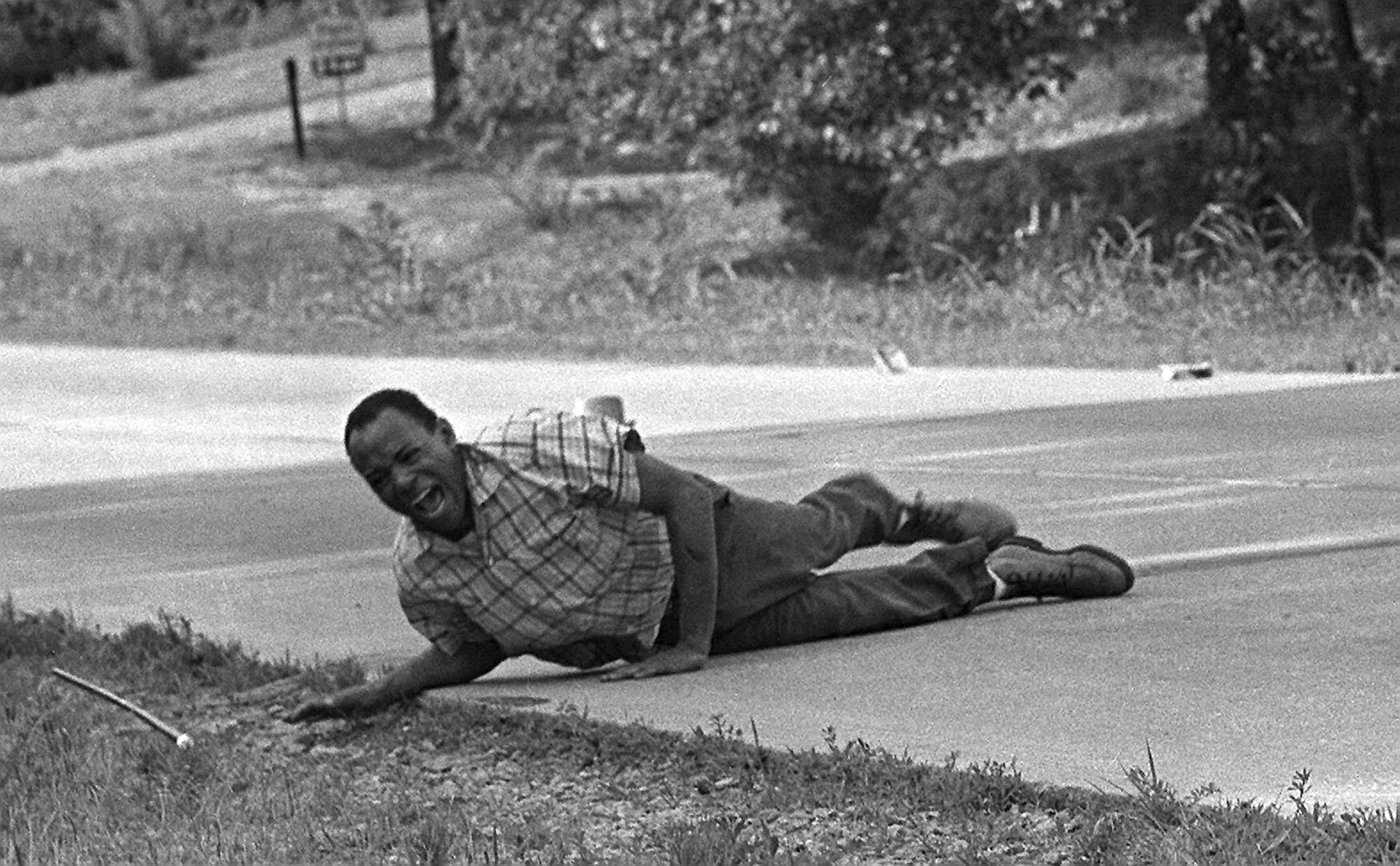
Provenance and sources for frame 1
File and rights
Associated Press photograph. A 1750 × 1082 Commons copy; AP still credits and licenses the image. Free reuse across all jurisdictions is not established.
2. Another angle
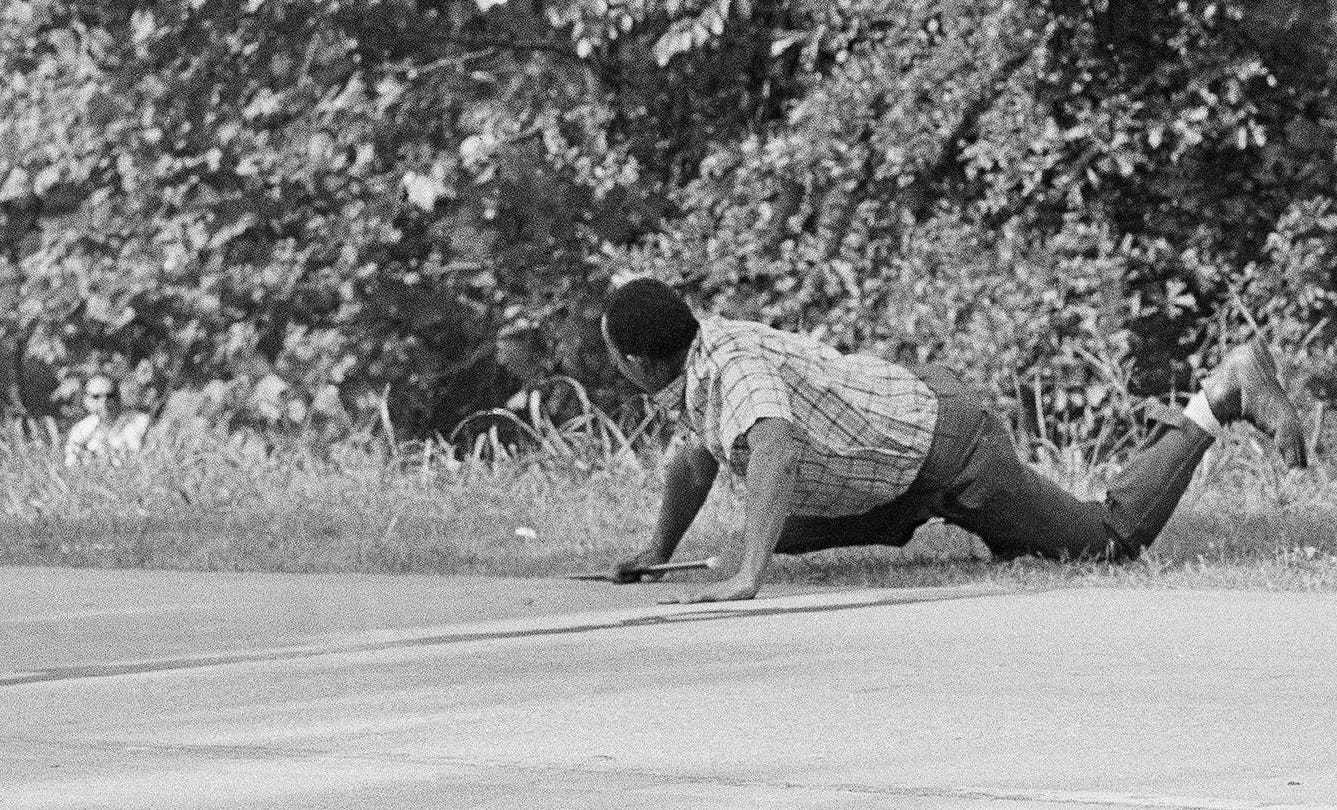
Provenance and sources for frame 2
File and rights
Jack Thornell / AP photograph, 1337 × 810 copy. Agency rights remain; the file has no stated free licence.
Meredith was taken to a Memphis hospital, but the march did not end. On 7 June the comedian and civil rights activist Dick Gregory came to the hospital, intending to carry on the walk. The following day Meredith became unwell during a press conference and a doctor came to his aid. AP photographer Charles Kelly recorded both moments.
3. Gregory at the hospital
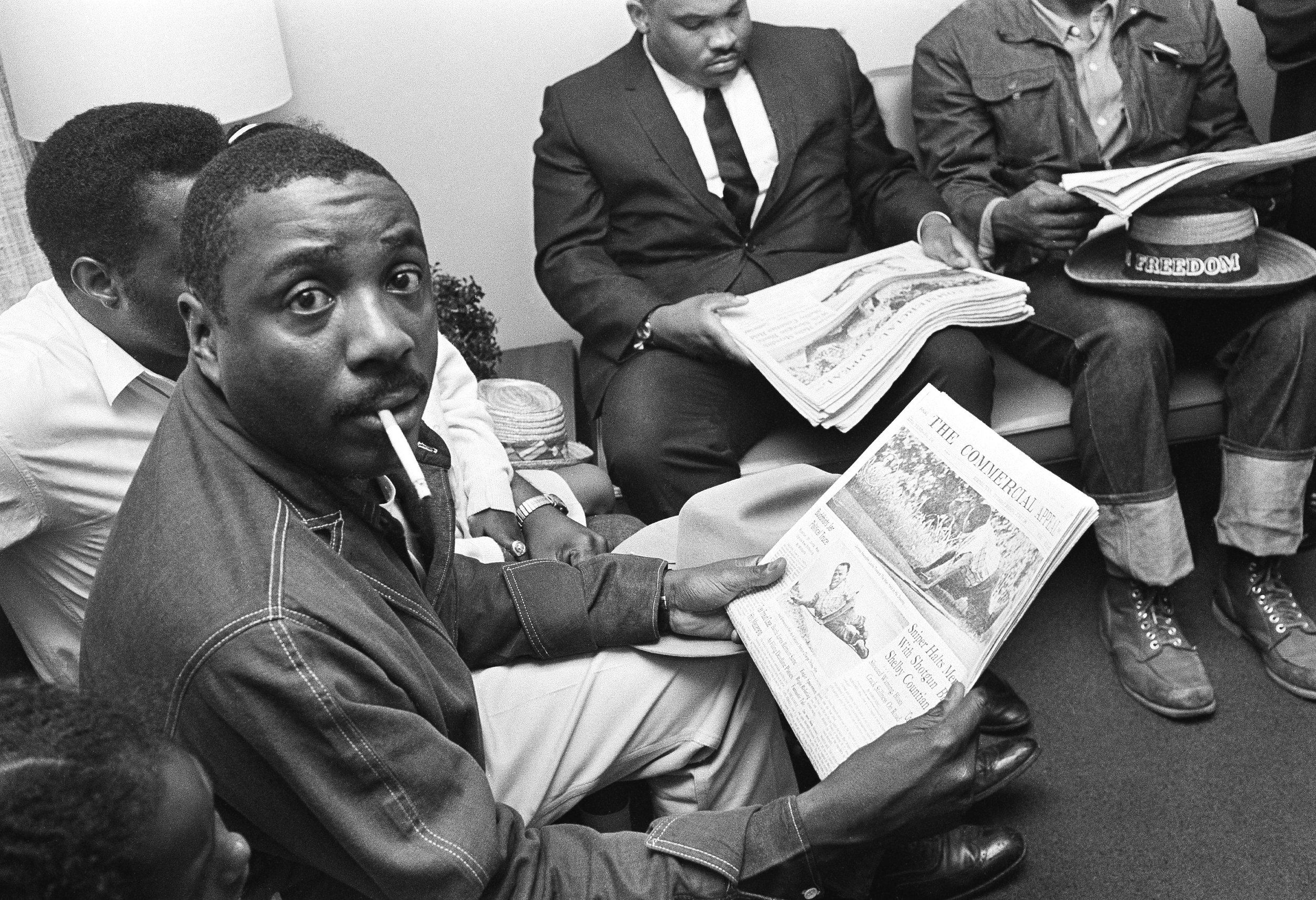
Provenance and sources for frame 3
File and rights
Public AP file, 2500 × 1709; agency photograph with no stated free licence.
4. Press conference
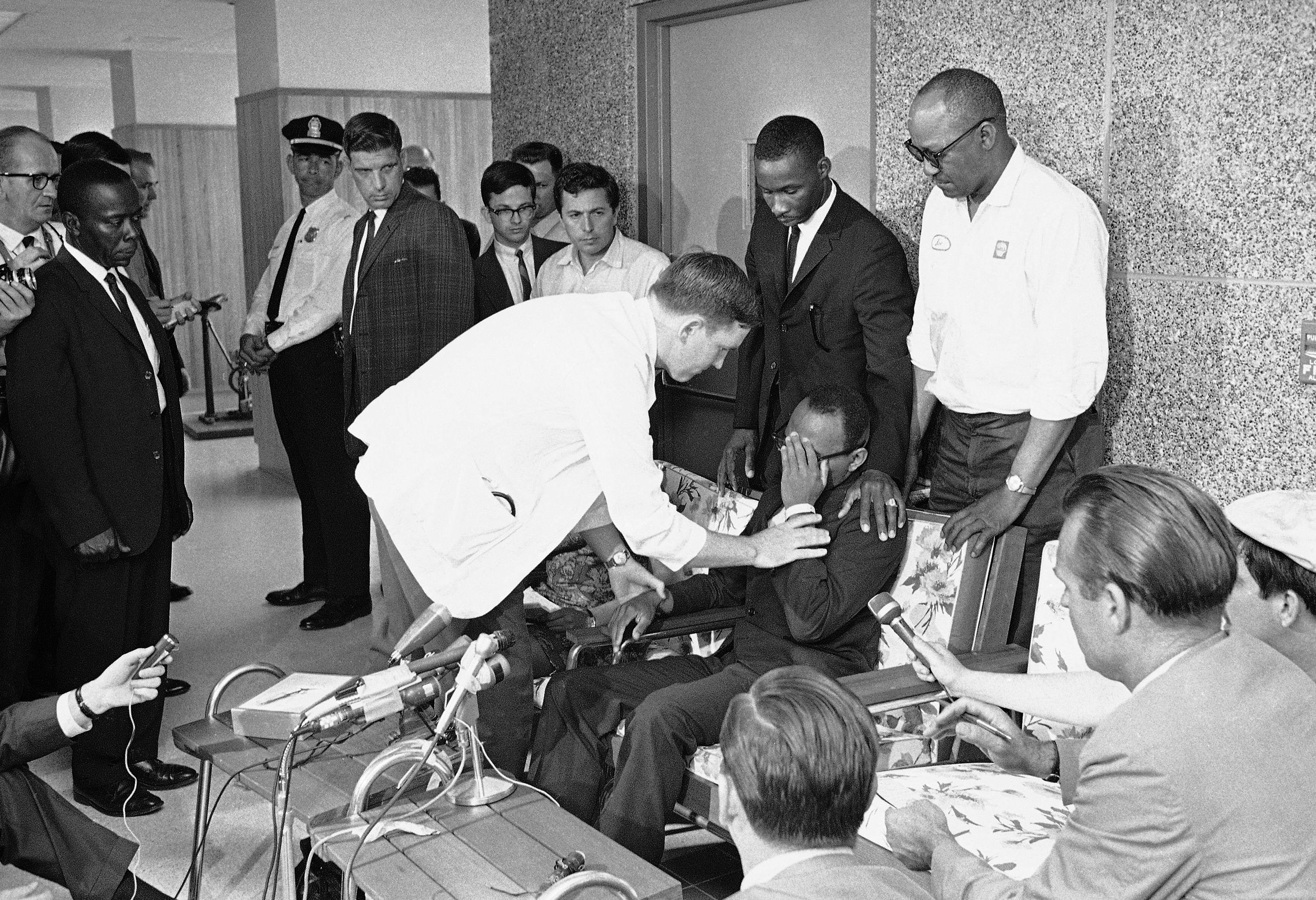
Provenance and sources for frame 4
File and rights
Public AP file, 2500 × 1710; agency photograph with no stated free licence.
Civil rights leaders took up the march. Martin Luther King Jr., Floyd McKissick, Stokely Carmichael and local organisers turned a solitary walk into a drive to register voters. The route passed through Mississippi Delta towns where threats and official resistance still kept Black residents from the ballot. During the march, the call for Black Power, already heard among SNCC activists, entered the national political debate.
On 23 June in Canton, officials refused the marchers permission to camp in a schoolyard. Police used tear gas. Kelly photographed officers in gas masks and, in a separate scene, marchers released on bond. Meredith rejoined the procession on 25 June.
5. Tear gas in Canton
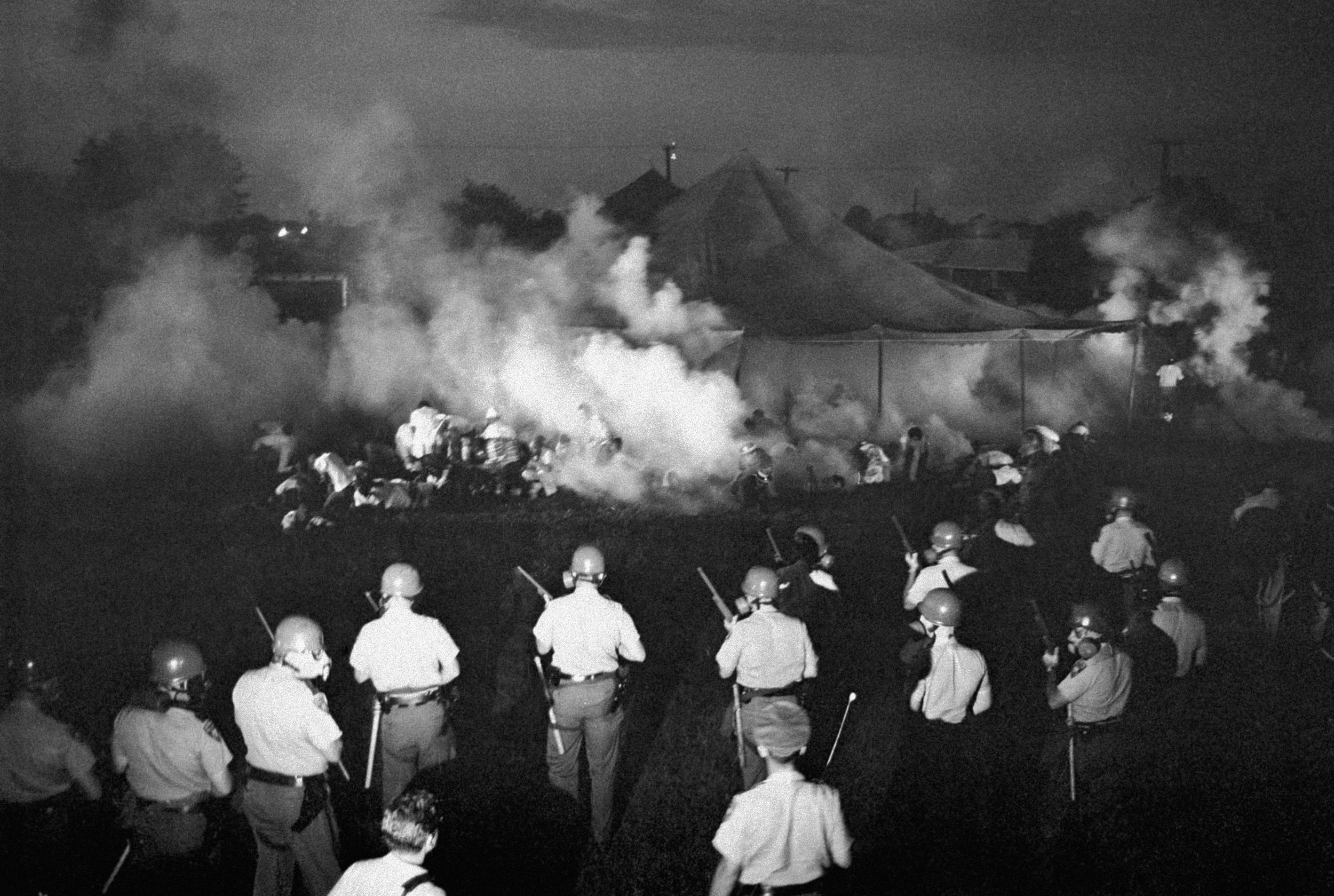
Provenance and sources for frame 5
File and rights
Public AP file, 2500 × 1679; agency photograph with no stated free licence.
6. After release on bond
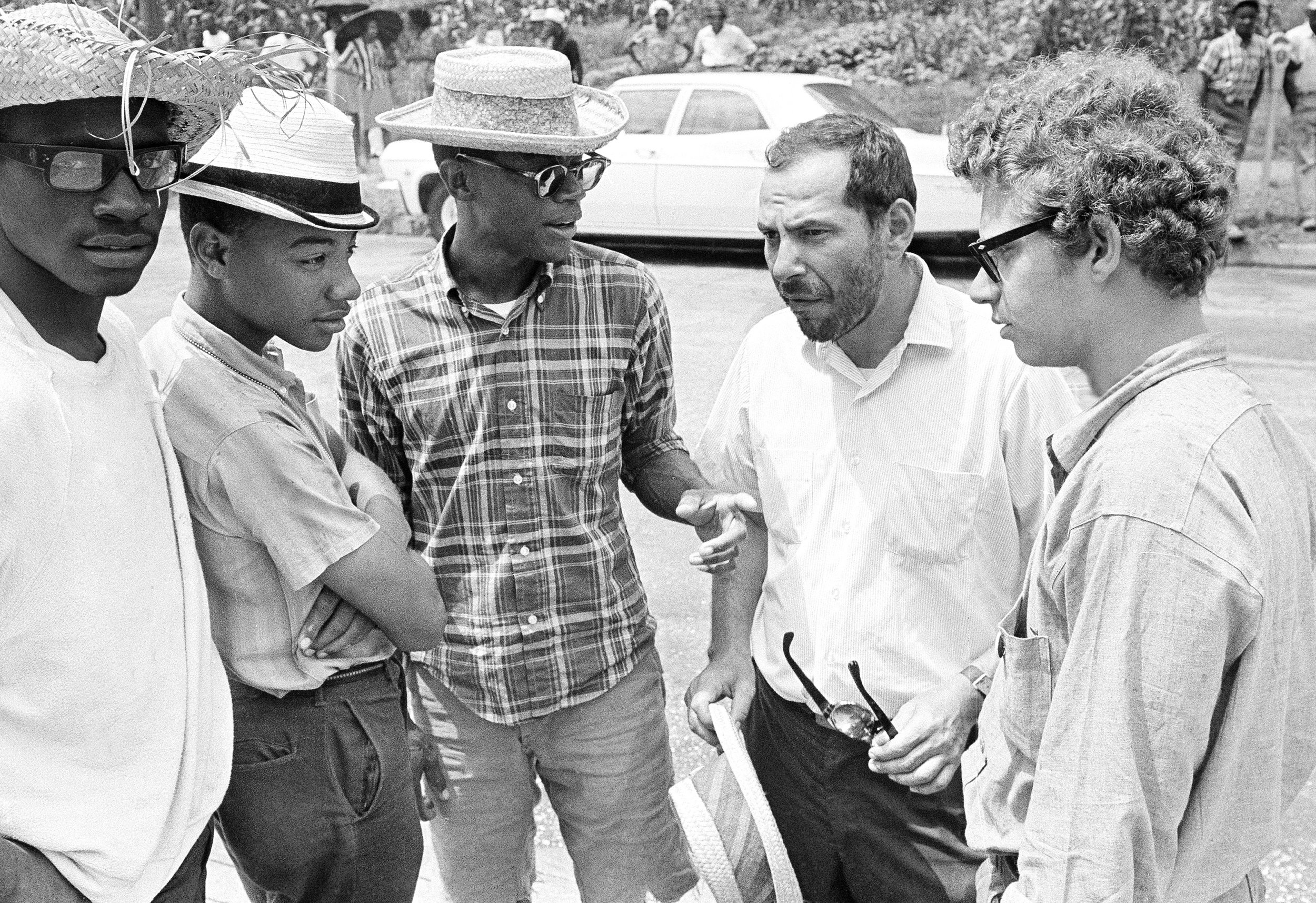
Provenance and sources for frame 6
File and rights
Public AP file, 2500 × 1715; agency photograph with no stated free licence. This image alone does not connect the arrests to the tear-gas incident.
On 26 June he walked with King, Coretta Scott King, Carmichael and others at the head of the column bound for Jackson. The march ended in a rally at the state capitol. The SNCC Digital Gateway estimates that about 15,000 people took part by the final day. Meredith's journey was completed—though no longer by one man.
7. At the head of the march
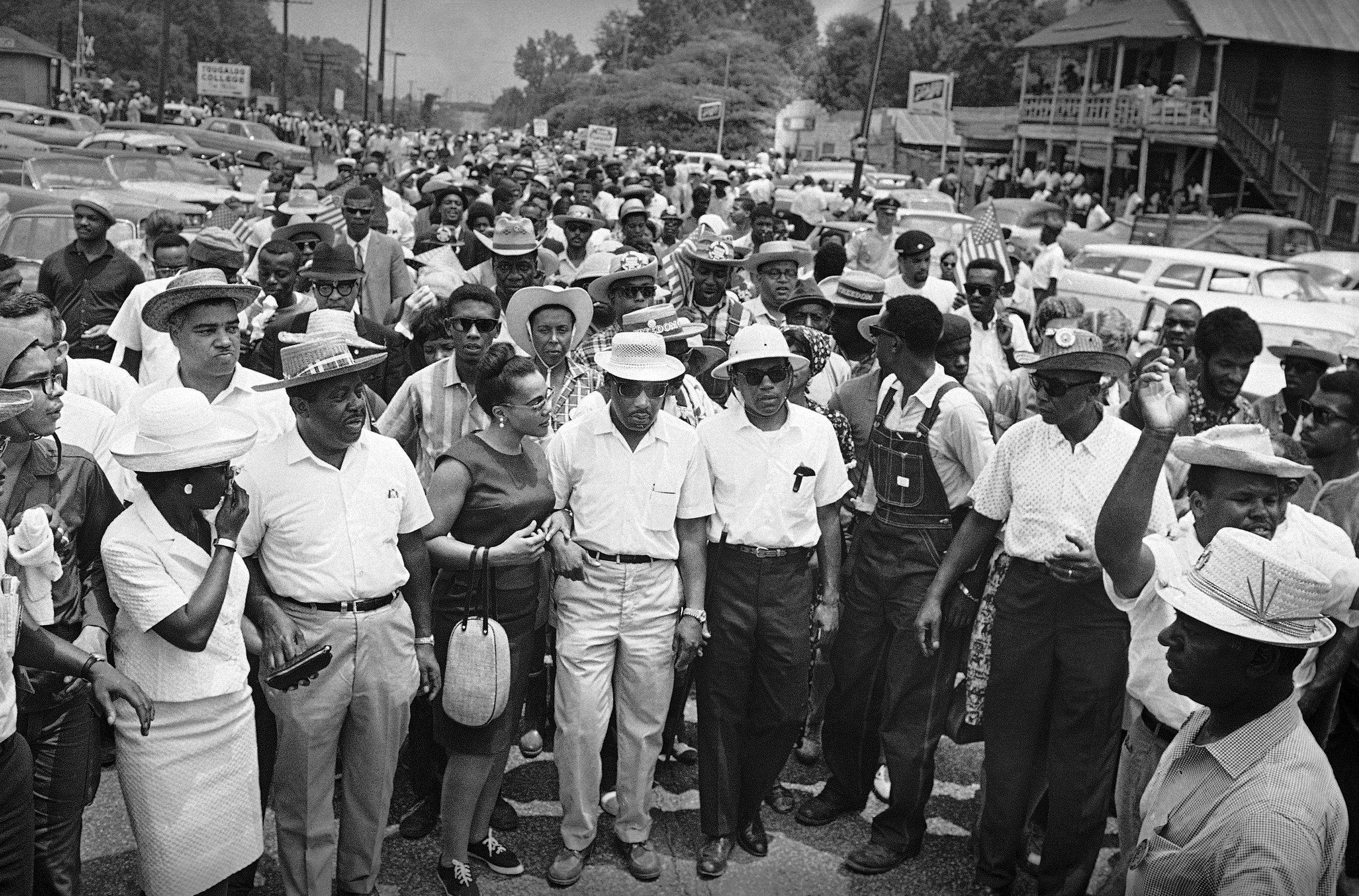
Provenance and sources for frame 7
File and rights
Public AP file, 2500 × 1648; agency photograph with no stated free licence.
8. Entering Jackson

Provenance and sources for frame 8
File and rights
Public AP file, 2500 × 1740; agency photograph with no stated free licence.
9. Meredith addresses the crowd
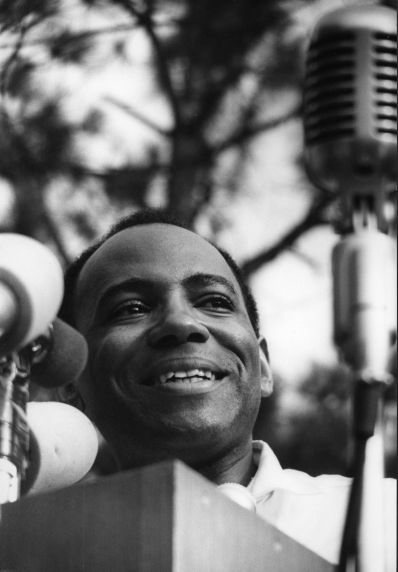
Provenance and sources for frame 9
File and rights
Public archive copy, 398 × 572; the catalogue spells the photographer's name Matt Heron (usually Matt Herron). No archival master was obtained; the library site reserves rights.