Nsala and King Leopold’s Rubber
W–071
Nsala carried his daughter’s remains as evidence of her killing. On 14 May 1904, armed rubber-company sentries came to his village, Wala. The next day, 15 May, he reached Baringa with the hand and foot of Boali, aged about five, wrapped in leaves. Missionary Edgar Stannard recorded his account in a letter dated 21 May.
Wala lay within the Congo Free State, the territory established under the personal rule of Belgium’s King Leopold II in 1885. Leopold presented colonisation as a campaign against the slave trade and a mission to civilise Africa. Across vast concessions, residents were required to gather wild rubber for the state and concessionary companies. Armed forces enforced quotas; women and village elders were held hostage while men went into the forest.
In the Baringa region, rubber was collected for the ABIR company. Its sentries worked under European agents. According to residents whose testimony Stannard recorded, they were allowed fourteen days to collect rubber and spent ten of those days in the forest. When Wala was attacked, the next delivery was still three days away.
Nsala said that fifteen sentries had come from the Lifinda post. They began taking prisoners and shooting. He named his wife, Bongingangoa, his daughter Boali and a boy, Esanga, aged about ten, among those killed. He reported that the attackers then dismembered, cooked and ate their bodies. The allegation of cannibalism is Nsala’s account as transmitted in the letter; Stannard did not witness the attack. He described what he saw at Baringa and recorded the testimony of those who came there.
Nsala said he took his daughter’s hand and foot when the sentries were not looking. He took them so that the company agent would believe his account. The men first visited the agent, then met the missionaries. Stannard dates that meeting to Sunday, 15 May, and explicitly says that Mrs Harris - Alice Seeley Harris - took the photograph.
Online captions often say that the girl’s limbs were cut off because her father had failed to meet a rubber quota. The letter gives a different sequence: Boali was killed with her mother and a boy, and Nsala brought some of her remains after the attack on the village. Stannard does not link the attack to a shortfall in Nsala’s own rubber delivery.
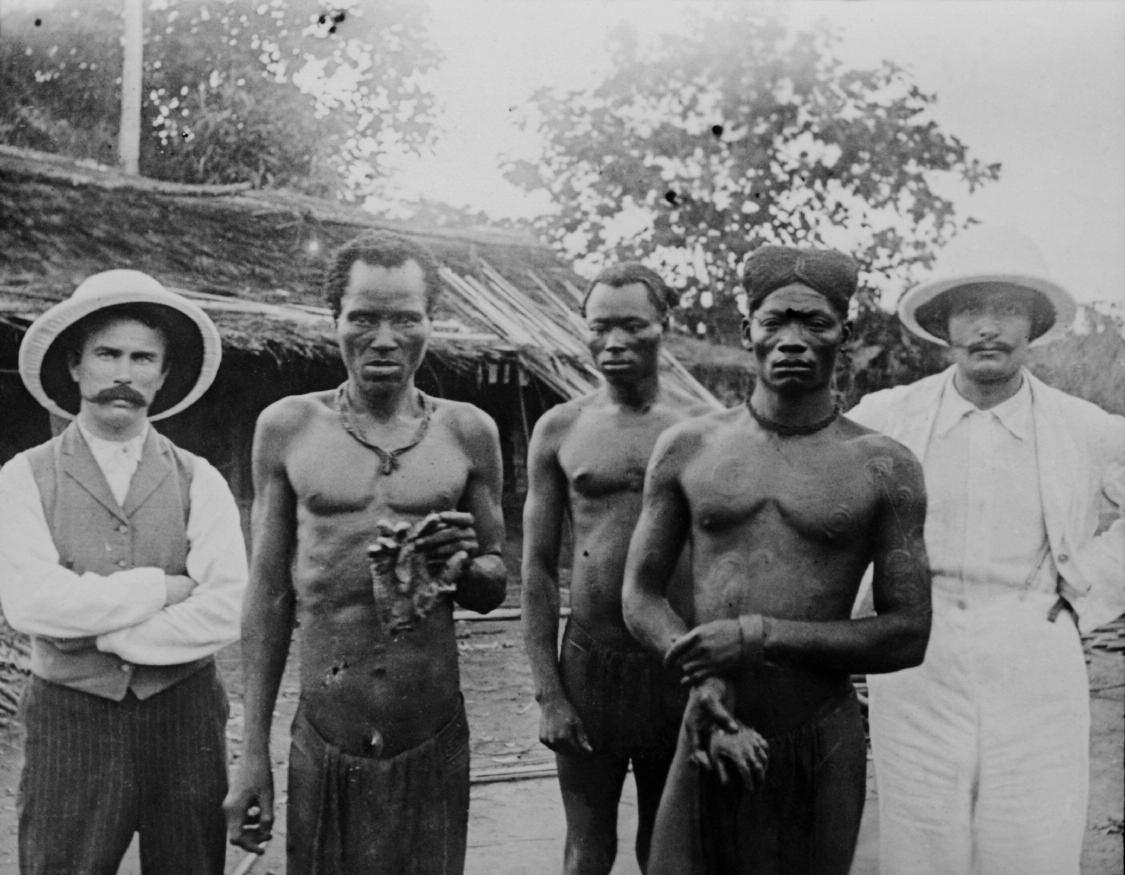
More witnesses arrived at Baringa during the following week. On 20 May, according to the same letter, three men brought the hands of Lingomo and Bolengo. Stannard recognised Bompenju and Lofiko, who had visited a few days earlier. Alice Harris photographed this group as well. John Harris and Stannard stood beside the men; Stannard explained that their presence was intended to strengthen the testimony.
In the same letter, Stannard described what happened when complaints did reach the courts. Judge Bosco had investigated other killings in the district. Sentries admitted shooting people and said they had followed the agent’s instructions; the agent denied ordering killings. The judge planned to send his findings to Boma and wait several months for a reply. According to Stannard, the judge arrested one head sentry for killing a woman. The others, no longer employed as sentries, remained at liberty in their villages.
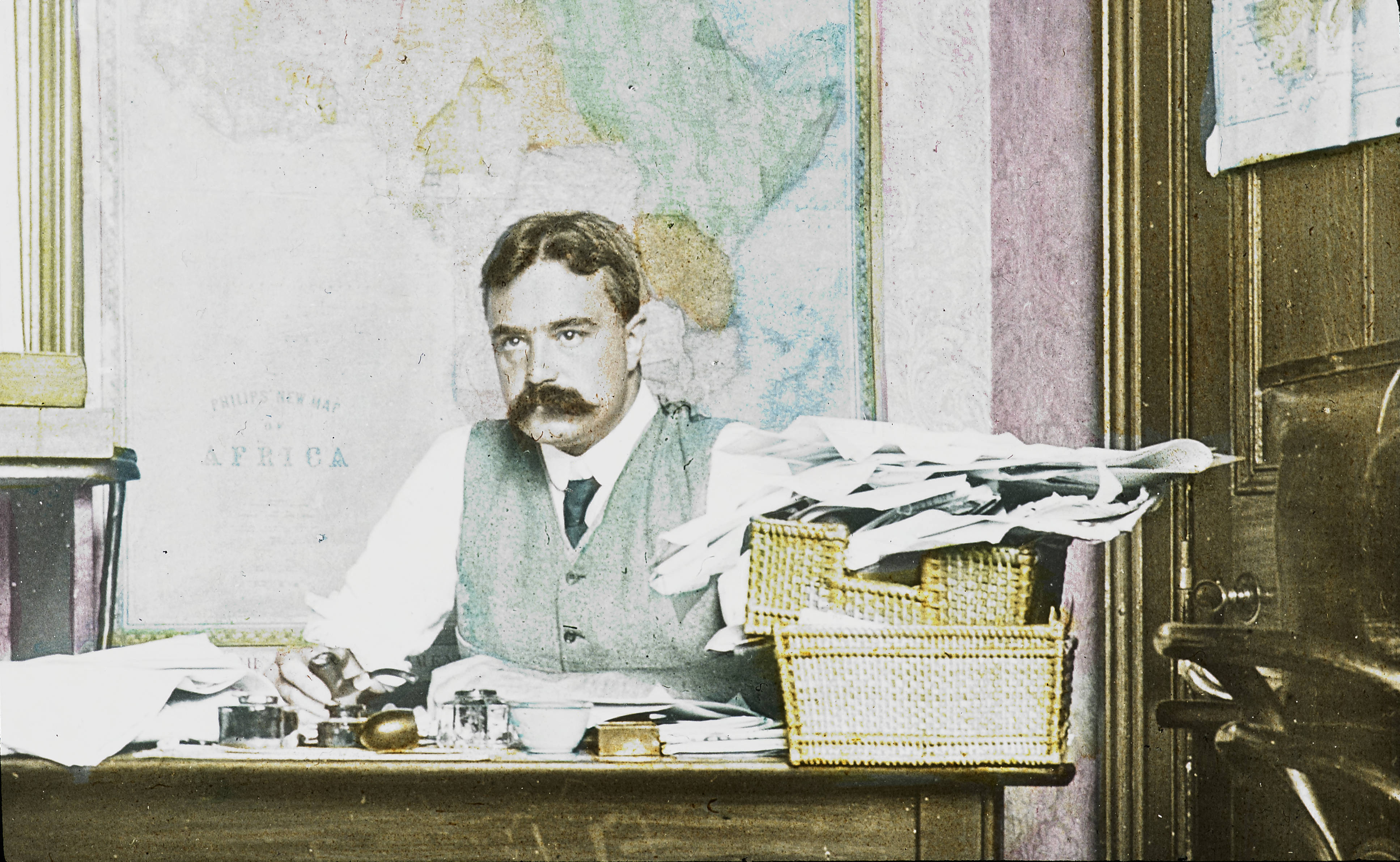
The campaign against Leopold’s rule was already under way. British consul Roger Casement investigated conditions in 1903; his report was published in 1904. Morel and his supporters established the Congo Reform Association that March. The May photographs joined an existing movement, appearing in print and at lectures illustrated with projected glass slides. Congolese testimony reached European and American audiences through missionaries, editors and the organisers of those lectures.
In 1904, Edmund Dene Morel included Nsala’s photograph and Stannard’s letter in his book King Leopold’s Rule in Africa. In 1905, a differently arranged reproduction appeared in Mark Twain’s satirical pamphlet King Leopold’s Soliloquy. Twain’s fictional Leopold complains about photographs: witnesses’ accounts can be dismissed as lies, but the camera frustrates that defence. These are the words of a literary character, not an authentic statement by the king.
In November 1905, the commission appointed by Leopold published a report supporting testimony about coercion and violence. In 1908, the Belgian state took over the Congo. The transfer did not end forced labour, and reformers continued their campaign. The Congo Reform Association held its final meeting on 16 June 1913.
Alice Harris continued campaigning with her husband and lived until 1970. Her photographs survive in the Anti-Slavery International collection managed by Autograph. The sources used here do not record Nsala’s later life.
Photographs and documents
1. Nsala after the attack on Wala

Sources and provenance for frame 1
Complete plate from E. D. Morel, King Leopold’s Rule in Africa, London, 1904, between pp. 144 and 145. The historical caption credits John Harris and calls another child who was killed Nsala’s son. Stannard’s letter, pp. 444-445, explicitly names Mrs Harris as the photographer and separately names the boy Esanga; his relationship to Nsala is not established. Alice Harris’s authorship and the date 15 May here follow that letter.
This is a digitised book plate retaining its margins and printed caption. Internet Archive IIIF rotated the complete leaf through 90° for reading; the supplied file is 3262 × 1956. Downloaded JPEG bytes are preserved; WITNESS has not cropped or retouched the image. The smaller WebP preview is separate. Published in 1904; the Internet Archive record marks it as not in copyright, without asserting rights status in every country.
Source image fileE. D. Morel, 1904 / Internet ArchiveFile on WITNESS · 3262 × 19562. Further witnesses at Baringa
Sources and provenance for frame 2
Stannard’s letter, p. 447, dates the men’s visit to the Friday after Thursday 19 May and explicitly identifies Mrs Harris as the photographer. The letter names two victims and two witnesses; the third man is unnamed. This caption does not assign the three men’s names by their positions in the photograph. Digital copy from Commons/KADIST, 1125 × 875.
Published in 1904/1905; Commons marks US public-domain status. This does not assert that rights have expired in every country. Downloaded archival bytes are unchanged; the WebP preview is separate.
Verification recordWikimedia Commons / archival reproductionFile on WITNESS · 1125 × 8753. A man in stocks
Sources and provenance for frame 3
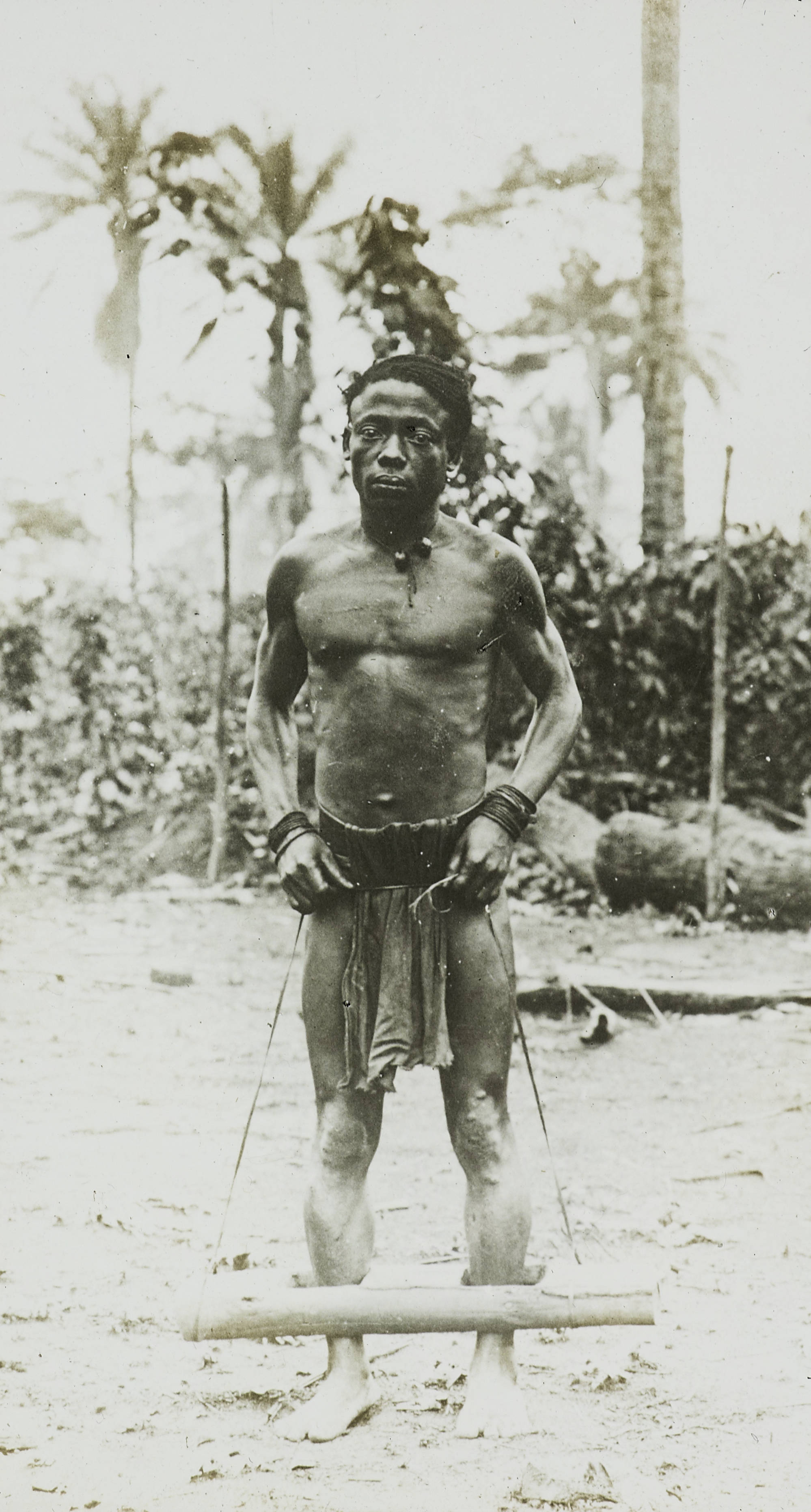
Missionary lantern slide CSCNWW33/OS10/86, University of Edinburgh; USC Libraries digital catalogue, record 78088. Photographer unknown; catalogue dates 1900-1915. No connection between this man and the attack on Wala or a particular rubber quota has been established. Commons digital copy, 1998 × 3727. The catalogue asks users to contact the repository about rights; Commons marks the file as public domain. No universal CC licence is claimed.
Verification recordUSC LibrariesWikimedia Commons / archival reproductionFile on WITNESS · 1998 × 37274. Morel and the reform campaign
Sources and provenance for frame 4
Slide CSCNWW33/OS10/23, University of Edinburgh; USC Libraries, record 78045. The catalogue identifies historical hand tinting of the glass slide; WITNESS did not colourise it. Photographer unknown. The approximate 1900-1915 dating does not establish that Morel was photographed in the Congo. Commons copy, 3870 × 2383; Commons marks US public-domain status, while the catalogue asks users to contact the repository about rights.
Verification recordUSC LibrariesWikimedia Commons / archival reproductionFile on WITNESS · 3870 × 23835. A missionary and a man missing a hand
Sources and provenance for frame 5
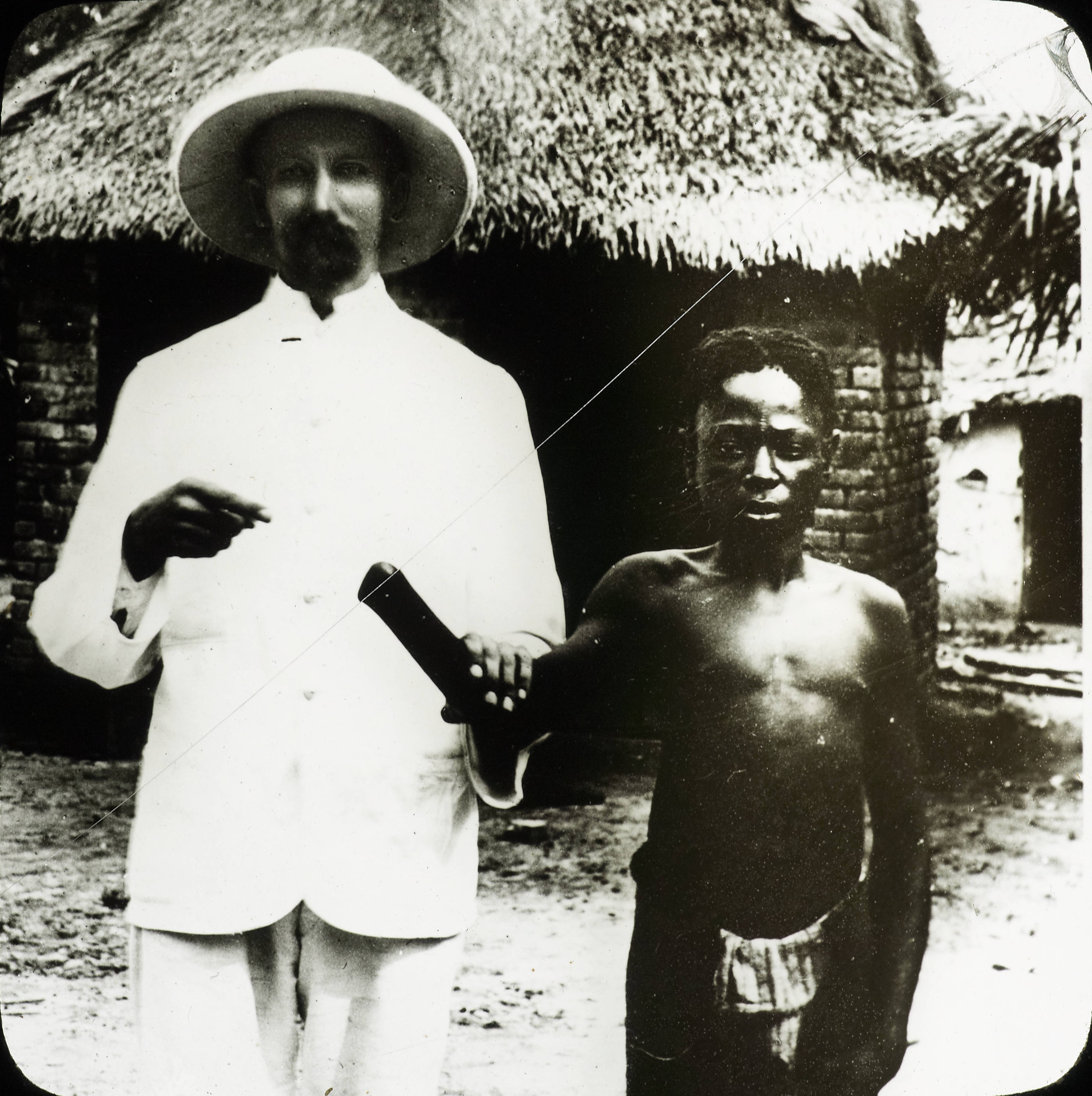
Lantern slide CSCNWW33/OS10/19, University of Edinburgh; USC Libraries, record 78038. Catalogue dates 1890-1910; photographer unknown. The catalogue connects the image with violence in the Congo but describes the particular case tentatively. The man’s name and any connection with the attack on Wala are unknown. The Commons version of 30 January 2014, 3582 × 3595, predates the 2025 restoration; visible damage is retained. The catalogue asks users to contact the repository about rights; Commons marks public-domain status.
USC LibrariesArchival bytes are unchanged; the smaller WebP preview is separate.
Wikimedia Commons / archival reproductionFile on WITNESS · 3582 × 35956. John and Alice Harris
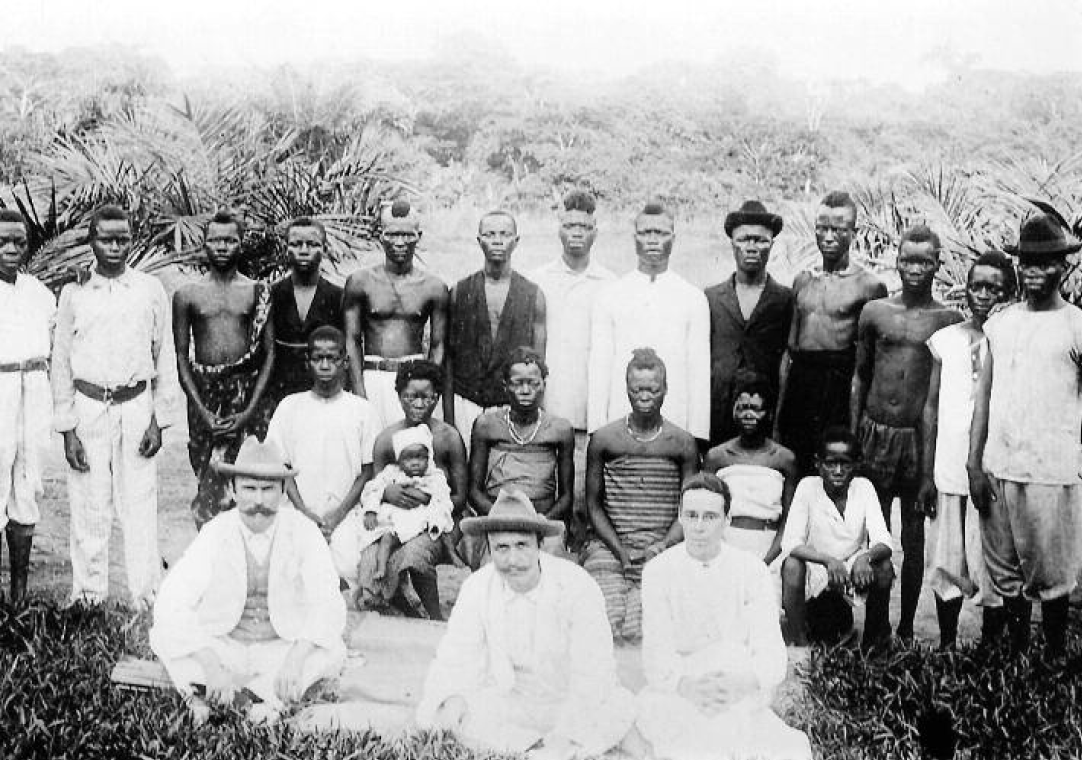
Sources and provenance for frame 6
Group portrait with John and Alice Harris, published in an Autograph information sheet. Commons gives 11 August 2015, the file’s upload date rather than the historical exposure date. The historical date and precise location are unknown; the image is not assigned to the day of the Wala attack. Copy 1083 × 760. Commons marks public-domain status; the exact publication history is unknown, and no CC licence is claimed.
Archival bytes are unchanged; the smaller WebP preview is separate.
Wikimedia Commons / archival reproductionFile on WITNESS · 1083 × 7607. Nsala in Mark Twain’s pamphlet
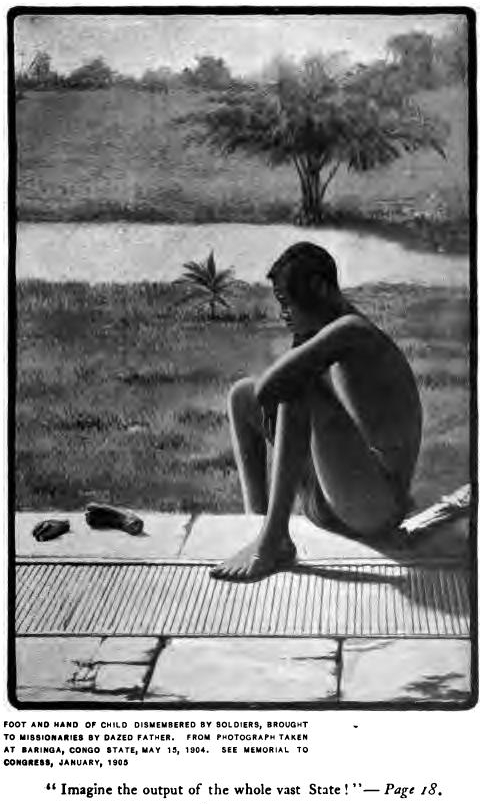
Sources and provenance for frame 7
Historical document: King Leopold’s Soliloquy, The P. R. Warren Co., Boston, 1905. The publisher used part of the photograph; WITNESS did not make this crop. The caption survives as part of the document; its allegations should be read alongside Stannard’s letter. Commons/Internet Archive digital copy, 484 × 804; no better accessible copy of this particular printed layout was found.
Published in 1904/1905; Commons marks US public-domain status. This does not assert that rights have expired in every country. Downloaded archival bytes are unchanged; the WebP preview is separate.
Verification recordWikimedia Commons / archival reproductionFile on WITNESS · 484 × 8048. Modern restoration: tonal treatment
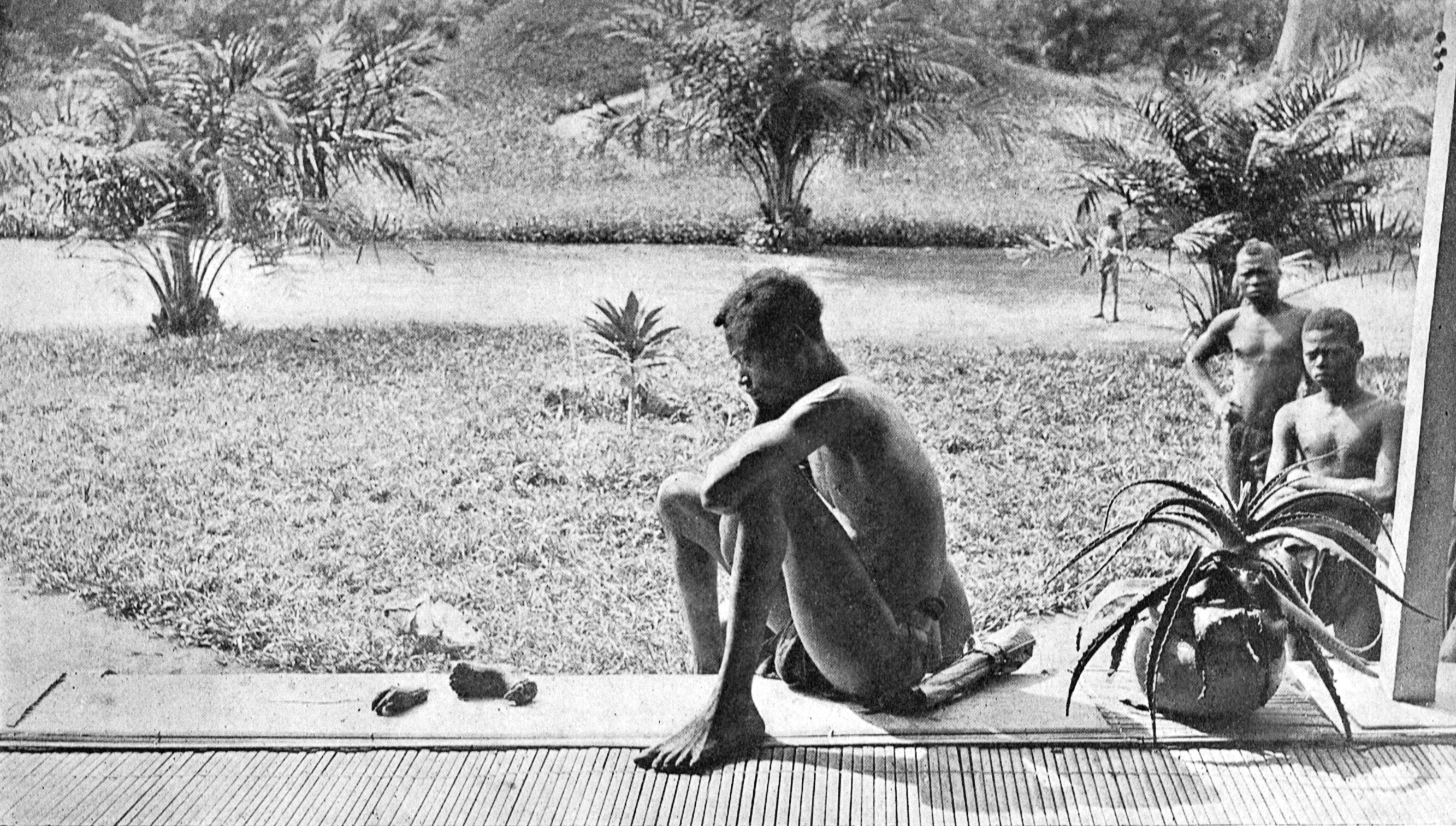
Sources and provenance for frame 8
A modern restorative tonal treatment of the historical photograph by contributor Hic et nunc. In the Fotowerkstatt discussion on 12 July 2013, the contributor published a JPEG processed afresh from the RAW CR2 scan of Morel’s book, explaining the treatment of its yellowed reproduction in black-and-white tones. This is a tonal treatment of the same photograph, without colourisation. The published version omits the book margins and caption; WITNESS did not make that crop.
Historical photograph: Alice Seeley Harris, 15 May 1904 according to Stannard’s letter, pp. 444-445. Commons file 2666 × 1513, published on 12 July 2013; its 2007 digitisation metadata does not date the historical exposure. Original downloaded bytes are preserved; the WebP preview is separate. Commons marks US public-domain status for the early publication; no universal free licence is claimed.
Treatment discussion, July 2013Hic et nunc / Wikimedia CommonsFile on WITNESS · 2666 × 1513